Pendant un siècle, le seul moyen d’obtenir cet aspect néon brillant était le verre : de fragiles tubes de gaz éclairés par une tension dangereusement élevée. Aujourd'hui, Néon LED flexible offre le même visuel avec une meilleure sécurité, un coût inférieur et une installation beaucoup plus facile.
Dans ce guide, nous comparons côte à côte les néons en verre traditionnels et les néons LED flexibles, afin que vous puissiez décider lequel convient le mieux à votre projet.
01. Comment fonctionne le néon en verre traditionnel
Néon en verre a été inventé au début des années 1900. Il fonctionne en remplissant un tube de verre scellé avec un gaz (généralement du néon pour le rouge-orange, ou de l'argon/mercure avec des phosphores pour d'autres couleurs) et en appliquant 10 000 à 15 000 volts pour ioniser le gaz et le faire briller.

Les avantages du néon en verre
- Éclat authentique — une lumière chaude et continue inégalée par les technologies plus anciennes
- Esthétique classique — l'aspect original de la signalisation au néon historique
Les inconvénients du néon en verre
- Fragile — les tubes de verre se fissurent et se brisent facilement
- Dangereux — La haute tension de 10 à 15 kV nécessite un spécialiste
- Cher — le cintrage du verre sur mesure coûte cher
- Lourd et délicat à expédier — risque élevé de transport
02 Comment fonctionne le néon LED Flex
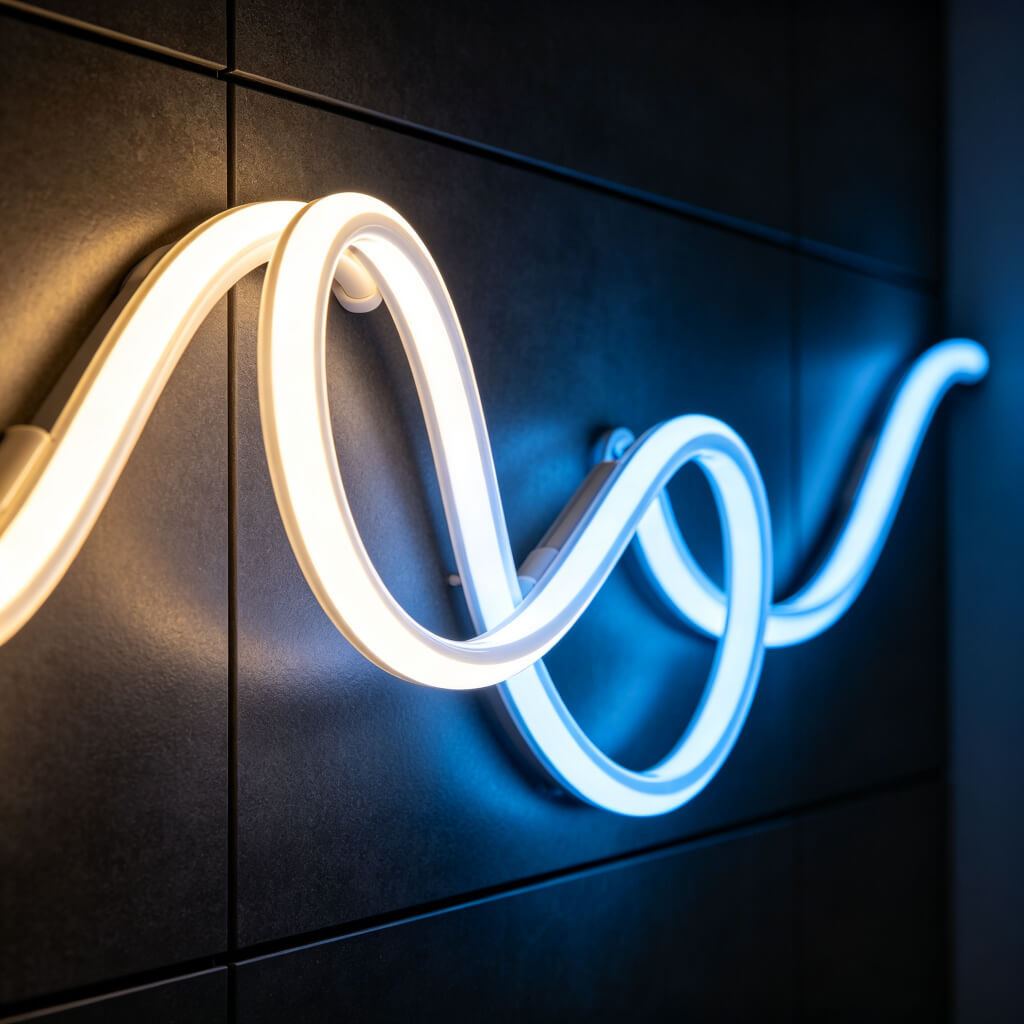
Néon LED flexible remplace le tube de verre rempli de gaz par une construction simple : une bande LED à l'intérieur d'un tube flexible en silicone ou en PVC. Il fonctionne en toute sécurité 12-24 V et utilise des LED qui durent 50 000 heures ou plus.
Les avantages du néon LED Flex
- Basse tension sûre — aucun risque de haute tension
- Flexible et pliable — jusqu'à un rayon aussi petit que 5 cm
- Durable — incassable, résistant aux intempéries (IP65–IP68)
- Efficace — environ 100 lm/W contre ~50 lm/W pour le néon en verre
- Facile à expédier et à installer — coupez, connectez et montez vous-même
Les inconvénients
- Différents regards de près — Le motif de points LED peut être visible dans certains produits (les noyaux COB haute densité résolvent ce problème)
- Les grandes enseignes peuvent être plus lumineuses avec du verre — pour les écrans à très grande échelle, le néon en verre gagne toujours en luminosité brute
03 Comparaison face à face
Voici l’image complète, côte à côte :
| Facteur | Néon en verre | Néon LED flexible |
|---|---|---|
| Tension de fonctionnement | 10 000 – 15 000 V | Coffre-fort 12 – 24 V |
| Efficacité | ~50lm/W | ~100 lm/W |
| Durabilité | Verre fragile | Silicone/PVC incassable |
| Pliage | Limité, fabriqué par des spécialistes | Pliez à un rayon de 5 cm |
| Étanche | Rarement | IP65 – IP68 |
| Durée de vie | Plus court, le tube se dégrade | 50 000+ heures |
| Sécurité | Risque de haute tension | Basse tension, sûr |
| Toxicité | Variantes gaz + mercure | Non toxique |
| Installation | Électricien spécialisé | Clips/chaînes faciles à bricoler |
| Transport | Lourd, fragile, coûteux | Léger, enroulable, sûr |
| Formes personnalisées | Verre personnalisé coûteux | Découpe et pliage faciles |
| Coût | Élevé (verre + main d'œuvre) | Beaucoup plus bas |
04Quand choisir chacun
Ni l’un ni l’autre n’est universellement « meilleur » – cela dépend du projet. Voici un guide pratique :
Pour le classique authentique
Répliques de qualité musée, restauration de signalisation historique ou œuvres d'art à très grande échelle où l'esthétique originale du verre est essentielle.
Pour presque tout le reste
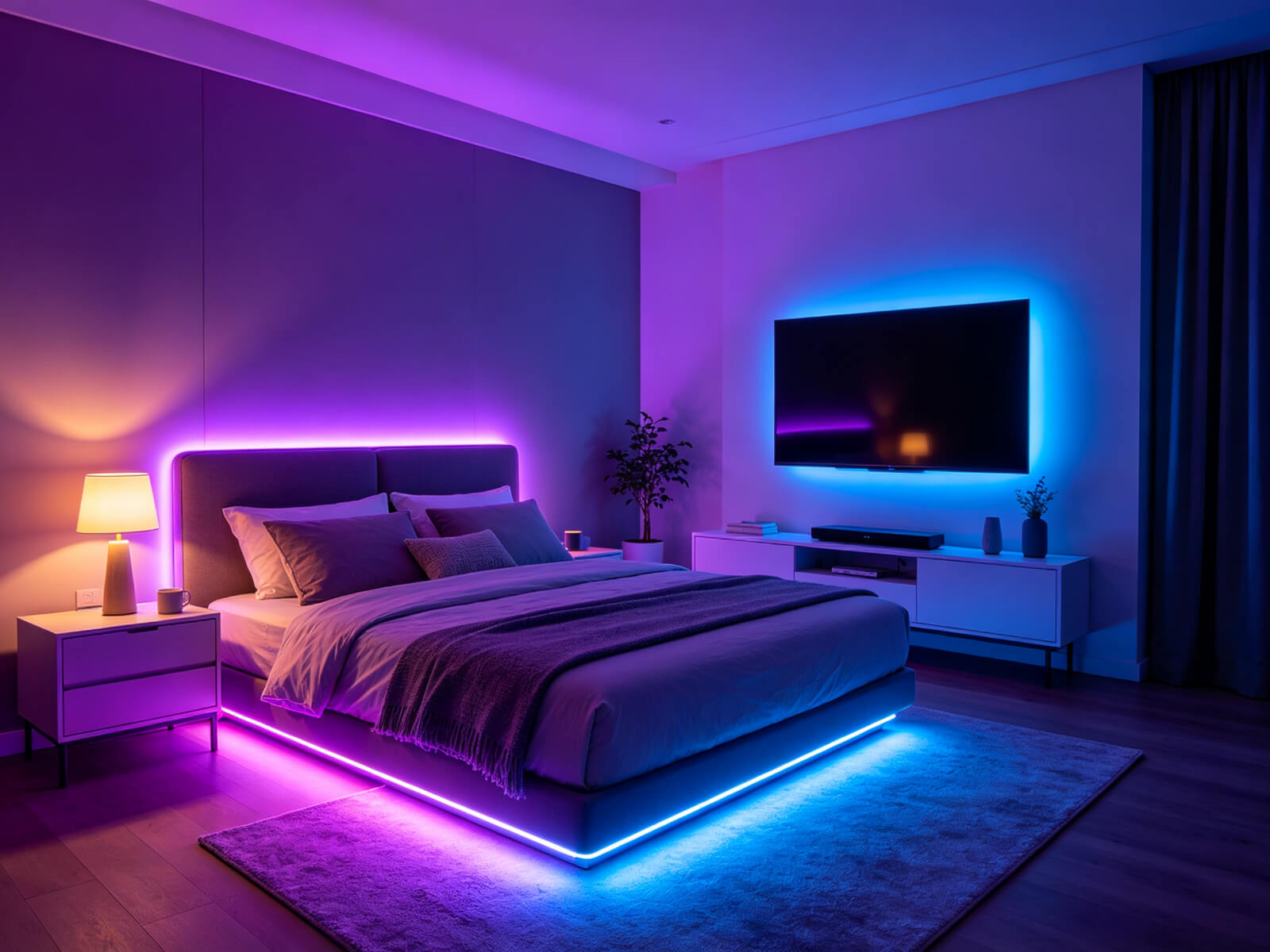
Signalisation moderne, logos de vente au détail, accents architecturaux, éclairage extérieur, événements, maisons – où la sécurité, le coût et la facilité l'emportent.
Pour la plupart des projets, la LED gagne
À moins que vous n'ayez spécifiquement besoin de l'esthétique verre-néon authentique, Le néon LED flexible offre le même impact visuel à une fraction du coût, avec une sécurité et une durabilité bien supérieures..
Explorez notre Gamme d'éclairage LED et voyez à quel point il est facile de travailler avec le néon moderne.
05 L'essentiel
Le néon en verre traditionnel a du charme et a sa place dans l'histoire, mais pour les nouveaux projets, le néon LED flexible est le choix le plus judicieux pour la plupart des acheteurs :
Vous obtenez l’aspect brillant emblématique, la flexibilité nécessaire pour créer n’importe quelle forme et aucune de la fragilité, du danger ou du coût du verre.
06 FAQ sur la comparaison des néons
T1Le néon LED flexible est-il aussi brillant que le néon en verre ?
Pour la plupart des tailles de signalisation, oui : le néon LED est environ deux fois plus efficace (~100 lm/W contre ~50 lm/W). Pour les écrans extrêmement grands, le néon en verre peut toujours produire davantage de résultats bruts.
T2Le néon LED flexible est-il sûr ?
Oui. Il fonctionne sur une basse tension sûre de 12 à 24 V au lieu des 10 000 à 15 000 V utilisés par le néon en verre, éliminant ainsi le risque de haute tension et réduisant les risques d'installation.
T3Pourquoi les néons en verre sont-ils remplacés ?
Le néon en verre est fragile, dangereux et coûteux à fabriquer et à expédier. Le néon LED flexible offre le même look avec une meilleure durabilité, sécurité, efficacité et un coût bien inférieur.
T4Le néon LED flexible peut-il être utilisé à l'extérieur ?
Oui. La plupart des néons LED flexibles sont classés IP65 – IP68, ils résistent donc à la pluie et aux intempéries. Le néon en verre est rarement étanche. Voir notre options imperméables.
Du néon pour votre projet ?
Demandez à notre équipe des échantillons et des prix sur les néons LED flexibles dès aujourd'hui.
Cette comparaison m'a épargné des heures de recherche. La comparaison entre le néon LED flexible et le néon en verre couvre clairement la durabilité, le coût et l'installation. Les photos du rayon de courbure ont rendu l'avantage de flexibilité facile à comprendre. Mettre ceci en signet.
Comparaison très instructive. Nous avons remplacé une enseigne en verre par du néon LED flexible l'année dernière et les raisons énumérées ici correspondent à ce que nous avons vécu. La section maintenance est honnête – elle mérite d'être lue avant de s'engager dans le verre néon.
J'avais supposé que le néon en verre était encore meilleur pour un lettrage extérieur net, mais la comparaison de durabilité a changé mon point de vue sur les panneaux extérieurs. Les données sur le rayon de courbure et la résistance aux UV sont les spécifications exactes dont nous avions besoin pour comparer les devis. Utile pour les créateurs d'enseignes.