
Connecting multiple LED strip lights can transform your space with vibrant, customizable lighting. Whether for home decor or commercial projects, understanding the best practices for connecting these strips is essential for achieving optimal results. At KayTai, we specialize in providing high-quality LED solutions and guidance to help you create the perfect lighting setup.
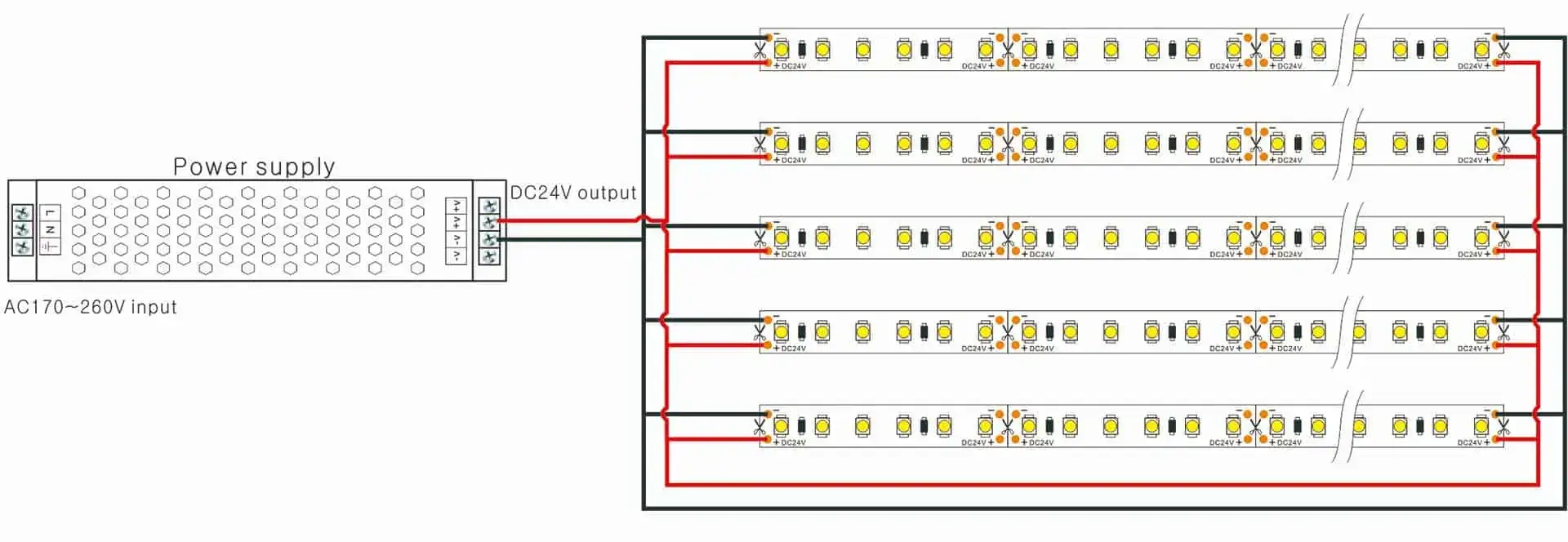
Table of Contents
1. Main Methods for Connecting LED Strip Lights
When it comes to connecting multiple LED strip lights, you have two primary methods: using connectors and soldering. Connectors are ideal for those who prefer a quick and easy installation. They allow for flexibility and are perfect for temporary setups or DIY projects. Soldering, while more technical, offers a permanent and secure connection. This method is recommended for long-term installations where durability is crucial. See our guide on cutting and connecting.
Connectors
Quick and easy; flexible for DIY projects.
Soldering
Permanent, secure; for long-term durability.
💡 Connectors are easier but less robust; soldering provides a permanent, stronger connection.
2. Importance of Calculating Total Voltage
Calculating the total voltage of combined LED strips is vital when selecting a power source. The total voltage should not exceed the power supply’s rating; otherwise, you risk overloading the system, which can lead to overheating or even fire hazards. Ensuring that all strips operate at the same voltage is key to maintaining a safe and efficient lighting system.

3. Advantages of Connecting Multiple LED Strips
There are several benefits to connecting multiple LED strips:
Extended Coverage
Easily illuminate larger areas by linking strips together.
Enhanced Brightness
Combining strips can increase overall light output.
Cost Efficiency
Reduces the need for multiple power adapters.
4. Series vs. Parallel Connections
Understanding the difference between series and parallel connections is crucial. In a series connection, strips are connected end-to-end. While this approach simplifies wiring, it can lead to voltage drop issues over longer distances, causing dimmer lights further from the power source. In a parallel connection, each strip connects directly to the power supply, ensuring consistent brightness across all strips. Although this method requires more complex wiring, it is generally recommended for larger installations. Learn more about avoiding voltage drop.
5. Understanding Voltage Drop
Voltage drop occurs when the voltage decreases as electricity travels along a conductor. This phenomenon can be problematic for LED strip lights because it may cause LEDs located farther from the power source to appear dimmer. The length of an LED strip directly impacts voltage drop; longer strips experience greater voltage drop, resulting in more noticeable dimming. To mitigate this issue, consider using shorter runs or higher-voltage strips (like 24V) for extensive installations. Read our 12V vs 24V guide.
6. Calculating Maximum Number of Strips
To determine how many LED strips can be connected to a single power supply, use the formula: Number of Strips = Power Supply (Watts) ÷ Power Consumption per Strip (Watts). This calculation ensures that you do not exceed the capacity of your power supply.

💡 Keep the load on a power supply at about 80% of its maximum capacity rather than 100%. This practice helps reduce stress on the power supply and extends its lifespan.
7. Types of LED Strip Connectors
There are two main types of LED strip connectors. Gapless pin connectors create a seamless connection between strips, ideal for maintaining uniform lighting. Jumper cord connectors allow flexibility in bending around corners or obstacles, making them perfect for intricate designs.
8. Safety Considerations
When connecting multiple LED strip lights, safety should be paramount. Ensure all connections are properly insulated to prevent short circuits. Use appropriate wire gauges based on current loads to avoid overheating. Regularly inspect connections for wear or damage. By following these guidelines and leveraging KayTai’s expertise in LED solutions, you can confidently connect multiple LED strip lights while ensuring safety and optimal performance in your lighting projects.
Connect Multiple LED Strips with Confidence
Get quality connectors, strips, and power supplies from KayTai — plus expert wiring advice.
Contact KayTai
Good guide for linking multiple strips. The series versus parallel explanation is clear, and the power supply sizing section prevents under-specification. Practical connector tips too.
Useful guide for connecting multiple strips. The series vs parallel explanation is clear, and the power supply sizing section prevents a common mistake. The connector tips are practical.
I am a home automation integrator in Switzerland and this guide cleared up series vs parallel for my longest install. The power injection and wire gauge sections prevented voltage drop issues on a 20m run. The diagrams made it easy to explain to the homeowner.