
At KayTai, we understand that choosing the right LED strip for your project is crucial. One of the most important aspects to consider is the LED density on the strip. LED density directly affects the appearance and performance of your lighting, potentially leading to a dot or spot-like effect if not chosen correctly.
Inhoudsopgave
1. Defining Key Terms
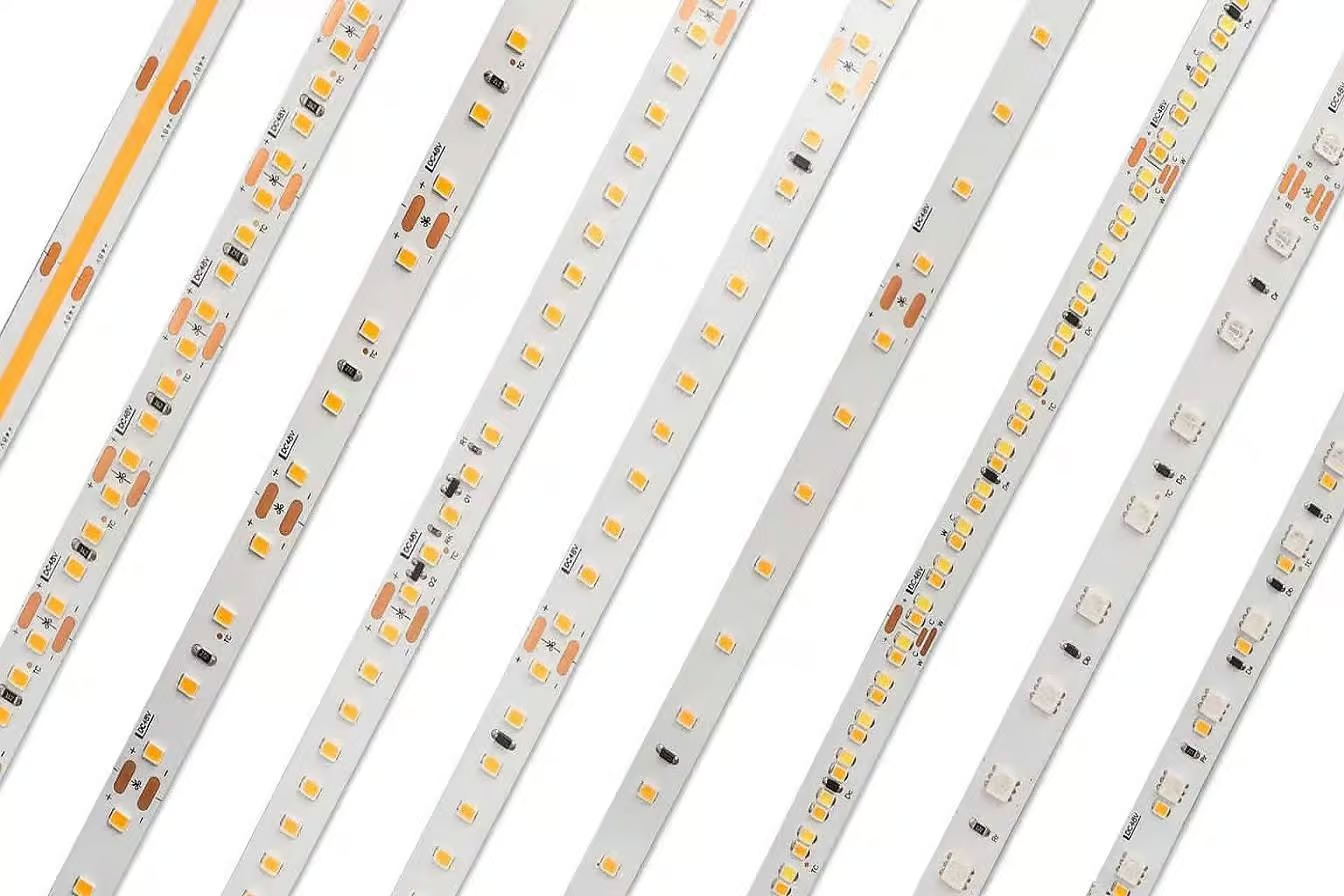
LED Count refers to the total number of LEDs on an entire strip, commonly measured on a 5-meter length. This count gives you an idea of how many lights you’re getting. LED Density more specifically measures how many LEDs are packed into each meter of the strip. Higher density means a smoother, more uniform light output.
2. The Impact of LED Density
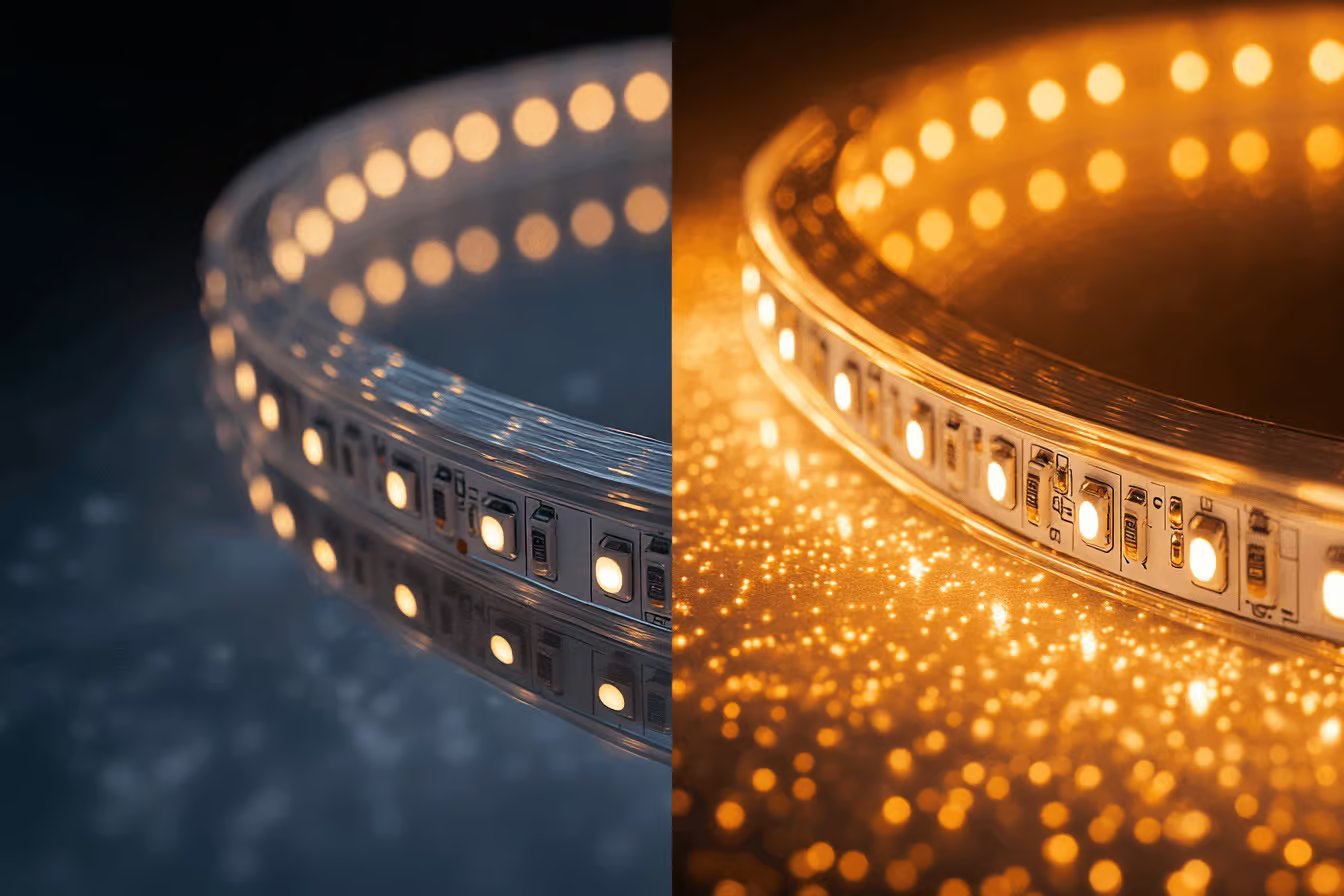
Light Uniformity — high density is ideal for applications requiring even lighting without noticeable gaps between LEDs, resulting in a seamless lighting effect perfect for ambient or task lighting. Low density is suitable for decorative or accent lighting where the spots of light can add to the aesthetic. However, you might see visible dots or gaps.
Light Uniformity
High density = seamless light; low = visible dots.
Power Consumption
Higher density consumes more power.
Heat Generation
Dense strips generate more heat; need thermal management.
Cost Implications
Higher density is pricier but offers better value.
Power consumption: strips with higher LED density will consume more power. This is essential to consider for energy efficiency and your project’s power requirements. Heat generation: dense LED strips generate more heat due to the concentration of LEDs. At KayTai, our high-density strips are equipped with thermal management solutions like heat sinks to ensure longevity and safety. Low-density strips generally run cooler but might push individual LEDs harder, which can also affect their lifespan. Cost implications: higher density strips are pricier due to the increased number of LEDs and the technology needed to manage heat. At KayTai, we balance cost with quality to provide the best value for your investment.
💡 High-density strips are perfect for uniform lighting in kitchens, offices, or retail spaces; low-density strips suit mood and accent lighting.
3. Comparing High vs. Low LED Density
| Aspect | High Density | Low Density |
|---|---|---|
| Light Uniformity | Smooth, even light without gaps | Visible dots, more decorative |
| Power Consumption | Higher, more energy | Lower, energy-efficient |
| Heat Generation | More heat, needs thermal management | Less heat, simpler cooling |
| Kosten | More expensive | Generally less costly |
| Best Use Cases | Ambient/task lighting | Accent/decorative effects |
4. Practical Considerations for Your Project
Choosing the Right Density — high-density strips are perfect for uniform lighting in areas like kitchens, offices, or retail spaces where bright, even light is required without shadows or dark spots. Low-density strips are great for mood lighting, under-cabinet lighting, or anywhere you want to highlight specific areas or features. Identifying LED Density — check the labels on our product packaging, which clearly indicate the LED density. A quick visual check can also show the spacing between LEDs, giving you an immediate sense of density.
💡 Learn more about our COB LED-strips for the smoothest, densest light output.
Conclusie
Bij KayTai, we aim to provide LED strip lights that match your specific needs. Understanding LED density helps you choose the right product for the desired lighting effect, power consumption, and cost-efficiency. Whether you’re looking for uniform, bright lighting or decorative spot lighting, we have the LED density to meet your requirements. Always reach out to our team for guidance in selecting the perfect LED strip for your project.
Choose the Right LED Density
Get expert help selecting the perfect LED strip for your project from KayTai.
Gerelateerde LED-gidsen

Density explained clearly. The trade-off between LED count, brightness and diffusion is easy to understand. Choosing 60 versus 120 per metre is now a simple decision.
Good explanation of LED density and why it matters. The comparison between 30, 60 and 120 LEDs per meter makes the trade-off between brightness, diffusion and cost easy to see.
I stock LED strip lights for a retail store in New Zealand, and understanding density changed how I advise customers. The brightness per metre comparison helped me explain why 120 LEDs per metre costs more. This guide makes a technical topic easy to sell.