
Best Color Temperature for LED Office Lighting: A Complete Guide (2026)
Everyone has different lighting preferences at work — some want a cozy mood, others need a formal meeting atmosphere. But not every light color gives the same working comfort. Choosing the right color temperature for your office affects focus, energy, eye strain and productivity. This guide explains what color temperature is, which kelvin range suits each office area, and how to specify LED lighting that keeps your team alert and comfortable.
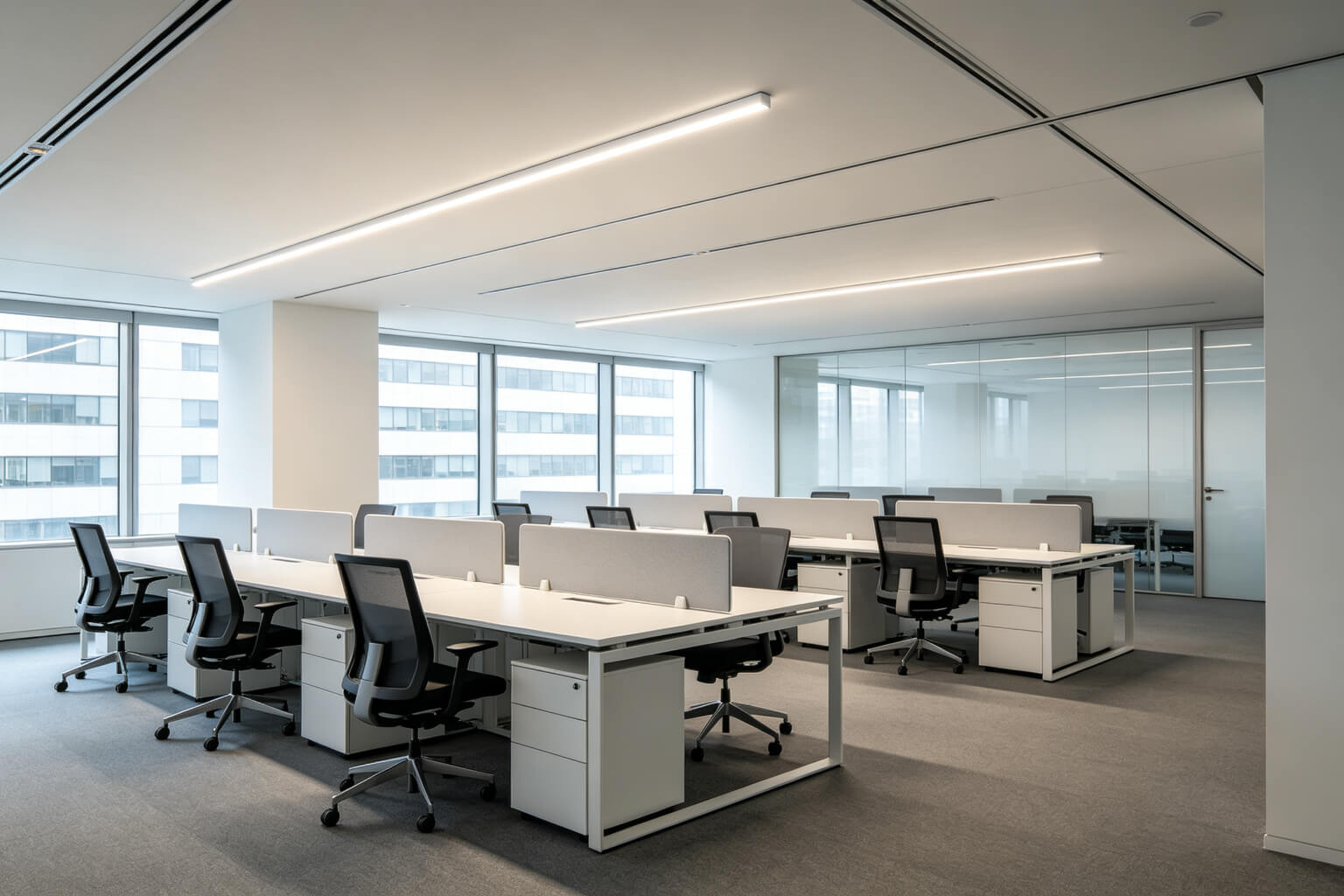
In short: an office needs an energetic atmosphere, and a color temperature between 4000K and 5500K works best. Yet different areas of the office have unique requirements — a break room wants warmth while a working area needs a cooler tone. Below 4000K, workers tend to feel sleepy. This guide gives you the complete picture, area by area.
Obsah
- What Is Color Temperature?
- What Is the Best Color Temperature for LED Office Lighting?
- Color Temperature Recommendations for Different Office Areas
- Color Tones Suitable for LED Office Lighting
- Why Is Color Temperature Important for LED Office Lighting?
- Key Factors to Consider When Selecting Color Temperature
- LED vs. Fluorescent Lighting for Offices
- How Lighting Affects Mood, Health and Productivity
- Why Choose KayTai?
- FAQ
1. What Is Color Temperature?
Color temperature, also known as Correlated Color Temperature (CCT), is the visible color of the light a source produces. It is measured in kelvin (K) and typically ranges from 2700K to 6500K. The higher the value, the cooler and bluer the light; the lower the value, the warmer and more yellow it appears.
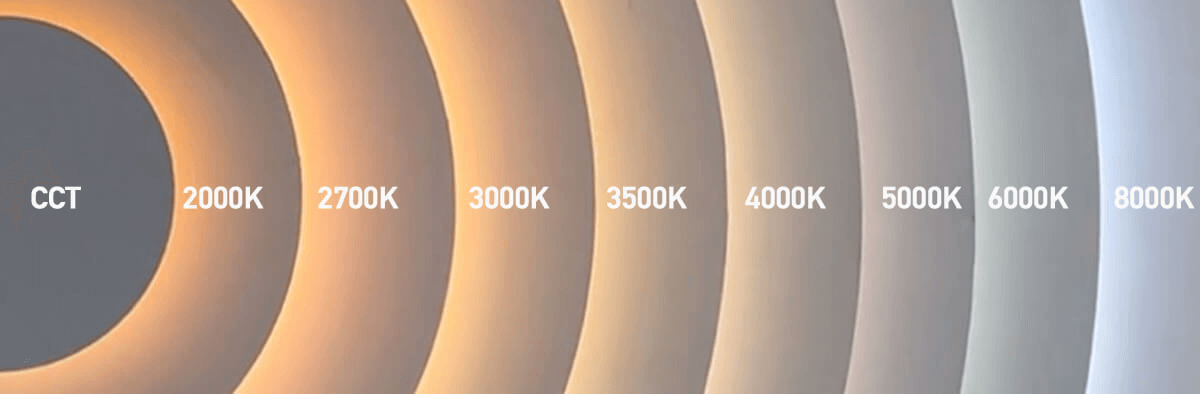
Here is a quick reference for how the color of office light changes with the CCT rating:
| Color Temperature | Appearance of the Light |
|---|---|
| 2700–3300K | Warm — red, yellow and orange tones |
| 3300–5300K | Cool — less yellow, bluer and calmer |
| 6500K | Daylight — natural blue-white appearance |
So a 2700–3300K light creates a cozy, warm atmosphere, while 4000K makes colors less yellow and bluer, and 5000K gives a crisp blue-white tone. Understanding this chart lets you pinpoint exactly which lighting each office area needs — see our complete color temperature guide for more detail on every kelvin step.
2. What Is the Best Color Temperature for LED Office Lighting?
Taking the office as a whole, 4000K is the optimal color temperature for LED office lighting. It falls in the neutral category: it does not strain the eyes or trigger headaches, and it creates a natural atmosphere that increases working efficiency.
4000K — Neutral (Recommended)
Natural white light that keeps workers alert without harsh blue glare. The professional default for general office areas.
Below 4000K — Too Warm
Warm, yellow light is relaxing but makes office workers sleepy and reduces concentration during the workday.
Above 5000K — Too Blue
Higher CCT produces strong blue light that harms employees, causes eye strain and makes the workplace less energizing.

The ideal choice is a white-tone light — it boosts efficiency for both workers and visitors while creating a pleasant working environment, and its daylight effect keeps everyone awake through the day. You can always add accents such as spotlights for decoration.
3. Color Temperature Recommendations for Different Office Areas
There is no single kelvin value that fits an entire office. Because each space serves a different task — deep focus, casual chat, or moving between rooms — we adjust the CCT per area. Use this area-by-area table when you spec your next project:
| Office Lighting Areas | Recommended Color Temperature |
|---|---|
| General office | 4000K |
| Employee break room | 3300K–5300K |
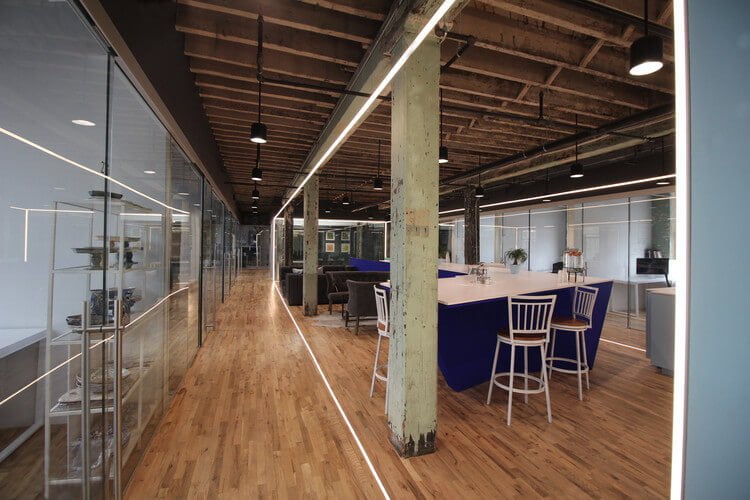
| Office corridor | 3000K–4000K |
| Lobby office | 5000K |
General Office
A neutral 4000K gives a natural atmosphere to the working space. Individual preferences for warmer or cooler shades can still be respected.
Break Room
A relaxing, cozy setting is ideal — an orangish-yellow tone or natural blue-white from 3300K to 5300K helps employees unwind.
Office Corridor
Corridors are transition zones, not workstations. A formal 3000K–4000K wash keeps them feeling clean and professional for people passing between rooms — bright enough to guide the way, calm enough not to glare.
Lobby Office
The lobby is the focal point for visitors and collaborative work — cooler white light at 5000K is the perfect tone.
4. Color Tones Suitable for LED Office Lighting
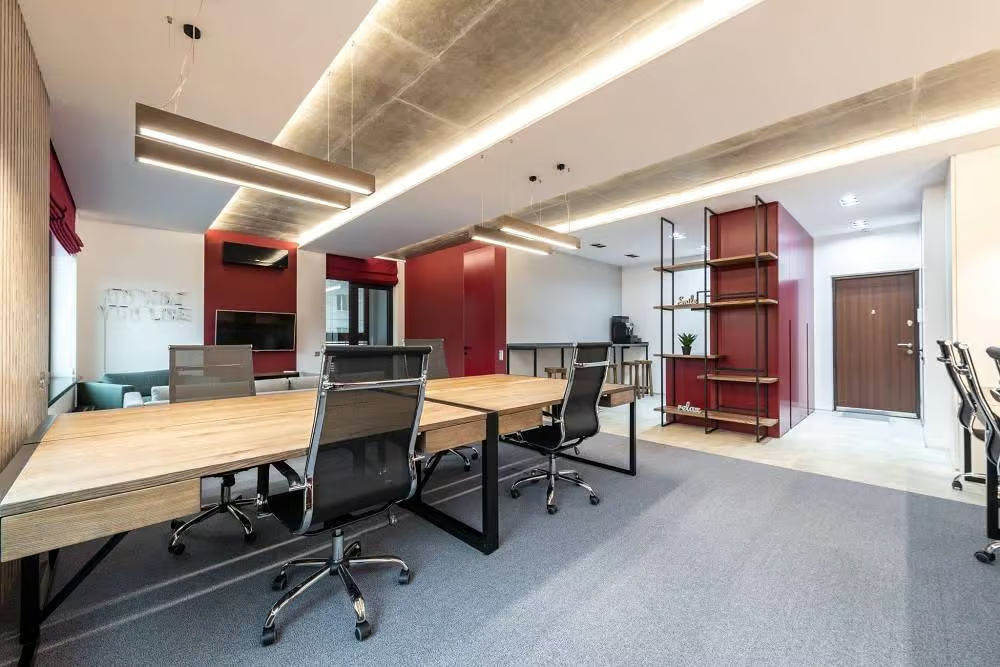
The same kelvin number can feel different depending on tone and context. In practice, office lighting falls into three working tones — each with its own role in the workplace:
Warm White (3000K)
Warm and soothing. Ideal for spaces that need a formal but cozy appearance — for example, an office corridor.
Natural White (4000K)
The neutral tone that blends warm and soft colors. Perfect for general office lighting and everyday tasks.
Cold White (Daylight)
A natural daylight effect for spaces where great feature awareness is essential — working stations and lobbies.
5. Why Is Color Temperature Important for LED Office Lighting?
Working in a strict office environment is already unpleasant — and a poor lighting setup makes it worse. Color temperature shapes how the office looks, how staff feel, and how productive everyone is.
✓ Improves the Office Environment
The right CCT does more than make a room look good — it sets the room’s energy level. Well-tuned neutral light reads as professional and modern, which subtly lifts how staff feel about the space and their work.
✓ Supports Concentration
Neutral lighting gives a peaceful atmosphere that encourages employees during typing, email and detailed tasks.
✓ Reduces Eye Strain
A balanced 4000K light does not strain the eyes or cause headaches, unlike harsh blue or flickering alternatives.
✓ Boosts Energy
The higher the color temperature, the cooler and more energizing the light — keeping the team awake and focused.
✓ Separates Work from Rest
A warm, yellowish setting in the break room helps employees relax and relieve stress away from workstations.
Light quality goes beyond color alone. Rendering and consistency matter too — learn how CCT and CRI explained so your office lighting performs as intended.
6. Key Factors to Consider When Selecting Color Temperature
Before specifying your office lighting, consider these four factors — they determine whether the final install feels right in every corner.
The Atmosphere You Want to Create
Warm settings feel cozy; cool tones create an energetic mood. Offices need energy, so lean toward cool, neutral shades — brighter environments also suit factories and heavy-lifting areas.
The Colors of Your Interior
Use a cool scheme for white, blue or silver walls and furniture. Choose warm-temperature lighting if the room and furnishings are painted in rich, warm colors.
Diverse Applications
Reception and break rooms call for warm, welcoming shades. For ceiling and cabinet lighting, LED strips work best — plain white or tunable white strips decorate the office, lobby, break room and restroom.
Adjustable CCT for Convenience
Tunable white LED strips let you shift from warmer to cooler tones at any time, adjusting the light to the working mood. Dim-to-warm strips give break rooms an adjustable, cozy atmosphere.

7. LED vs. Fluorescent Lighting for Offices
Most consumers now choose LED over fluorescent — and for good reason. LED lighting is more efficient, brighter and more functional, and it lasts longer. Although fluorescent tubes are cheaper to buy, the durability and lower replacement frequency make LED the smarter long-term choice. Fluorescent light also increases stress, worsens migraines and causes eye strain.
| Comparison | LED osvetlenie | Fluorescent Lighting |
|---|---|---|
| Power | More energy efficient for the same brightness | Consumes more energy |
| Quality | Reliable, durable and feature-rich | Cannot match LED quality |
| Durability | Lasts for years (typical warranty 3–5 years) | Shorter lifespan |
| CCT & Rendering | Accurate CRI and adjustable color temperature | Lacks these features |
| Dimming | Easy and smooth dimming | Harder to dim effectively |
Fluorescent lights also flicker and trigger extreme mood swings, headaches and disturbed sleep patterns in workers. That is why the industry standard has shifted — understand why professionals choose LED to see why LED dominates modern office lighting.
8. How Lighting Affects Mood, Health and Productivity
All types of light in the office have biological and psychological effects on us — influencing sleep, mood, productivity and health. Here is what each kind of light does:
Light for Day vs. Night
Human eyes and body clocks are tuned to the sun: we work best with bright light by day and less of it at night. Running high-intensity lighting after hours suppresses melatonin — the sleep hormone — which is why late-shift spaces need dimmable, warmer controls.
Blue Light
Blue-enriched white light is the standard for task areas: it signals the brain to stay alert and sharpens concentration during work hours. Save it for daytime — after dark, blue-heavy light suppresses melatonin and delays sleep.
Red Light
Used rarely, but research shows it raises melatonin levels and has favorable effects on the body.
Warm Lighting
Warm light is the reset button of the office — it lowers stimulation in break rooms, lounges and meeting areas, helping people switch off and recover between tasks.
White Light
A neutral white tone is the safe default for most workstations. It renders skin tones naturally — useful for video calls and client meetings — and pairs well with any interior palette.
The takeaway: match light intensity to the time of day, avoid excessive blue light in the evening, and use warm tones in relaxation areas to protect sleep and wellbeing.
9. Why Choose KayTai?
KayTai is a factory-direct manufacturer of LED strip lights and LED neon flex, supplying office lighting projects to contractors, wholesalers and importers since 2011. We provide complete lighting solutions — from single-color to tunable white strips — in any color temperature you specify.
✓ Any CCT from 2700K to 6500K
Single-color, tunable white and dim-to-warm strips in every kelvin value, tested for consistent color.
✓ Color Consistency as Standard
Quality chips on 2oz copper PCB with strict binning and batch records — see our quality control system.
✓ CE & RoHS Certified
Certificates and test reports available to support your market entry and compliance.
✓ 72-Hour Stress Testing
Moisture, heat and flicker testing on every batch before it ships.
✓ OEM / ODM Service
customize your strips for your project, with samples and technical support.
FAQ
▶What color LED light is best for the office?
Blue-white light is ideal because it matches the work environment, keeps employees alert and productive, and focuses them on their tasks. Mix in natural lighting to create an energizing atmosphere.
▶Is 6500K suitable for the office?
6500K daylight can be beneficial for workplaces where employees need to concentrate — it reduces tiredness and sharpens focus. For most general offices, however, 4000K remains the safer, more comfortable default.
▶Is 4000K lighting good for an office?
Yes — 4000K is the value we recommend most often for offices. It is a neutral white that keeps people alert and focused, without the harsh blue of 5000K+ or the drowsy warmth of 3000K.
▶Is 5000K too bright for an office?
For typical office work, we recommend 3000K–4000K — brighter, cooler settings above that can feel harsh for long hours. Values like 5000K suit clinical or inspection environments where maximum visual clarity outweighs comfort.
▶How bright should office lighting be?
Office spaces should be between 300 and 500 lumens. Choose around 300 lumens for a single light source, and 400–500 lumens for larger rooms with additional lighting.
▶Why does the office use white light?
White light at about 4000K keeps the workplace bright and alert, greatly improving work efficiency. It gives employees the focus their tasks demand.
▶What color light is best for productivity?
Cooler blue or white light is best for productivity — it keeps workers alert and focused throughout the workday.
▶How can I improve my office lighting?
Install background lighting for a calmer option, replace fixtures with LEDs to reduce health risks, use a lighting control system, and reduce both direct and indirect glare.
Ready to Upgrade Your Office Lighting?
Tell us about your project — we’ll recommend the right color temperature, LED strips and controls for your office. Free samples are available.
Súvisiace LED vodidlá
Want to go deeper? Read our complete LED color temperature and CRI guide for the full technical breakdown.

Clear comparison of color temperatures. The 4000K vs 5000K section for office tasks is something I will use with clients. Most guides oversimplify this, so the breakdown here is genuinely useful for spec work.
Useful reference for office projects. The suggestion to test a small area before committing across a whole floor is practical advice I wish I had read before a recent fit-out. The comparison table is a keeper.
We set our office to 4000K after reading this and the staff feedback on eyestrain has been noticeably positive. The comparison of 3000K vs 4000K for different zones was useful when we split the meeting room from the open plan. Well explained.