
LED pásové svetlá do spálne: 15 nápadov, farebná teplota a sprievodca nastavením (2026)
Nothing transforms a bedroom at night like the warm, indirect glow of LED strip lights. Run them behind the headboard, under the bed frame or along the ceiling cove, and a plain room turns into a calm, hotel-like retreat — for a fraction of the cost of rewiring. But the difference between a cozy glow and a harsh, cheap-looking line of light comes down to three things: where you put them, which strip you choose, and what color temperature you pick.
This guide walks you through the 15 most popular bedroom LED strip ideas, the specs that actually matter (including the 2700K vs 3000K sleep question), how to install them so you see the glow and not the dots, and the safe, reliable products we recommend. Whether you rent or own, renters-friendly or built-in, there is a setup here for you.
Obsah
1. Why LED Strips Transform a Bedroom
A bedroom is not a workspace — its job is to help you wind down. Overhead ceiling light at full brightness is the wrong tool for that. LED strips give you something better: ambient, indirect, dimmable light that bounces off walls and ceilings instead of shining straight into your eyes.
Cozy ambient mood
Hidden glow behind furniture or along coves makes the room feel warmer and more expensive than plain overhead light.
Sleep-friendly
Warm 2700K/3000K strips emit very little blue light, so they do not suppress melatonin the way cool white or phone screens do.
Cheap to run
A 5 m LED strip draws 10–24 W — a fraction of a bulb — and lasts 30,000+ hours. Leave it on all evening for pennies.
No rewiring
Self-adhesive 12 V strips plug into a wall adapter. No electrician, no permits, renters-friendly when applied to existing furniture.
Dimmable & smart
Pair with a dimmer or smart controller to dim from movie night to sleep mode, or change color for a party.
Zoned lighting
Separate strips for headboard, bed base and wardrobe mean you can light one zone without waking your partner.
If you are new to LED strips in general, start with our complete LED strip light buying guide for the basics, then come back here for the bedroom-specific ideas.
2. Pick the Right Strip: 5 Specs That Matter
Not all LED strips are bedroom material. A cheap, dim, dotty strip glued directly to drywall will look exactly like what it is. Spend attention on these five choices and the result looks like a designer install:
2.1 Color temperature: 2700K – 3000K only
For a bedroom, choose 2700K (candle warm) to 3000K (warm white). Anything above 4000K reads cool and clinical — the opposite of sleep. If you like flexibility, a tunable-white strip lets you dial from 2700K in the evening to 4000K for dressing in the morning.

2.2 CRI 90+ for flattering light
CRI (Color Rendering Index) measures how accurately the strip shows real colors. Cheap CRI 70 strips make skin, bedding and wood look grayish. CRI 90+ strips make warm tones look rich and natural — worth the small premium in a room you spend 8 hours a day in.

2.3 COB vs SMD: dot-free light
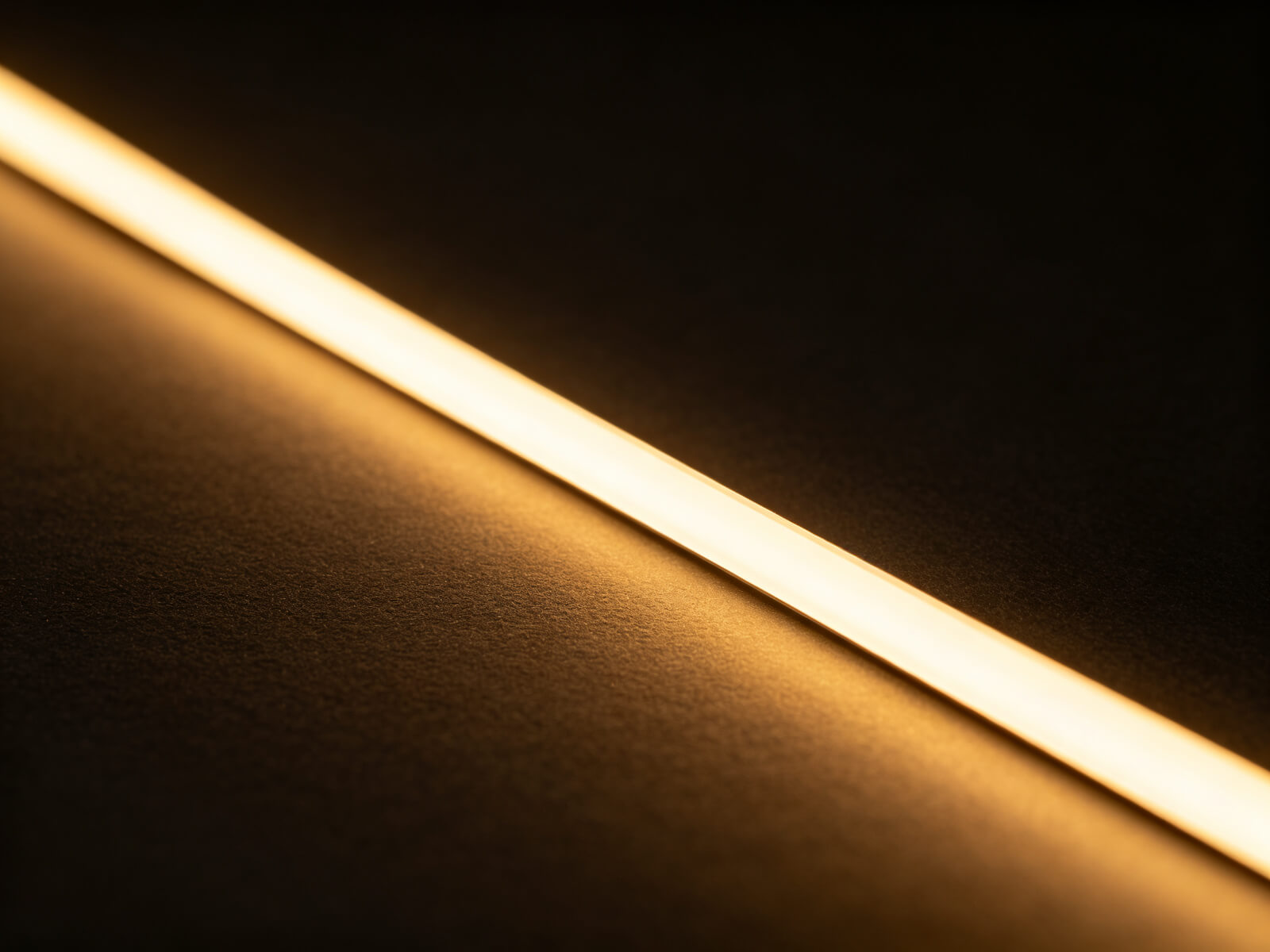
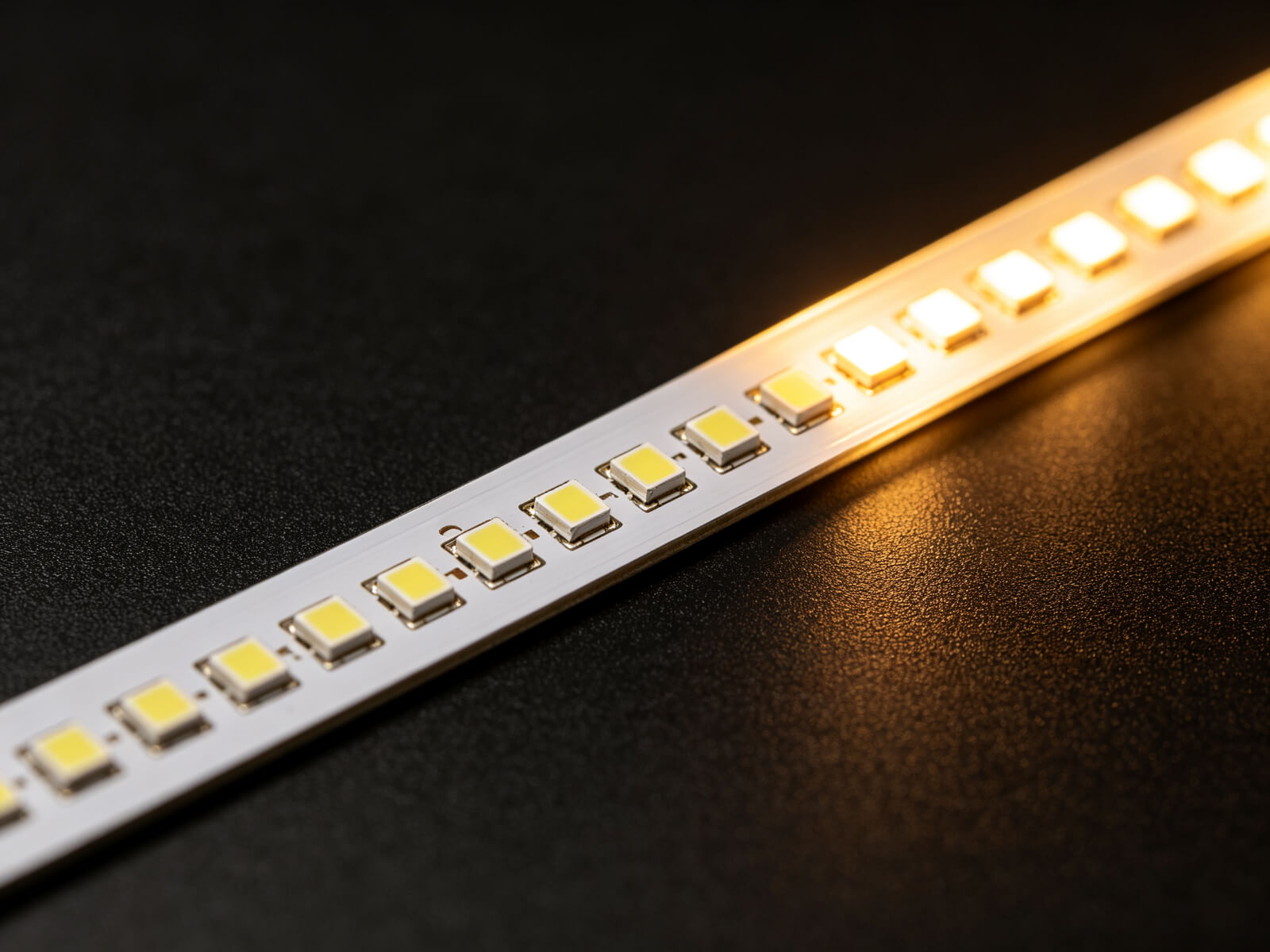
SMD strips (30/60/120 LEDs per meter) show visible dots when you look directly at them. COB (Chip on Board) strips blend the LEDs into a single, smooth line of light — no dots, no hotspots. For bedroom indirect lighting, COB looks far more premium. Compare the two:
COB strip
Dotless, continuous light. Best for visible positions behind headboards, under shelves and in shallow coves. Smooth, even, premium look.
SMD strip
Visible individual LEDs. Fine when hidden inside an aluminum channel or a deep recess where you never see the strip itself.
2.4 12 V (safe) and dimmable
Bedroom strips run on 12 V DC — completely safe to touch, low-voltage. Always pair with a dimmable driver and a dimmer (RF wall dimmer, phone app or voice control). Non-dimmable strips on full brightness are the #1 mistake people make; the same strip at 20% brightness is a completely different mood. Unsure about voltage? Our 12V vs 24V vs 48V guide explains when to step up to 24V for longer runs.
2.5 Hide the dots: aluminum channel + diffuser
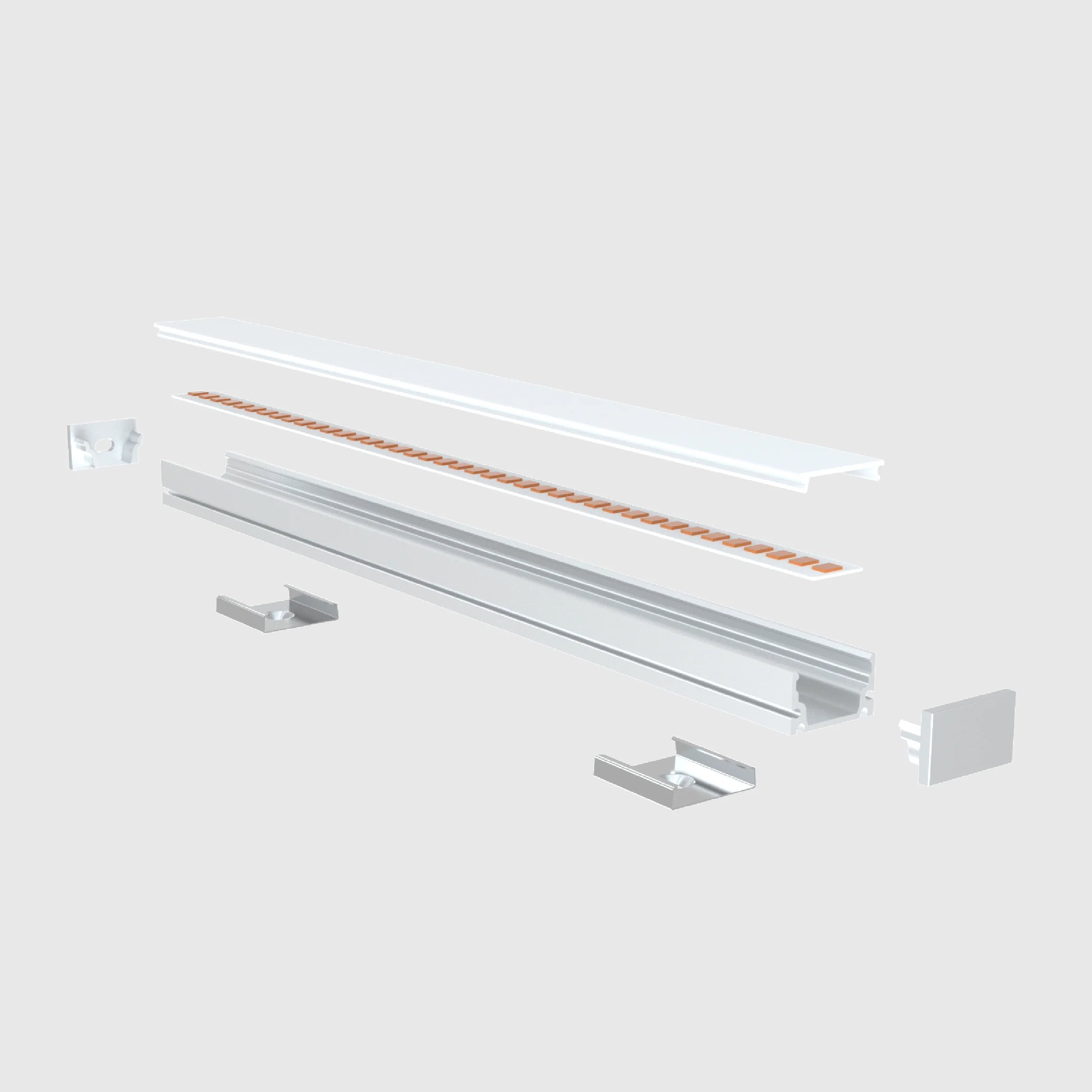
The pro trick: never glue a bare strip to a visible surface. Run it inside an aluminum LED channel with a frosted diffuser cover. The channel acts as a heat sink (extending strip life) and the diffuser turns dots into a clean, even line of light. For a hidden cove or behind a headboard where the strip itself is invisible, bare strip is fine.
3. 15 Bedroom LED Strip Ideas by Placement
Here are the ideas that actually work, grouped by where you install them. The first four are the classic, high-impact setups; the rest are variations and smaller details.
Idea 1 — Headboard glow (the #1 classic)
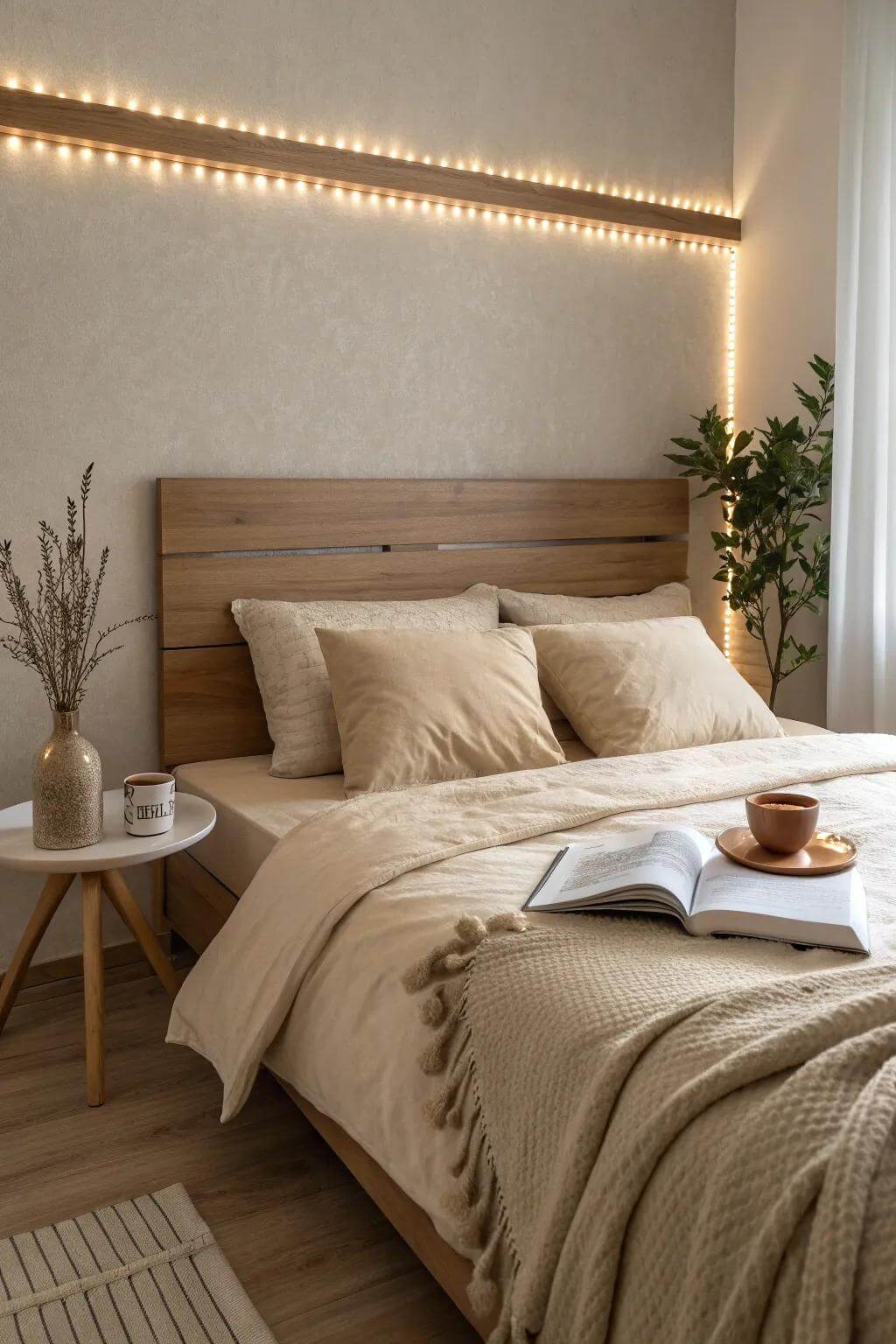
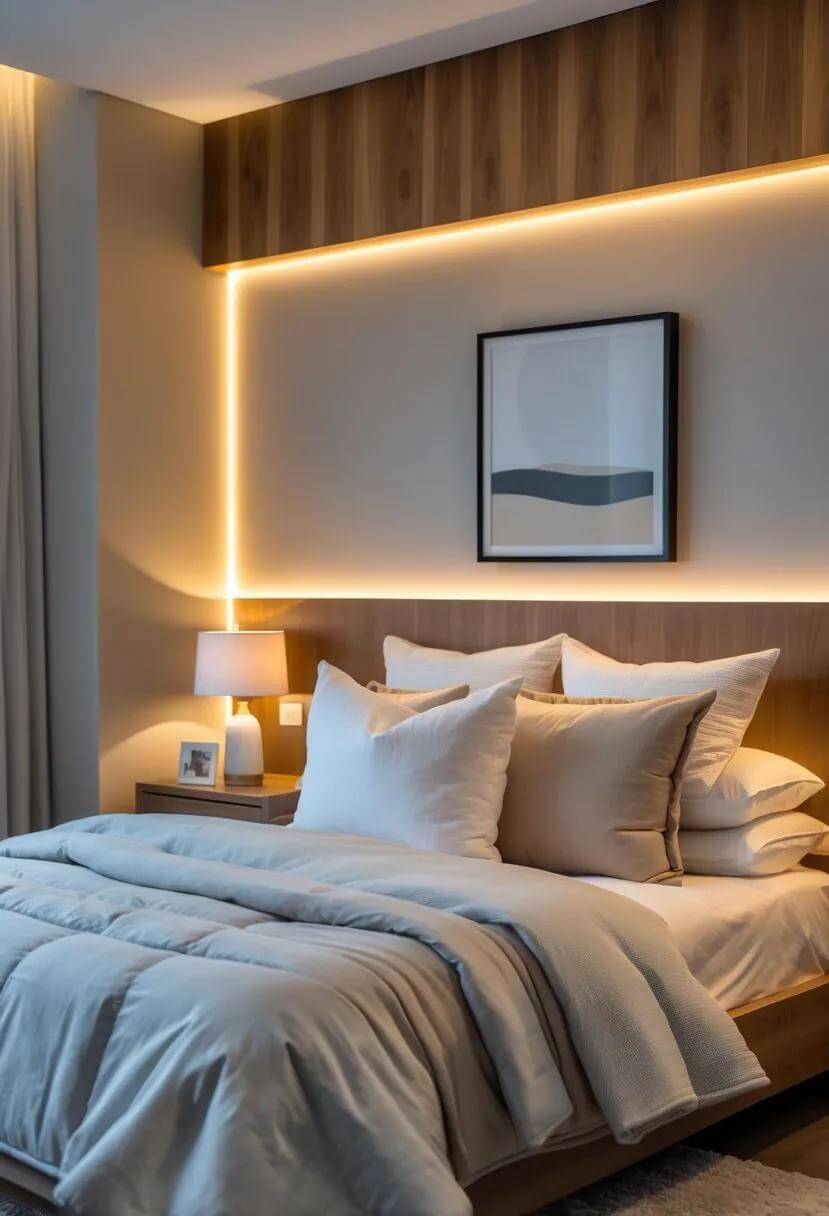
Run a strip along the top and sides of the headboard, or on the wall directly behind it. The wall lights up in a soft halo, the room feels instantly like a boutique hotel. Use warm 2700K, COB for a smooth line, and dim it low at night.
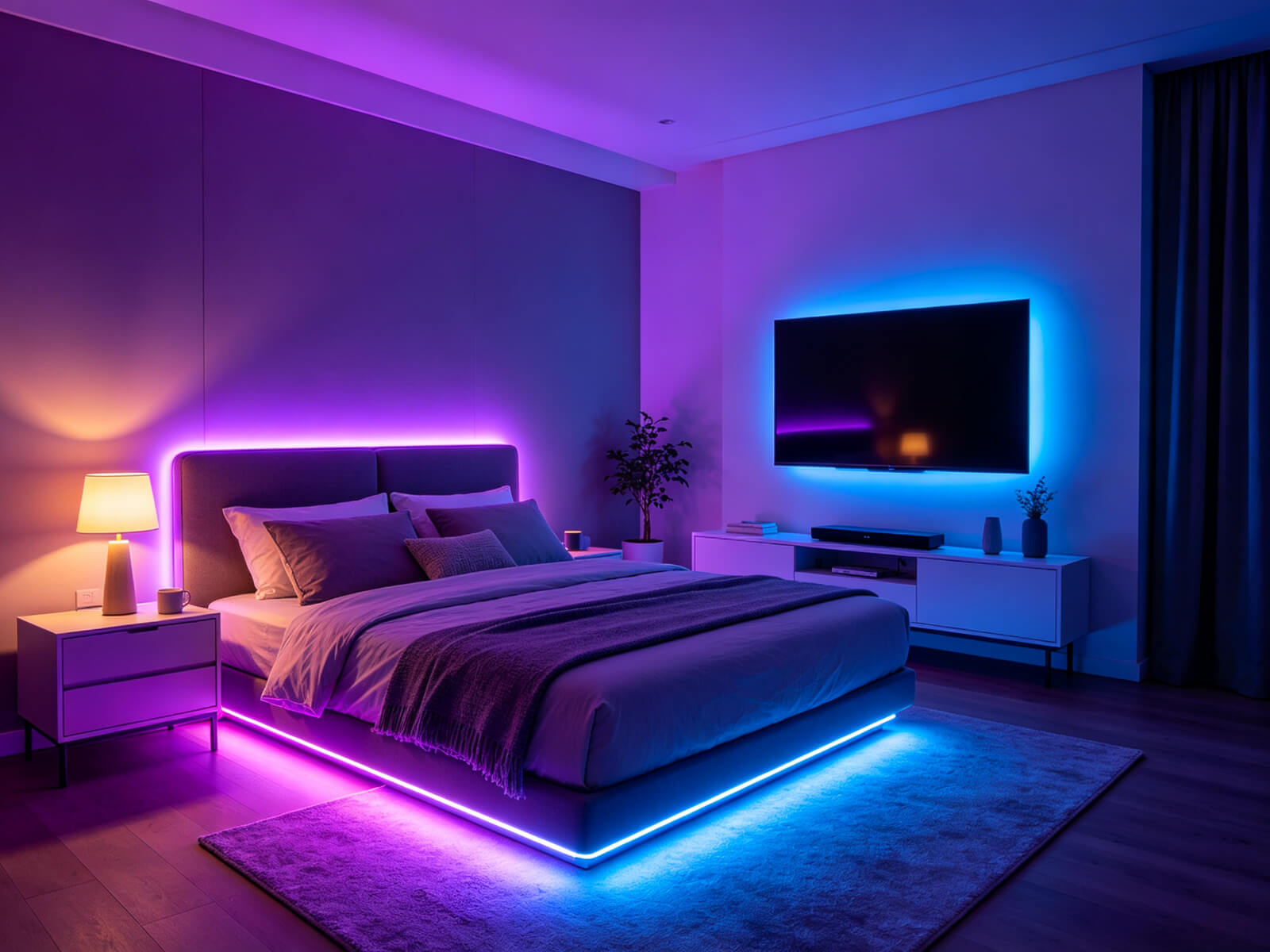
Idea 2 — Under-bed floating glow
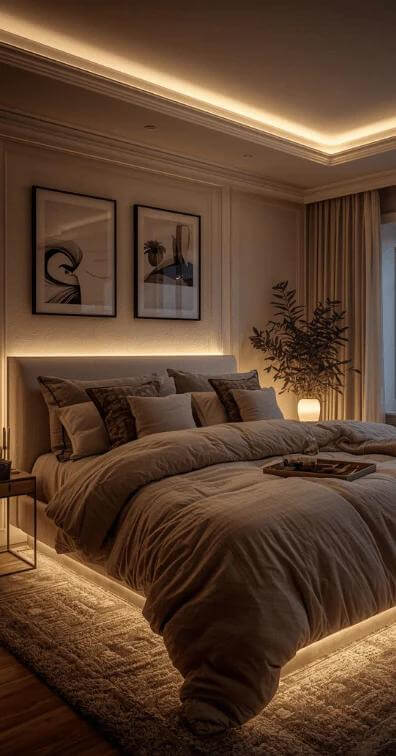
Stick strips along the underside of the bed frame legs or platform. At night the bed appears to float, and the soft uplift on the floor doubles as a safe night-light for getting up. Perfect for kids' rooms too.
Idea 3 — Ceiling cove / perimeter glow
Run strips where the wall meets the ceiling (in a cove, on crown molding, or above a dropped ceiling). The whole ceiling washes with warm light, making the room feel taller and larger. This is the most “hotel” option and works beautifully as the only light source in the evening.
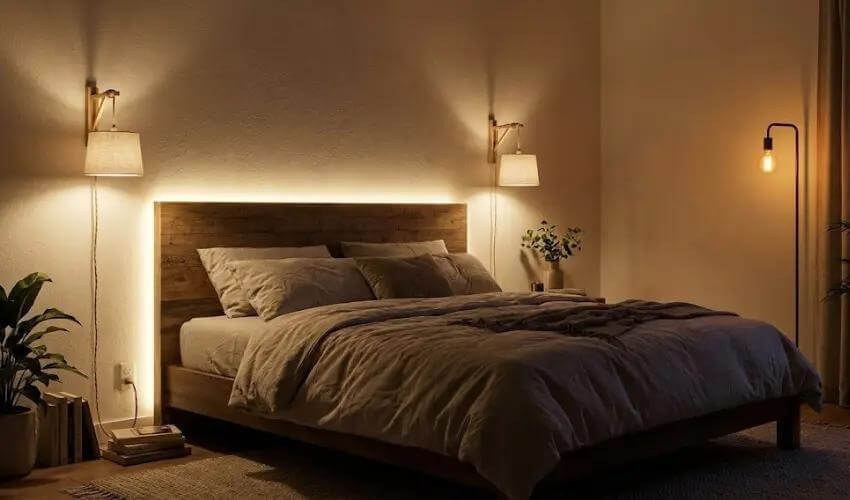
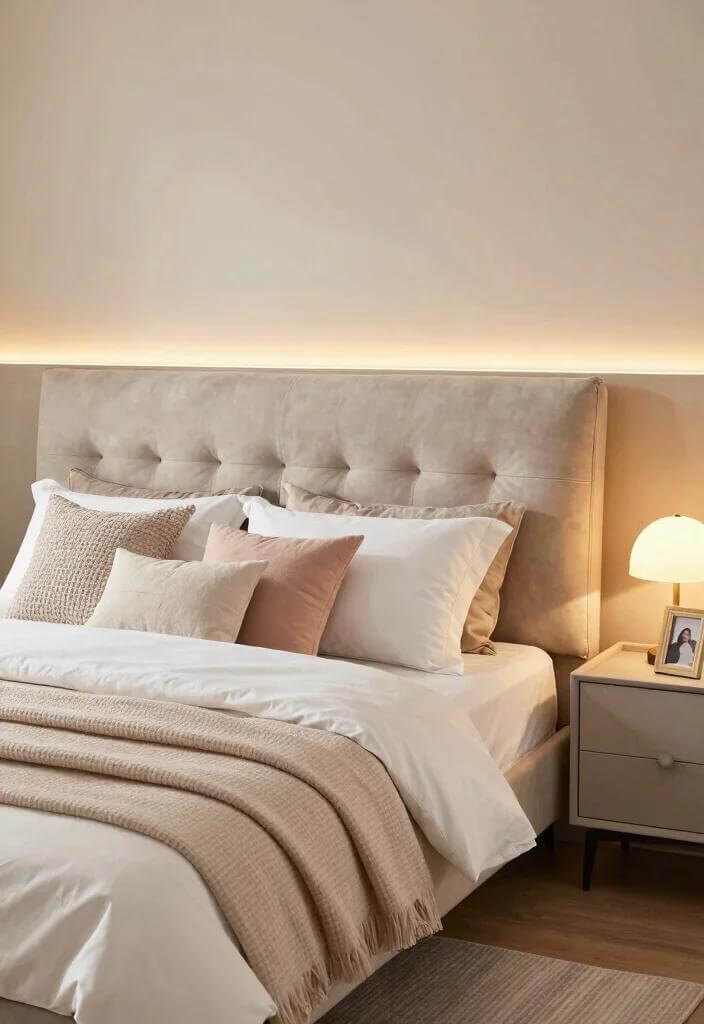
Idea 4 — Soft upholstered headboard backlight
For a padded or upholstered headboard, run the strip along the back edge. It reads as a soft, diffused halo rather than a hard line — very calming, very “spa”.
More placement ideas (5–15)
Wardrobe / closet
Strips above the hanging rail and under shelves mean you never fumble in the dark. Motion-activated for auto-on when the door opens.
Dresser / vanity mirror
Strip behind the mirror at 4000K CRI 90+ gives flattering, shadow-free light for makeup and shaving.
Under floating shelves
Soft glow under each shelf lights books and decor without harsh overhead light.
Window frame outline
Outline the window perimeter for a dramatic, architectural look at night — warm inside, cool city outside.
Behind the TV / media wall
Bias lighting reduces eye strain during late-night shows; warm 2700K avoids the blue-TV effect.
Above the vanity / toe kick
Strip along the baseboards or toe kick acts as a gentle night-light for late bathroom trips.
Inside a bookshelf
Back-light each shelf cubby to turn a bookcase into a feature wall.
Canopy / four-poster bed
Run strips along the canopy frame edges for a dreamy, cocoon-like glow.
Behind wall art / gallery
Back-light a framed print to make it pop and add depth to a plain wall.
Under the crib / changing table
Warm red or 2700K dim strip lets you check on a baby without turning on bright lights.
Desk backlight
Strips behind the monitor or desk shelf reduce screen glare and make a home office cozy in the evening.
Headboard reading nook
A dimmable strip above the reading corner gives enough light for a book without lighting the whole room.

4. Warm White vs RGB: Which One for Sleep?
RGB strips are fun — until you realize you almost never leave them on blue or green at night. Here is the honest split:
| Setup | Najlepšie pre | Sleep-friendly? | When to choose |
|---|---|---|---|
| Warm white 2700–3000K | Everyday mood, reading, sleeping | Yes — very low blue light | Your default. Buy this first. |
| Tunable white (2700K–6500K) | People who want to dim and tune through the day | Yes at the warm end | If you want one strip for morning + night. |
| RGB / RGBW | Accent, parties, movie nights, kids | Only on warm red/orange settings | Add a second strip if you want color; do not rely on RGB for sleep light. |
Rule of thumb: spend your budget on a good warm-white strip for the everyday glow, then add a cheaper RGB strip only if you specifically want color accents. Blue and green light at night suppresses melatonin and delays sleep — keep those colors for daytime or movie nights.
5. 2700K vs 3000K: The Sleep Question
The two warmest color temperatures come up constantly in bedroom discussions. Here is the straight answer:
| 2700 tis | 3000K | |
|---|---|---|
| Look | Candlelight / amber, very warm | Warm white, slightly brighter / whiter |
| Najlepšie pre | Pure relaxation, sleep mode, evening | Bedroom + dressing + reading where you need a little clarity |
| Blue light | Very low | Nízka |
| Feel | Cozy, intimate, hotel-like | Warm but still functional |
| Choose it if | You want maximum relaxation | One strip must also light getting dressed |
Either is sleep-friendly. If you can only pick one and the bedroom is mainly for sleeping, 2700 tis. If the room doubles as a dressing area, 3000K. For a deeper dive, our 2700K vs 3000K guide covers the full comparison.
6. Installation: Glow, Not Glare
The difference between a cheap-looking install and a designer one comes down to four details:
Hide the strip
Mount it where you never see the strip itself — behind a headboard lip, inside a cove, under a shelf overhang. Light bounces, the strip disappears.
Use a diffuser channel
Where the strip must be visible (edges, thin coves), run it in an aluminum channel with a frosted cover to kill dots and hotspots.
Dim it low
Start at 10–30% brightness. The same strip at full power looks harsh; dimmed, it looks expensive.
Power safely
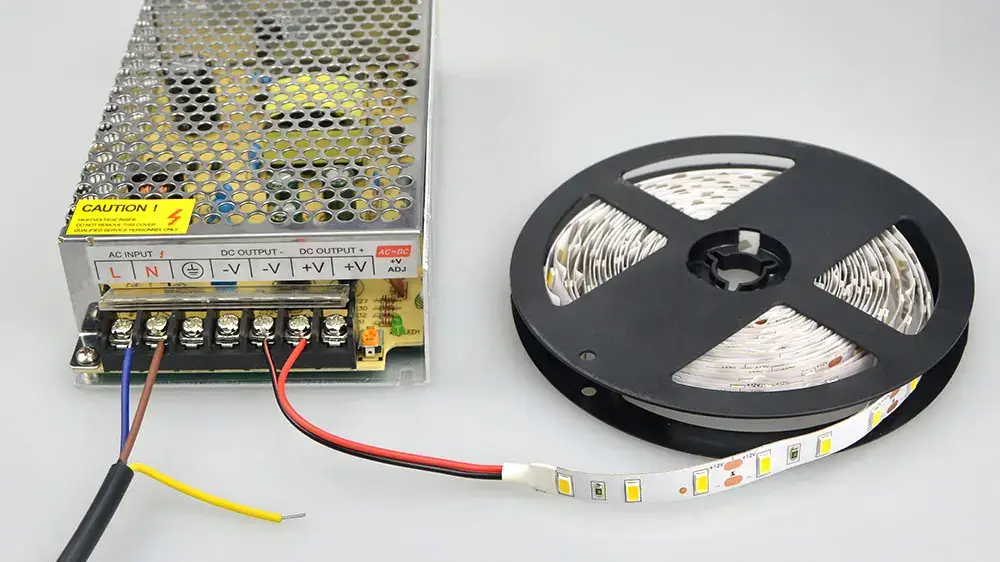
Use a certified 12 V driver (UL listed), never exceed its wattage (leave 20% headroom), and keep the junction box accessible.
7. FAQ — Bedroom LED Strip Lights
▶Can I leave LED strip lights on all night?
Yes — 12 V LED strips are low-voltage, cool-running and safe to leave on. Set them to 2700K at low brightness as a night-light. Avoid blue, green or cool-white at night because they suppress melatonin. A strip uses only 10–24 W, so the electricity cost is negligible.
▶Do LED strip lights get hot or cause a fire?
No — quality 12 V strips run cool to the touch and use certified drivers. They cannot overheat like halogen bulbs. The two real risks are cheap uncertified power supplies and overloading a driver beyond its wattage. Buy UL/CE listed drivers and keep total strip wattage at or below 80% of the driver rating.
▶Where should I put LED strips in a bedroom?
The top three spots are: behind the headboard (halo glow), under the bed frame (floating effect + night-light), and along the ceiling cove (whole-room ambient glow). Add strips in the wardrobe, under shelves and around the vanity for function.
▶How many LED strips do I need?
Plan for one 5 m roll per zone: headboard (5 m), bed frame (3–5 m), ceiling perimeter (varies by room). A typical bedroom uses 10–15 m total. For runs over 5 m, wire from both ends or step up to 24 V to avoid voltage drop — see our napäťový vodič.
▶Are LED strips safe to touch / for kids?
Yes — 12 V SELV (safety extra-low voltage) is harmless to touch, even for children. Keep the driver out of reach and use a fused, certified adapter. For nurseries, choose 2700K warm white and keep strips out of climbing reach.
▶Can I install LED strips myself, or do I need an electrician?
You can install them yourself. 12 V strips are self-adhesive and plug into a wall adapter — no wiring, no electrician. The only electrical work is plugging the driver into a wall socket. For permanent in-ceiling or in-wall installs, use an aluminum channel and have a handyman tidy the cabling.
▶Do LED strips ruin the wall or furniture when removed?
Quality 3M adhesive strips peel off cleanly from painted walls and wood without damage. For rented homes, test a small spot first, or use aluminum channels screwed/clipped in place rather than adhesive direct to the wall.
8. Recommended Bedroom LED Products
For a bedroom glow that lasts, start here — all factory-direct from KayTai, tested and dimmable:

Build Your Bedroom Glow the Right Way
Tell us your room size, where you want the strips and the mood you are after — we will spec the strip, driver, channels and controller, and send a quote.
Contact KayTai for a Quote →Sourcing more than a single room? Read our complete guide to finding a professional LED strip supplier in China for OEM/wholesale quantities.