Hur man hittar en professionell LED Strip-leverantör i Kina: Den kompletta 2026-inköpsguiden
Searching for a professional LED strip supplier in China can feel like walking into a market with thousands of vendors — all of them claiming to be the best, few of them able to prove it. Get it right, and you get reliable quality, flexible OEM support and pricing that keeps your margins healthy. Get it wrong, and you are stuck with dim strips, mixed colour bins, delayed shipments — or worse, money sent to a company that was never a factory at all.
This guide gives you the complete, step-by-step sourcing process: how to build and vet a supplier list, which specifications actually matter, how to verify certifications and factory claims, what to ask before ordering, how to test samples, how to pay safely, and how to ship. It is written from the factory floor perspective — the shortcuts and red flags that real Chinese LED strip factories and their best buyers use.

Innehållsförteckning
- 1. Why Source LED Strips from China
- 2. Factory vs Trading Company: Know Who You Are Buying From
- 3. Step 1 — Build Your Candidate List Online
- 4. Step 2 — Research Each Candidate Deeply
- 5. Step 3 — Check the Specs That Actually Matter
- 6. Step 4 — Verify Quality Testing and Certifications
- 7. Step 5 — Contact, Ask Questions, Request Samples
- 8. Step 6 — Test the Sample Like a Pro
- 9. Step 7 — Factory Visit, Video Call or Third-Party Audit
- 10. Payment Terms, Shipping and Incoterms
- 11. Common Sourcing Mistakes to Avoid
- 12. Why KayTai Is the Factory You Are Looking For
- 13. FAQ
1. Why Source LED Strips from China
China produces the overwhelming majority of the world’s LED strip lighting — the industry clusters in Guangdong (Zhongshan, the “Lighting Capital”, Shenzhen and Guangzhou), where the full supply chain lives within a few hours’ drive: LED chips, FPCB, resistors, silicone, controllers, aluminum profiles and testing labs. That concentration creates five concrete advantages for buyers:
Cost-effective
Lower manufacturing and labour costs mean factory-direct pricing that is hard to match elsewhere.
Scalable production
Mature factories run SMT lines and ageing racks in volume — from 50 m samples to container loads.
OEM/ODM customization
Length, PCB width, CCT, density, voltage, IP rating, logo printing — most factories customize to spec.
Global shipping
Express (3–7 days), sea and rail freight reach America, Europe, the Middle East and Asia.
Export-grade certifications
CE, RoHS, UL, ETL, CB, LM80 and ISO 9001 production are routine for serious export factories.
Complete ecosystem
Controllers, drivers, aluminum profiles and connectors from the same cluster — one-stop sourcing.
If you are new to LED strips entirely, start with the complete LED strip light guide, then return here for the supplier hunt. And if you specifically need aluminum profiles to go with your strips, the process in how to source LED aluminum profiles from China follows the same logic.
2. Factory vs Trading Company: Know Who You Are Buying From
The single most important question to answer before anything else: are you talking to the factory, or to a trading company? China has tens of thousands of LED strip trading companies — many with polished websites — that buy from factories and resell. There is nothing wrong with a good trading partner, but you should know which one you are dealing with, because it changes pricing, customization ability, quality control and accountability.
| Aspect | Factory (manufacturer) | Trading company |
|---|---|---|
| Production | Owns SMT lines, soldering, coating, testing and packaging | Buys finished goods from factories; no production floor |
| Pricing | Factory-direct; most competitive at volume | Adds a margin on top of factory prices |
| Anpassning | Direct OEM/ODM: PCB, density, CCT, voltage, IP, logo | Limited; must relay your spec to the factory |
| Quality control | In-house testing, ageing, traceable reports | Depends on the factory behind the scenes |
| Lead time control | Full control of production schedule | Depends on factory availability |
| Accountability | Responsible for defects directly | Layered responsibility can slow problem-solving |
| When it makes sense | Volume, customization, long-term partnership | Small mixed orders, quick trades, market access |
How to verify: ask for production photos and a live video call to the production floor, check the business licence, and simply ask “are you the manufacturer?” followed by “May I see your SMT or coating line on video?” — a genuine factory can always show you. Our own factory story — SMT, soldering, ageing and packaging — is documented step by step in hur LED-remsljus tillverkas.
3. Step 1 — Build Your Candidate List Online
Start with a wide net, then narrow down. Three channels produce the best candidate lists for LED strip suppliers:
Google & industry searches
Keywords such as “LED strip manufacturer in China”, “LED strip factory Shenzhen”, “LED strip supplier Guangdong” surface the active players.
B2B marketplaces
Alibaba, Made-in-China and Global Sources list thousands of suppliers. Filter for verified suppliers, years on platform, response rate and Trade Assurance.
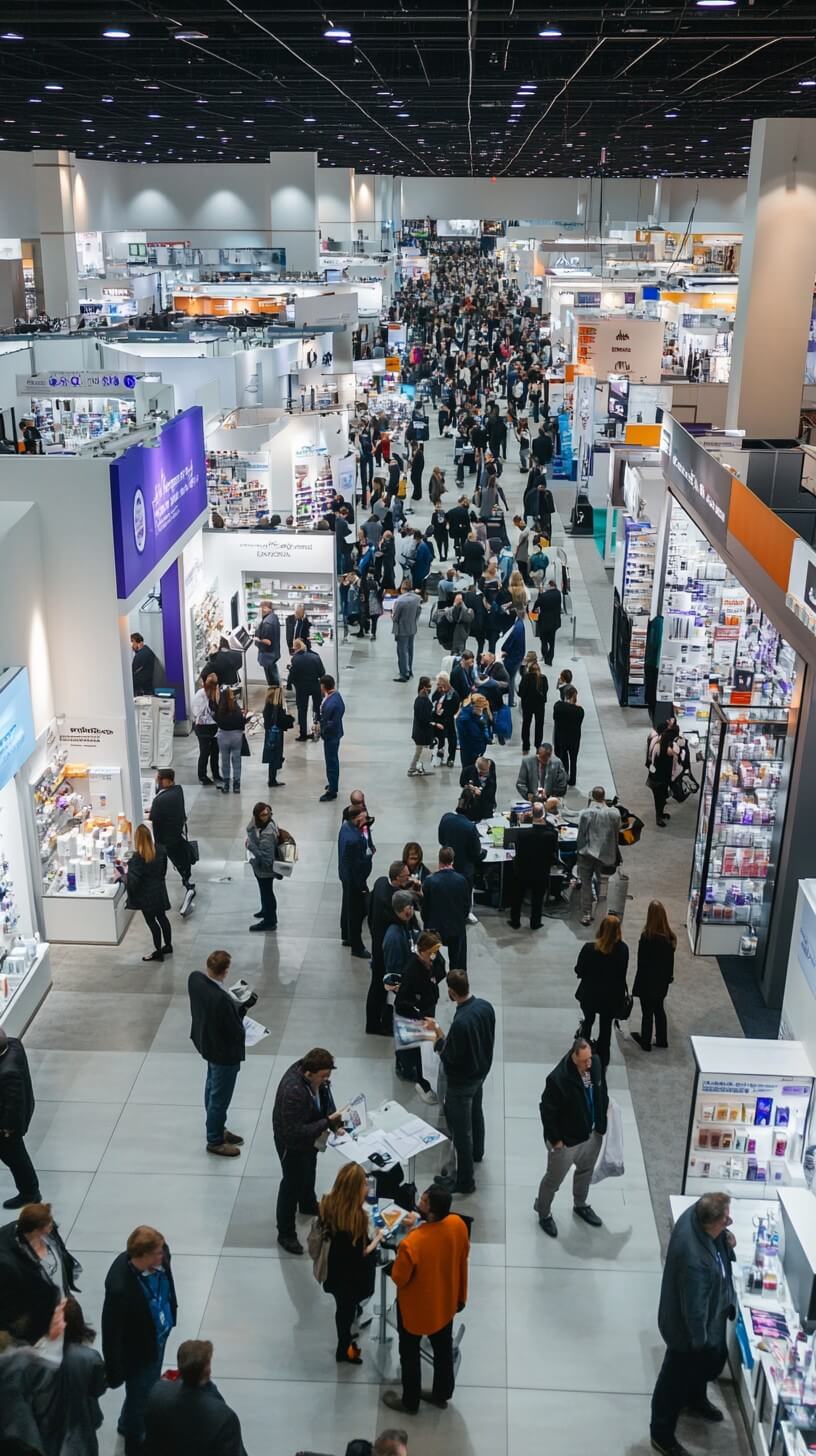
Tradeshows
Guangzhou International Lighting Exhibition (GILE) is the largest lighting fair in Asia — the fastest way to compare suppliers face to face.
On B2B platforms, use the filters deliberately: verified manufacturer, trade assurance, several years of platform history and a high response rate. Add promising companies to a simple spreadsheet — name, website, contact, platform history, product range, MOQ and notes. A good candidate list is 10–20 companies; you will compare only the strongest three to five later.
4. Step 2 — Research Each Candidate Deeply
A professional factory shows its hand publicly. Before you contact anyone, spend 30 minutes on their website and online presence:
Website quality & content
Updated product pages, a real blog with recent dates, downloadable catalogues and an FAQ section signal an active, professional company.
Photos and videos
Real production-floor photos and process videos (SMT, soldering, testing) are strong evidence of a factory. Be wary of stock photography.
Plats
Guangdong — Zhongshan, Shenzhen, Guangzhou — hosts the LED manufacturing cluster. A listed Guangdong address is the industry norm.
Domain age & reviews
Check domain registration age (WhoIs) and search “
Social proof
LinkedIn company page, YouTube channel, trade-show photos and client project cases all indicate an operating business, not a shell site.
Certifications on display
Factories that export show CE, RoHS, UL/ETL, CB and ISO certificates. Displaying them publicly is a good sign — verifying them comes in Step 4.
This is also the stage to check colour consistency credentials — one of the most under-rated quality signals in the industry. A supplier that openly discusses MacAdam ellipse steps and binning control is usually ahead of one that only talks price. Our explainer on LED strip colour consistency tells you exactly what to look for.
5. Step 3 — Check the Specs That Actually Matter
Before you can judge a supplier, you need to know what a good specification looks like. These are the numbers to compare across candidates — not just brightness, but the details that decide whether the strip will actually perform in your market.
CCT (colour temperature)
Range typically 1800K–6500K. Match to your application: 2700–3000K for hospitality, 4000–5000K for offices, 5000–6500K for industrial.
CRI (colour rendering)
CRI 80+ is the baseline for retail and hospitality; Ra 90+/95+ matters for jewellery, makeup and art displays.
IP rating
IP20/IP40 indoors, IP54 for humid indoor, IP65 for outdoor, IP67/IP68 for pools and fountains. Confirm the test report exists.
LED-densitet
More LEDs per metre means smoother, dot-free light. 30–60 LEDs/m for accents, 120–720 LEDs/m or COB for premium even light.
Chip size & PCB
Chip size (2835, 3528, 5050) affects brightness and efficiency. Thicker copper PCB (2oz+) drops less voltage and runs cooler.
Voltage & length
12V/24V for most projects, 48V for long runs. Standard 5 m reels; some factories offer longer or custom lengths.

Need help reading a spec sheet? Our LED strip specs explained guide breaks down every number, and LED colour temperature & CRI covers the two most misunderstood specifications in detail.
6. Step 4 — Verify Quality Testing and Certifications
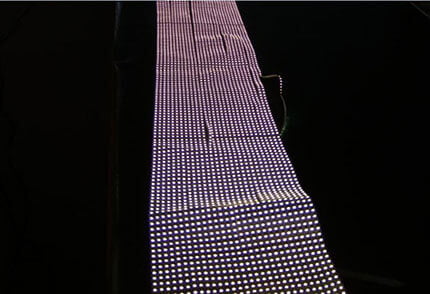
A claim is not proof. Serious factories run their strips through physical test equipment, and they can show you the reports. Ask which of these tests the product has passed — and request the reports:
Photometric (spectrum) test
Integrated-sphere measurement of lumen output, CCT, CCT consistency and CRI — the core performance proof.
Temperature & humidity chamber
Verifies performance across hot, cold and humid conditions — essential for outdoor and sauna-adjacent use.
IP water tests (IPX3–IPX8)
Spray, splash, jet and submersion tests that verify the claimed IP rating.
UV weathering & salt spray
Checks resistance to sunlight degradation and corrosion — important for coastal and outdoor projects.
Mechanical tests
Tensile (pull), drop/impact (IK) and vibration tests confirm the strip survives transport and handling.
Ageing / burn-in
Strips run at rated power for hours to catch early failures before shipment — a mark of quality control.
On the certification side, match the certificates to your destination market:
| Certification | What it means | Target market |
|---|---|---|
| CE-EMC / CE-LVD | Electromagnetic compatibility and electrical safety per EU directives | European Union |
| RoHS | Restriction of hazardous substances (Pb, Hg, Cd, etc.) | EU and most export markets |
| UL / ETL | Electrical safety certification by US/NA testing labs | North America |
| CB | International safety certification for multi-market acceptance | Global / market entry |
| LM80 | Lumen depreciation test method for LED packages | Quality benchmark, worldwide |
| ISO 9001 | Quality management system certification for the factory | Trust marker, worldwide |
Verification tip: certificates can be copied. Ask for the certificate number and check it directly with the issuing body, or ask for a test report from a recognised lab. A factory that hesitates to share test reports is a red flag. For a deeper look at what separates good from bad, read what makes a high-quality LED strip.

7. Step 5 — Contact, Ask the Right Questions, Request Samples
Narrow your list to 3–5 strong candidates and contact each one with the same information: your market, your application, your target specs and your estimated volume. Equal information makes comparison fair. Then ask these questions in your first exchange:
Are you the manufacturer?
Plus: production capacity, number of employees, monthly output — scale tells you if they can serve you at volume.
What is your MOQ?
Some factories start at 10 m for samples and 100–500 m for production. Flexible MOQs reduce your trial risk.
What can you customize?
PCB width and colour, density, CCT, voltage, IP rating, reel length, logo printing — the scope of OEM/ODM matters.
Do you offer samples?
Free or paid sample policy, and how long samples take. Sample quality is your best early signal.
Which test reports can you provide?
LM80, IP68, CE-EMC/LVD, ETL, CB — request the actual documents, not promises.
Payment terms?
Expect 30% deposit / 70% balance against B/L copy for first orders; never send full prepayment to an unverified supplier.
Lead time and warranty?
Production lead time, shipping time, and warranty terms (typical: 3–5 years from real factories; check responsiveness).
What else do you supply?
Controllers, drivers, aluminum profiles, connectors — one-stop supply saves shipping and compatibility headaches.
Keep the first email short and technical. A vague, price-only reply is a poor sign; a supplier that asks clarifying questions about your application understands its product. Here is a proven starter template:
Subject: OEM inquiry — 24V COB LED strip for [your market]
Hello [Company],
We are an importer based in [country] supplying LED lighting to [retail/commercial] clients. We are currently sourcing [spec: e.g. 24V COB strip, CRI 90+, IP20, 120 LEDs/m, 5 m reels] with an initial order of [volume] and steady reorders.
Could you please confirm: (1) are you the manufacturer? (2) MOQ and sample policy? (3) available certifications and test reports? (4) lead time? (5) payment terms?
Thank you,
[Name] — [Company]
Customization is usually the deciding factor between similar suppliers. If you plan to sell under your own brand, our guide to customizing LED strips (OEM/ODM) lists exactly which parameters a real factory can change.
8. Step 6 — Test the Sample Like a Pro
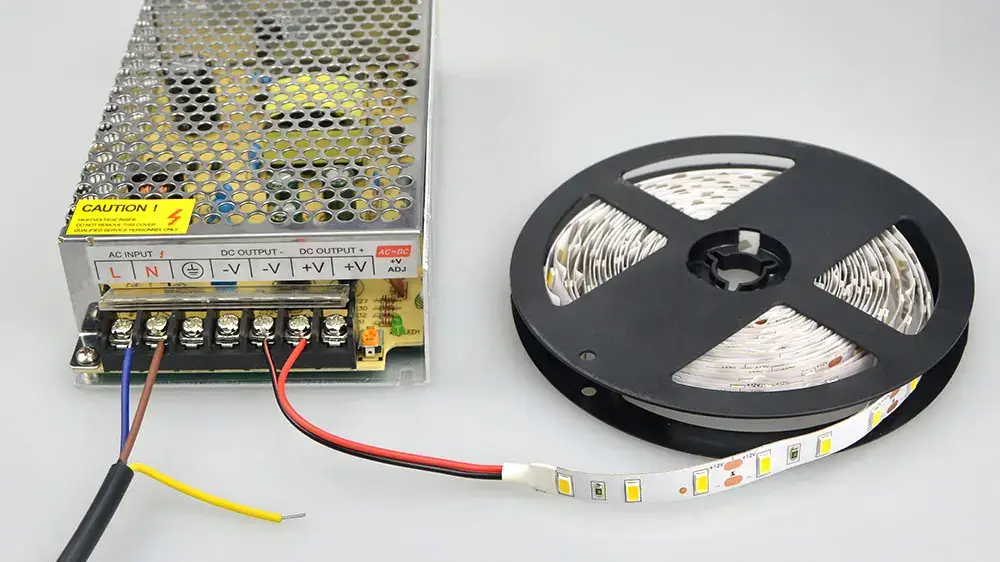
Request the same spec from 3–5 suppliers, then test the samples side by side. Identical specs make the differences visible. Four tests give you most of the signal:
Spectrum test
Use an integrating sphere (or a spectro-colorimeter) to verify lumens, CCT, CCT consistency and CRI against the supplier’s claims.
Voltage drop test
Power a full reel at rated voltage and measure the far-end voltage. Thicker copper PCB drops less — better construction wins.
Overvoltage test
Feed a 24V strip with ~30V and see how long it survives. Better materials and protection last longer.
IP / water test
For a waterproof claim, do the matching test: spray IP65, submerge IP68 — and confirm the ends and cut points are sealed.
Also inspect the physical details: even solder joints, clean cut lines, consistent brightness along the reel, correct binning (no visible colour shift between sections) and genuine adhesive tape. A good primer on reading these physical quality signals is inside LED strip quality control.
9. Step 7 — Factory Visit, Video Call or Third-Party Audit
Before committing to production, confirm the factory is real and well run. You have three options, in increasing rigour:
Live video call
Ask for a real-time tour of the SMT line, soldering area, ageing racks and packaging. Time-stamped and spontaneous beats staged photos.
Factory visit
If you or a trusted agent visits Guangzhou/Zhongshan/Shenzhen, walk the floor: line organisation, 5S, worker density, test equipment.
Third-party audit
An SGS/BV/Intertek or similar pre-shipment inspection confirms capacity, quality control and compliance — especially for first large orders.
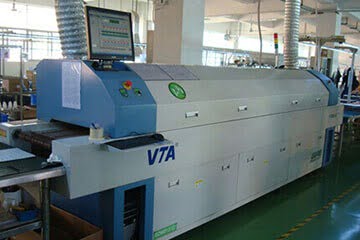
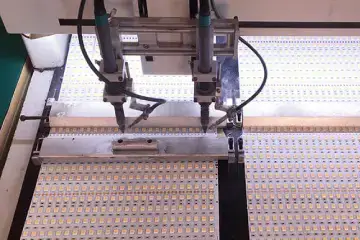
Communication quality during these calls matters too: clear technical English, honest answers about limitations, and a willingness to show the full floor are the marks of a professional partner.
10. Payment Terms, Shipping and Incoterms
Payment security is where sourcing goes wrong most often. The industry-standard structure for first orders is 30% deposit to start production, 70% balance against a copy of the Bill of Lading. Here is how to protect yourself at every step:
30% / 70% T/T
Deposit to start production; balance against B/L copy before shipment. Never pay 100% in advance to an unverified supplier.
Trade Assurance / escrow
Alibaba Trade Assurance protects eligible platform orders. Corporate bank transfer to the company account is the norm.
Letter of Credit
Irrevocable L/C at sight for large orders (typically $50k+) — the bank releases payment only against compliant documents.
Red flags
Personal accounts, full prepayment demands, no business licence, pressure to wire fast — these are classic fraud patterns. Stop and verify.

Shipping choices depend on volume and urgency:
| Metod | Delivery time | Bäst för |
|---|---|---|
| Express (DHL, FedEx, UPS) | 3–7 days | Samples, small orders, urgent reorders |
| Air freight | 7–15 days | Medium orders with time pressure |
| Sea freight | 20–40 days | Container volumes — lowest per-unit cost |
| Rail freight | 15–35 days | Countries connected by land routes |
Finally, agree the Incoterms clearly — FOB (buyer handles ocean freight from the Chinese port), EXW (buyer arranges everything from the factory door) and CIF (seller arranges freight and insurance) are the three you will see most. Ambiguity here causes the most invoice disputes.
11. Common Sourcing Mistakes to Avoid
Buying on price alone
The cheapest strip usually means thinner copper, mixed LED bins and weaker adhesive — the price difference appears in returns.
Ignoring colour consistency
Unbinned or loosely binned LEDs shift colour reel to reel. Insist on a tight MacAdam ellipse (3-step) where colour matters.
Not sharing your application
Indoor vs outdoor vs pool changes voltage, IP rating and PCB. A factory that knows the application builds the right strip.
Skipping the sample test
An untested sample is a gamble. Run the spectrum, voltage drop and IP checks before you commit to volume.
Forgetting the lumen spec
Brightness is lumens, not just LED count or wattage. Specify target lumens/metre and verify with the photometric test.
Full payment in advance
The single most common cause of sourcing fraud. Use 30/70, escrow or L/C until trust is earned over several orders.
One more mistake is subtle: ignoring the price vs value-for-money balance. A mid-price strip with thick PCB and high CRI often out-earns a cheap strip that fails in the field.
12. Why KayTai Is the Factory You Are Looking For
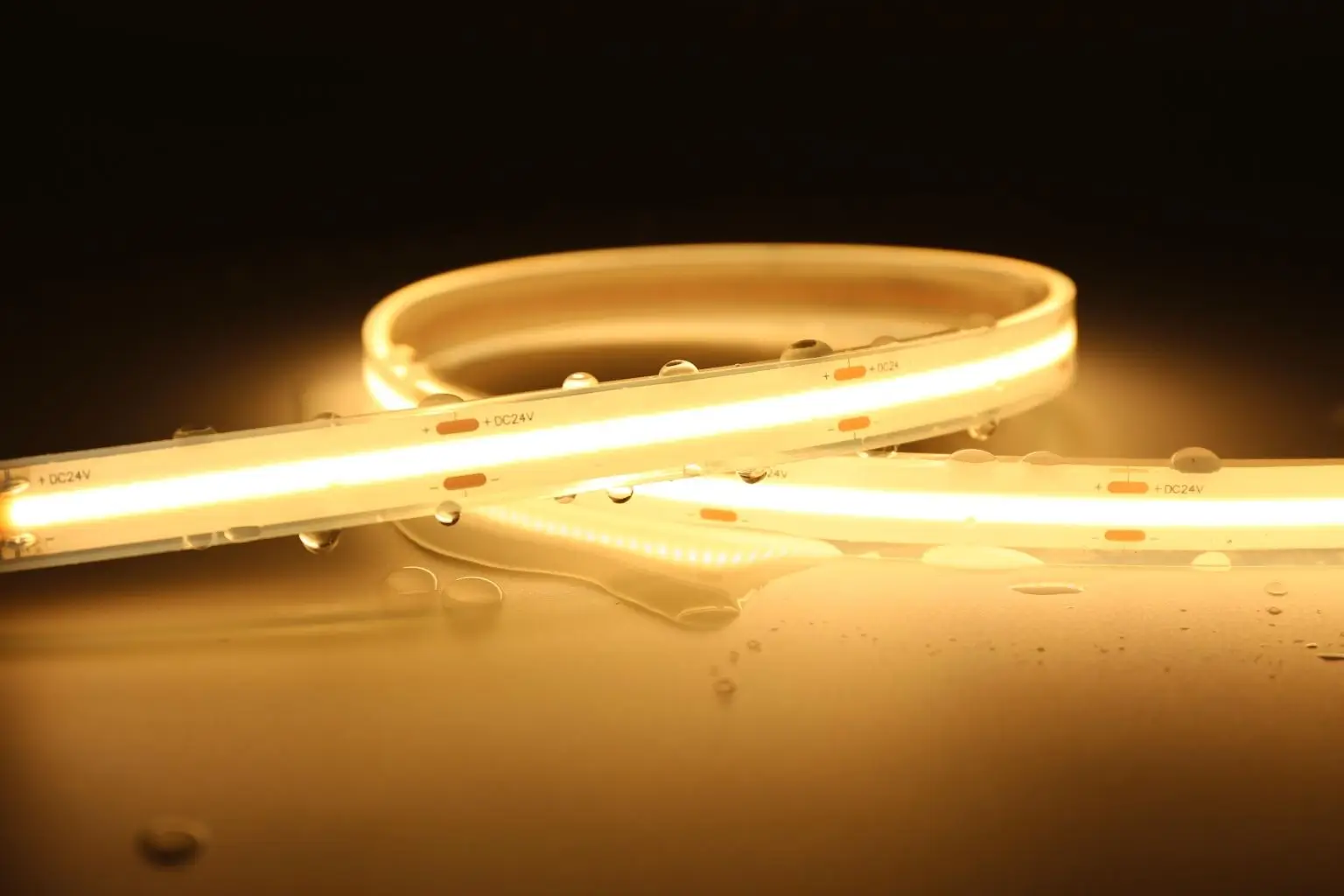
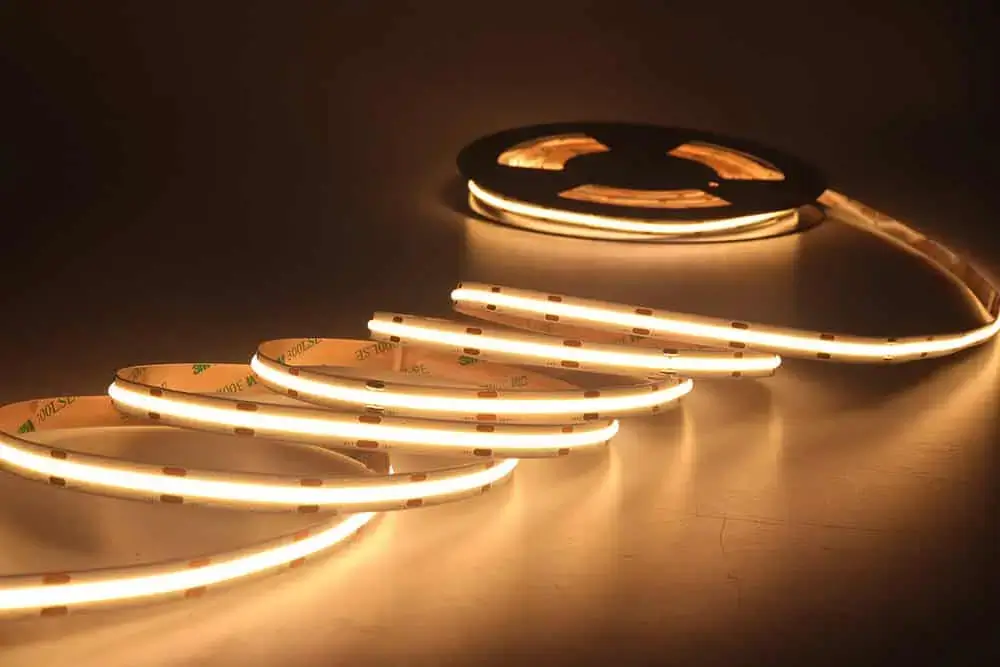
KayTai is a Guangdong LED strip manufacturer — a factory, not a trader. We run the full production chain in-house: SMT placement, soldering, coating and waterproofing, ageing tests, quality inspection and packaging, so the quality signals described in this guide are verifiable end to end. If you follow the checklist above, here is what you will find:
Factory-direct
Full in-house production in Guangdong with OEM/ODM customization: PCB width, density, CCT, voltage, IP rating, reel length and logo printing.
Certifications & test reports
Export-oriented certifications for EU and North America, with test reports available on request.
Flexible MOQ & samples
Low MOQs and quick sampling so you can validate quality before committing to volume.
Straightforward terms
Transparent pricing, standard 30/70 payment terms, and honest lead times.
Whatever you source, the same diligence protects you: verify, sample, test, audit. Our detailed buying guide sourcing LED strip lights from China och how to choose LED strips cover the companion topics, and for waterproof projects read finding the right waterproof LED strips.
13. FAQ
▶How do I know if a Chinese LED strip company is a real factory?
Ask directly, then verify: request a live video call to the production floor (SMT, soldering, ageing, packaging), ask for the business licence, and check for production photos and process videos on their site. A genuine factory can always show you its lines. Cross-check with a third-party audit (SGS/BV/Intertek) before large orders.
▶What is a safe payment structure for a first order?
The industry standard is 30% deposit to start production and 70% balance against a copy of the Bill of Lading. For larger orders, an irrevocable Letter of Credit at sight, or Alibaba Trade Assurance on platform orders, adds bank-level protection. Never pay 100% in advance to an unverified supplier, and never wire to a personal account.
▶What is the typical MOQ for LED strip factories in China?
It varies: many factories start at 100–500 m for production, while some offer trial orders as low as 10 m. Flexible MOQs usually reflect a manufacturer confident in its product — worth asking for explicitly in your first inquiry.
▶Which certifications should a LED strip supplier have?
Match to your market: CE-EMC and CE-LVD plus RoHS for the EU; UL or ETL for North America; CB for broader international acceptance; LM80 reports for lumen-depreciation data. ISO 9001 for the factory itself. Verify certificate numbers with the issuing body rather than trusting logos.
▶How long does LED strip production and shipping take?
Typical production lead time is 5–15 days depending on volume and customization. Express shipping takes 3–7 days, air freight 7–15 days, sea freight 20–40 days and rail 15–35 days. Always confirm the timeline in writing before ordering.
▶Can I order custom LED strips (OEM/ODM) from China?
Yes — customization is a core strength of Chinese LED factories. Real factories can change PCB width and colour, LED density, CCT, CRI, voltage, IP rating, reel length, packaging and print your logo on the PCB. Share your application and target specs, and the factory will engineer around them.
▶Is it safe to import LED strip lights from China?
Yes, when you follow the process: verify the supplier is a factory, check certifications and test reports, test samples, use safe payment terms (30/70, escrow or L/C), and consider a third-party inspection before shipment. The risk profile of importing from China is well understood and manageable.
▶What are the biggest red flags when sourcing LED strips?
Full prepayment demands, personal bank accounts, refusal to share test reports, stock photos instead of real production images, no verifiable business licence, and prices far below the market. Any one of these should stop the conversation until verified.
Ready to Source from a Verified Factory?
KayTai is a Guangdong LED strip manufacturer with full in-house production, export certifications and flexible OEM/ODM. Send us your application, specs and target volume — get a quotation, test reports and samples.
Kontakta KayTai