
Have you ever wondered why some LED strips glow a warm cozy white, others a crisp daylight blue, and still others cycle through millions of colors? The secret is not magic — it is semiconductor physics.
In this guide, we explain in plain English how LEDs produce different colors, why a red LED and a blue LED are built differently, and how manufacturers create white and RGB light from the same tiny chips.
01 Why Do LEDs Come in Different Colors?
An LED produces light when electrons release energy inside a semiconductor. The color of that light depends on how much energy each electron releases — and that depends on the material the LED is made from and the structure of its energy bands.
More energy released = shorter wavelength = bluer light.
Less energy released = longer wavelength = redder light.
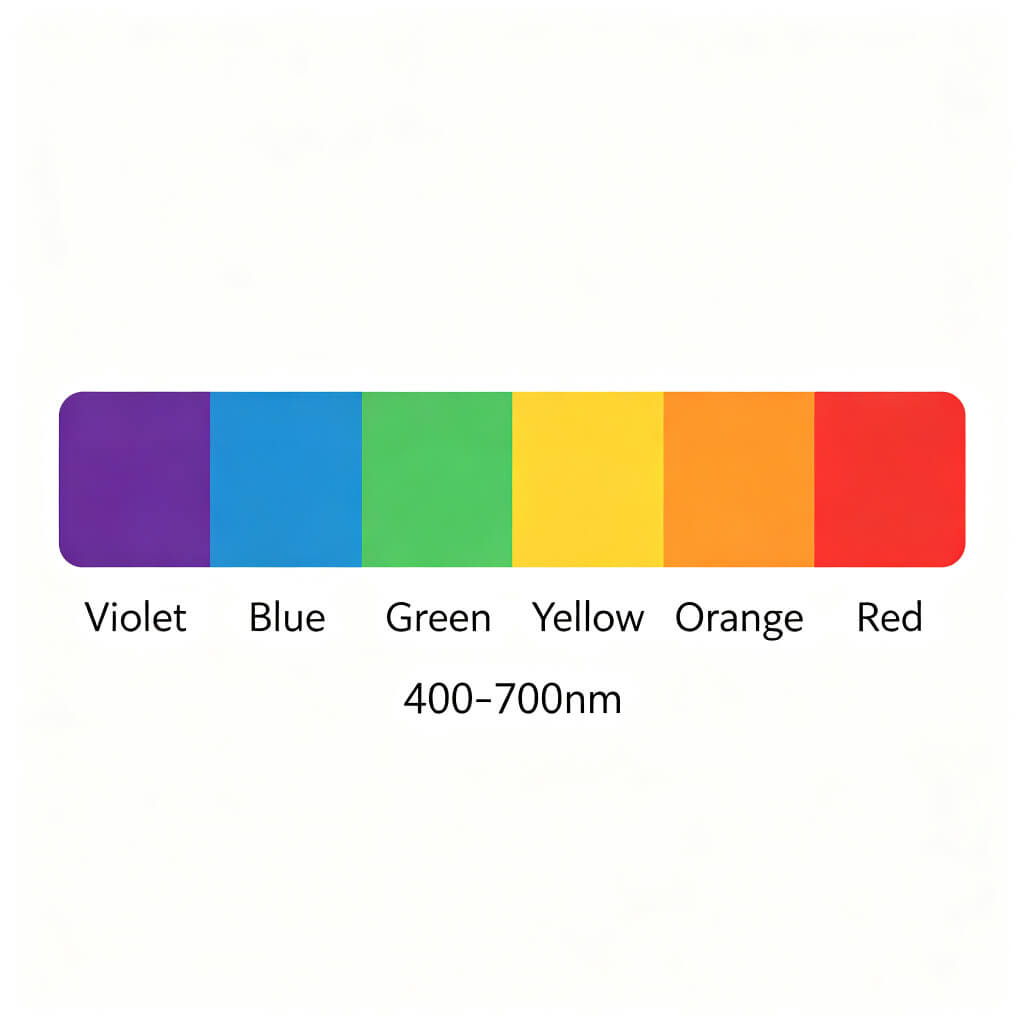
This is why the full visible spectrum — violet, blue, green, yellow, orange, and red — can all be produced by LEDs, simply by choosing the right semiconductor material and design.
See the visible spectrum below: at 400nm you get violet, and at 700nm you get deep red — with every color in between.
02 Energy Bands: The Heart of LED Light
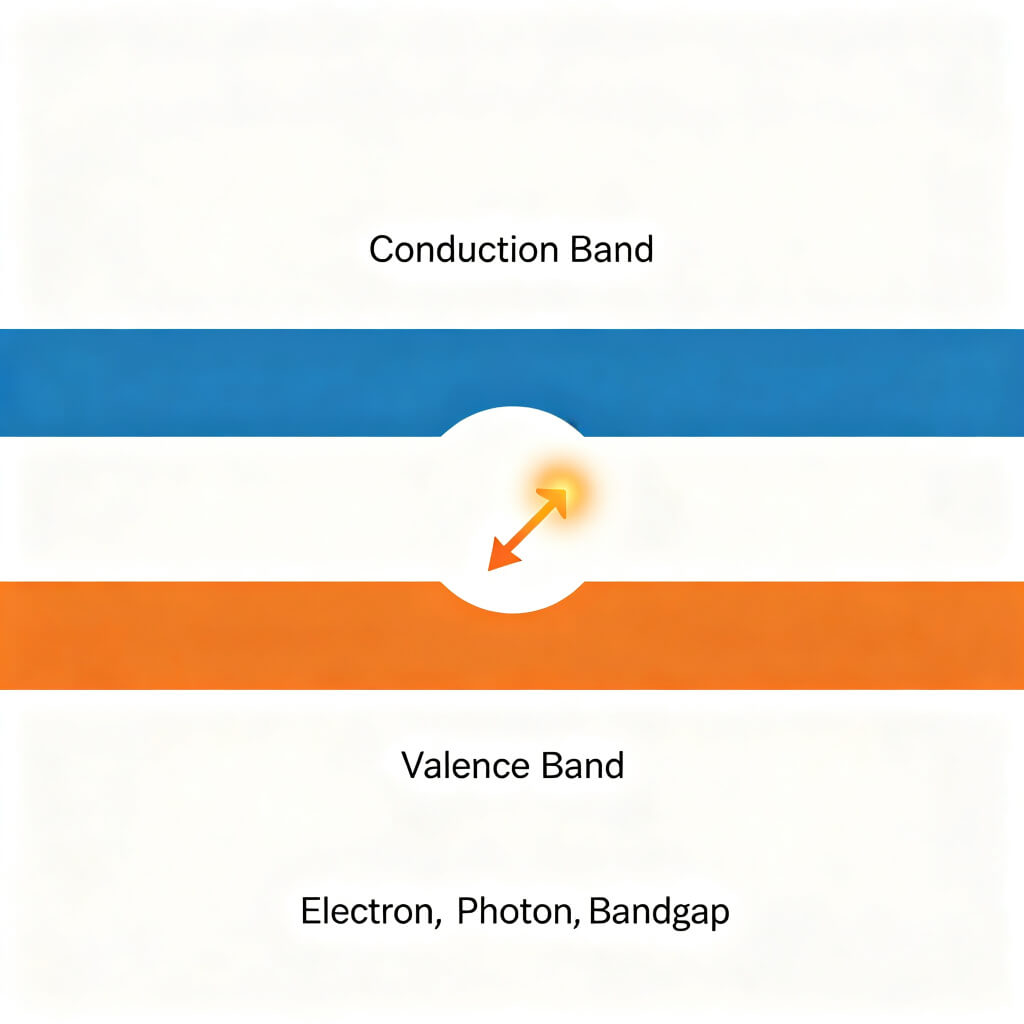
Inside every semiconductor there are two important energy bands:
Valence Band
The highest energy band that is fully occupied by electrons. Electrons here are bound to their atoms and cannot move freely to carry current.
Conduction Band
A higher-energy band where electrons are free to move and carry an electric current. When an electron gains enough energy, it jumps up here.
The gap between these two bands is called the bandgap. Here is what happens when you switch on an LED:
03 How the Bandgap Determines the Color
Here is the key rule: a larger bandgap needs more energy to excite the electron, producing shorter wavelengths (blue/violet); a smaller bandgap produces longer wavelengths (red/orange).
| Color | Wavelength | Band Gap Energy |
|---|---|---|
| Infrared | > 760 nm | < 1.63 eV |
| Red | 610 – 760 nm | 1.63 – 2.03 eV |
| Orange | 590 – 610 nm | 2.03 – 2.10 eV |
| Yellow | 570 – 590 nm | 2.10 – 2.18 eV |
| Green | 500 – 570 nm | 2.18 – 2.48 eV |
| Blue | 450 – 500 nm | 2.48 – 2.76 eV |
| Violet | 400 – 450 nm | 2.76 – 3.10 eV |
| Ultraviolet | < 400 nm | > 3.10 eV |
So a blue LED and a red LED are not the same chip painted differently — they are made from different semiconductor materials with different bandgaps.
04 Semiconductor Materials and Their Colors
LED manufacturers choose specific semiconductor compounds to hit each color. Here are the most common materials used today:
| Color | Common Semiconductor Materials |
|---|---|
| Red | AlGaAs, GaAsP, AlGaInP, GaP |
| Orange / Amber | GaAsP, AlGaInP |
| Yellow | GaAsP, AlGaInP |
| Green | GaP, InGaN, GaN |
| Blue | InGaN (zinc selenide / silicon carbide as substrate) |
| Violet | InGaN |
| White | Blue InGaN + yellow phosphor, or RGB combination |
Notice that indium gallium nitride (InGaN) powers blue — the breakthrough material that made white LEDs possible and won the 2014 Nobel Prize in Physics.
For strip lights, these chips are packaged into SMD components like 5050, 2835, or 3030. Learn more in our guide to LED CMS dans les bandes lumineuses LED.
05 From Single Color to White and RGB Light
LEDs do not naturally emit white light. To create white and millions of colors, manufacturers use two clever methods:
Blue + Phosphor = White
A blue InGaN chip is coated with a yellow phosphor. The blue light excites the phosphor, which emits yellow — together they appear as white light. Adjust the phosphor to shift between warm and cool white.
RGB Mixing = 16M Colors
Three chips — red, green, and blue — are packed into one LED. By mixing the three in different proportions, an RGB LED can produce roughly 16 million different hues.
What This Means for LED Strips
Single-color strips use one fixed chip color — the most reliable and consistent option for warm white or a specific color.
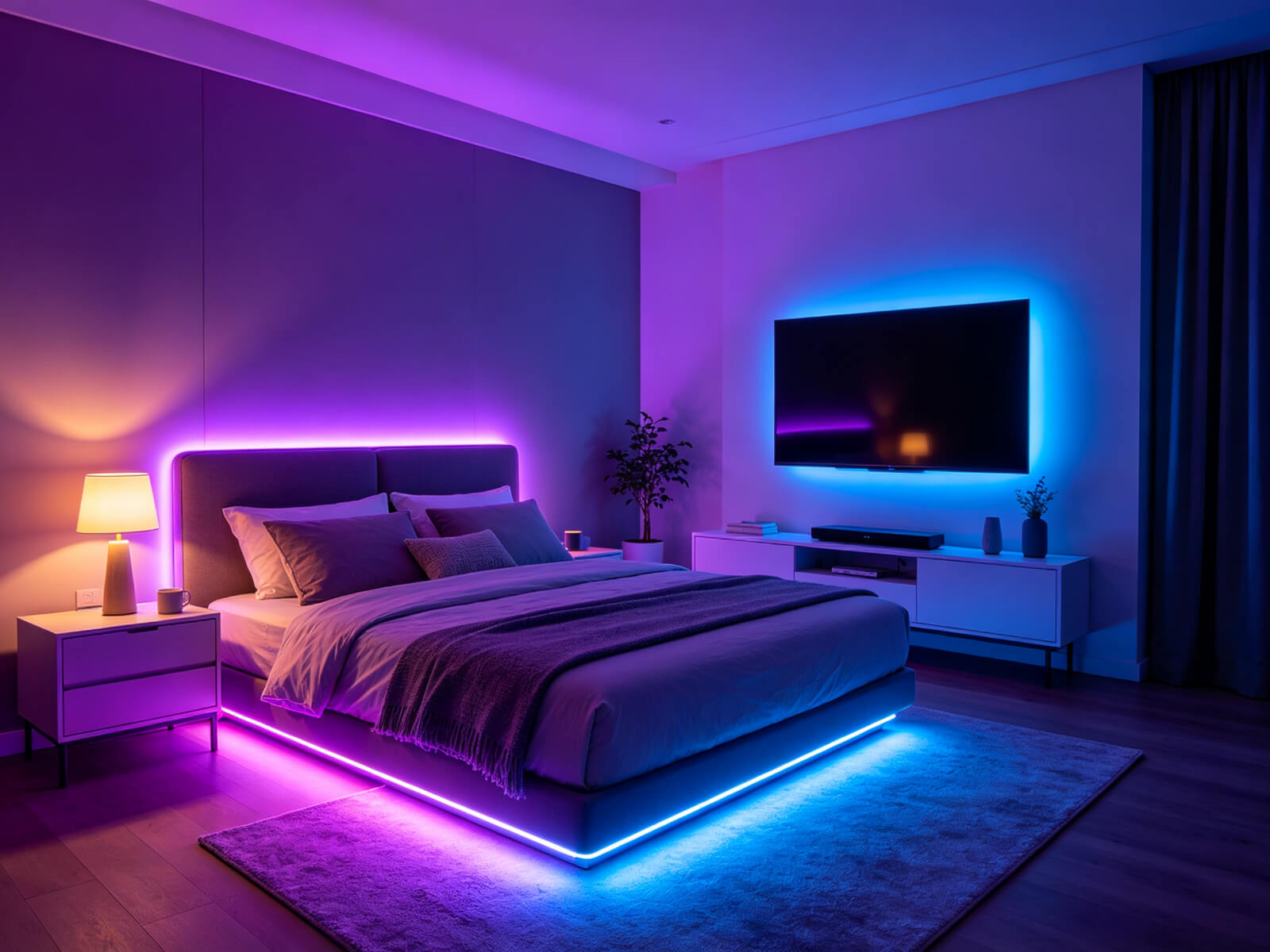
RGB / RGBW strips combine colored chips for dynamic, color-changing effects — perfect for entertainment and accent lighting.
Explorez notre single-color LED strips et RGBW LED strips to see the difference in action.
06 Choosing the Right LED Color for Your Project
Once you understand how LED colors are made, choosing becomes much easier. Here is a quick decision guide:
Cozy Spaces
2700K–3000K for bedrooms, living rooms, restaurants, and hotels — relaxing and flattering to skin tones.
Task & Work
4000K–6500K for kitchens, offices, garages, and retail — bright, crisp, and energizing.
Dynamic Effects
Gaming rooms, bars, signage, and accent lighting — endless color scenes and effects.
Consistency First
Brand colors, architectural lines, and applications where color accuracy matters most.
Color temperature is one of the most important choices you will make. Compare the options in our guide to 2700K vs 3000K vs 5000K vs 6500K, then browse our tunable white LED strips for adjustable CCT.
07 LED Color FAQ
T1Why is my LED strip a different color than expected?
White LEDs are made by combining a blue chip with phosphor, and small differences in phosphor or binning shift the tone. Quality strips control this with low-SDCM binning. Learn about LED color consistency for details.
T2Can a single LED produce any color?
No. A single LED chip produces one color based on its material and bandgap. To get millions of colors, RGB strips mix red, green, and blue chips together.
T3How is white light made if LEDs cannot emit white?
Two ways: a blue LED coated with yellow phosphor (most common), or by mixing red, green, and blue light. The phosphor method is what powers most white LED strips.
T4Which LED color is best for my room?
Warm white (2700K–3000K) suits relaxing spaces like bedrooms and living rooms; cool white (4000K–6500K) suits kitchens, offices, and task areas; RGB suits entertainment zones. See our guide des températures de couleur.
Not Sure Which Color to Choose?
Tell us your space and application — our engineers will recommend the right LED color and strip.

The RGB mixing explanation is very clear. Understanding how phosphor coating produces white light from blue chips is a detail I had not seen explained properly before. Great background reading.
Fascinating explanation of how LEDs create colors. The RGB mixing explanation finally makes sense to me. The section on phosphor coating for white light is a detail most articles skip.
The explanation of how phosphor conversion and RGB mixing create colours was easy to follow. The wavelength section gave me a better basis for explaining warm vs cool white to customers. Good science without being overly technical.