
LED Swimming Pool Lighting: The Complete Guide (2026)
A swimming pool is one of the most valuable additions to any home or resort property — but without proper lighting it is unsafe at night and visually flat after sunset. Good pool lighting prevents accidents, extends usable hours, highlights water features and raises the perceived value of the property. This guide covers every light option, explains why LED has become the professional standard, and shows you how to plan a pool lighting system that looks spectacular and lasts for years.

目次
1. What Is Swimming Pool Lighting?
Swimming pool lighting refers to any light source installed underwater, around the pool deck, or along the surrounding landscape. Underwater lights make night swimming safe, while perimeter lighting — such as waterproof LED strips in coves, under coping stones or around steps — defines the pool shape and creates a resort-like ambiance. Modern systems combine both layers for depth, safety and drama.
Light behaves differently in water than in air: it is scattered and absorbed, so fixtures need higher output and careful placement. Choosing products rated for the wet environment is critical — see our 防水LEDストリップガイド before you buy.
2. Popular Types of Swimming Pool Lights
Before choosing, it helps to understand the main lighting technologies used around pools. Each has strengths and limits that matter for cost, maintenance and light quality.
Halogen Pool Lights
Bright and cheap to buy, but they use about 80% more energy, generate heat that warms the water, and need frequent bulb changes. Running and maintenance costs exceed any upfront saving.
Fiber Optic Pool Lights
Light is delivered through glass or plastic fibers from a remote source, so no electricity enters the water. Extremely safe and easy to service, but less bright and costlier over time.
Solar Pool Lights
Wireless floats and deck lights add zero-energy ambiance to pool parties. They are not bright enough to light a whole pool reliably, so treat them as a supplement to a wired LED system.
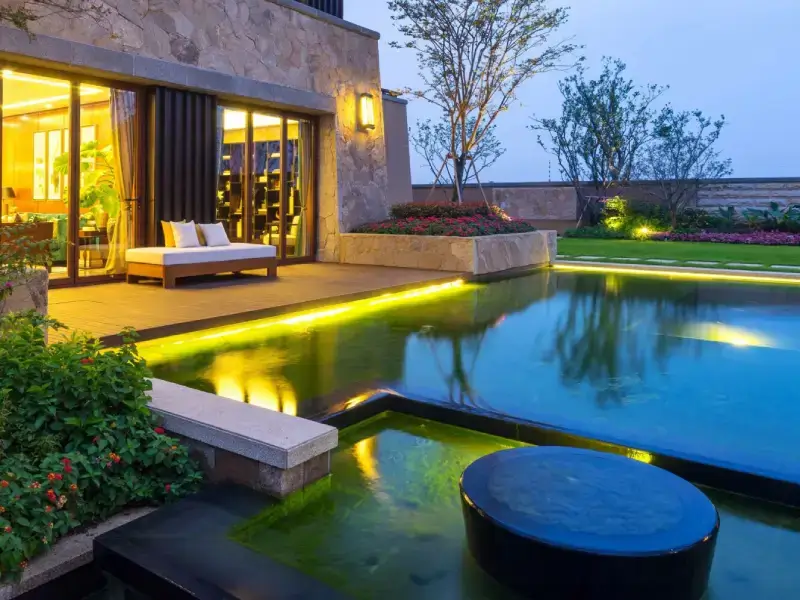
For most projects, LED combines the best of all worlds. See why professionals choose LED to understand why modern pools are moving away from halogen and fiber.
3. Why LED Is the Best Choice for Pool Lighting
LED has become the professional standard because it outperforms every alternative on the metrics that matter over a pool’s lifetime: energy, durability, heat, quality and control.
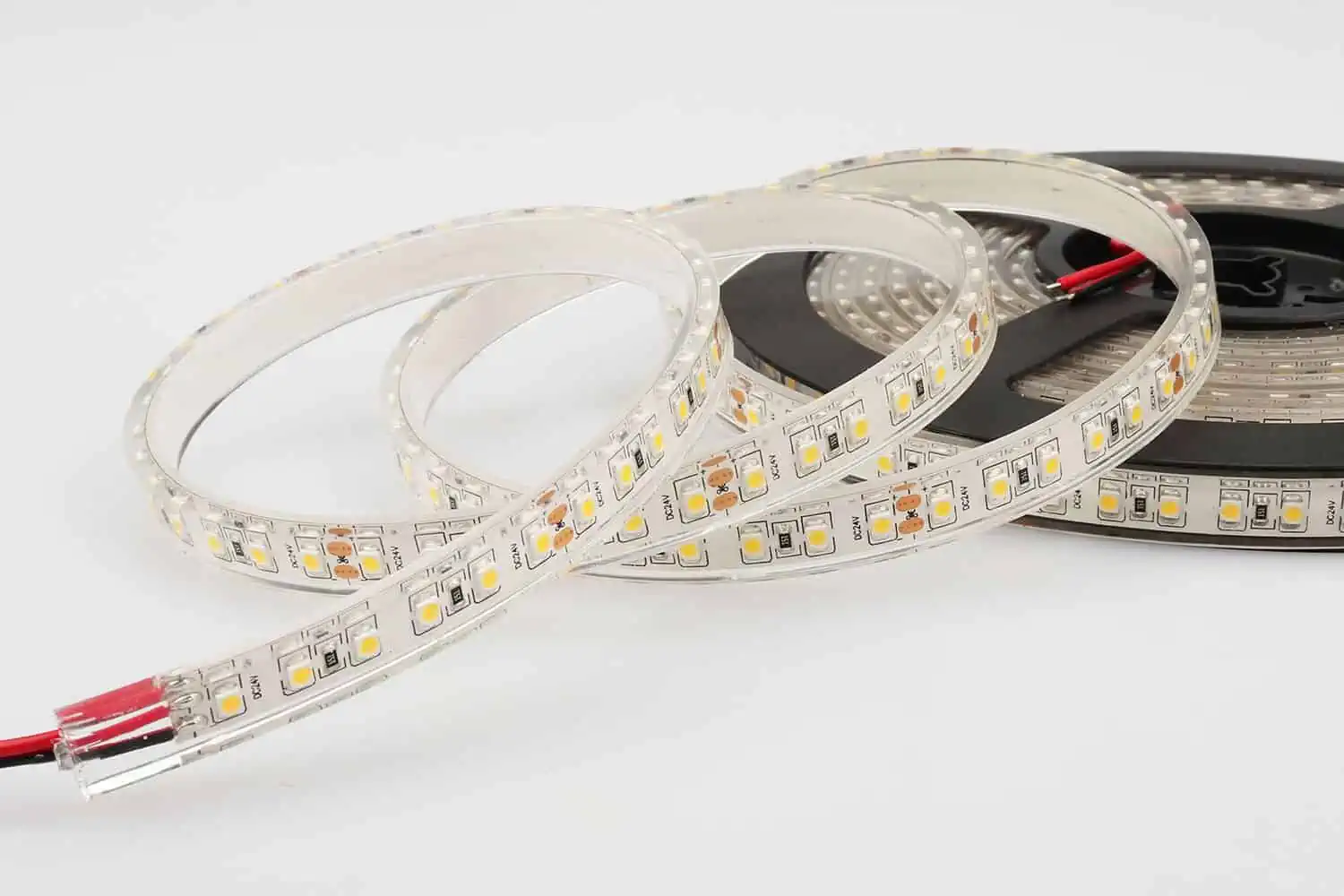
Energy Efficiency
An LED fixture needs roughly 40 watts to deliver the light of a 300–500 watt halogen bulb. Because pool lights often run through the night, that saving shows up directly on the energy bill.
Durability & Long Lifespan
Quality LED pool lights are rated for about 50,000 hours — five to ten times longer than halogen. A sealed IP68 fixture can serve for a decade without draining the pool to change a bulb.
Low Heat Output
Unlike halogen, LEDs stay cool to the touch and never raise water temperature or pose a burn risk to swimmers — a real safety advantage in humid pool environments.
Better Light Quality
LEDs switch on instantly with no flicker, deliver consistent CCT and CRI, and flatter skin tones with warm and neutral whites.
Full Color Control
From a calm warm-white night swim to a party palette, one LED system supports dimming, app control and color changing.
Set-and-Forget Maintenance
Once installed, LED pool lights need almost no attention. For contractors this means fewer callbacks and happier clients — backed by our quality system。
4. How to Install Pool Lighting
Underwater fixture replacement is a well-defined job that most contractors finish in a day; perimeter LED strip lighting is even simpler. Always follow local electrical codes and use a qualified electrician for any wiring near water.

Cut the Power
Turn off and lock out all power supplying the pool circuit before touching anything.
Remove the Old Fixture
Most lights are held by a screw or clip you can release without entering the water.
Fit the New Bracket
Mount the LED bracket or universal niche and feed the cable through the frame.
Connect & Seal
Strip and connect the cable with a waterproof seal, then secure the fixture.
Test the Light
Restore power, confirm the light works, and verify the seal is watertight before finishing.
For decorative perimeter lighting, run IP65–IP68 waterproof strips in channels or coves with an outdoor-rated driver, and seal every joint with the adhesive for waterproof strips。
5. Key Factors to Consider When Choosing Pool Lights
Now that you know why LED wins, these are the specifications that separate a reliable pool light from one that fails within a season.
Water & Chlorine Resistance (IP Rating)
The single most important spec. Submerged lights must be IP68; deck fixtures can use IP65. Pool water also contains chlorine, so look for corrosion-resistant housings — understand the full IP rating system to avoid costly failures.
Light Type: Fixed vs. Swivel
Fixed lights are flush and safe; swivel spotlights offer an adjustable beam for accenting water features. Many pools combine both.
Color Temperature
Warm to neutral white (2700K–4000K) is the professional recommendation — welcoming and never blinding at night. RGBW systems add party colors when needed. Choose with our 色温度ガイド。
Number & Wattage
Water absorbs light, so underwater fixtures need higher wattage than the same light in air. Count fixtures by pool size and shape — a circular pool may need one strong light, while an L-shaped pool needs one per corner.

6. Pool Lighting Ideas: Beyond the Underwater Fixture
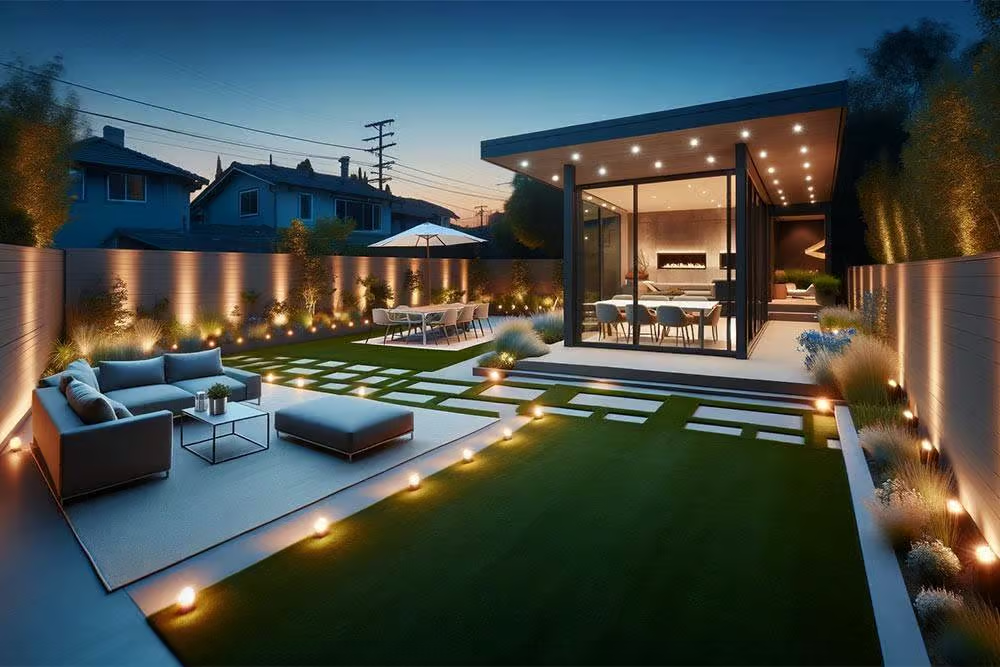
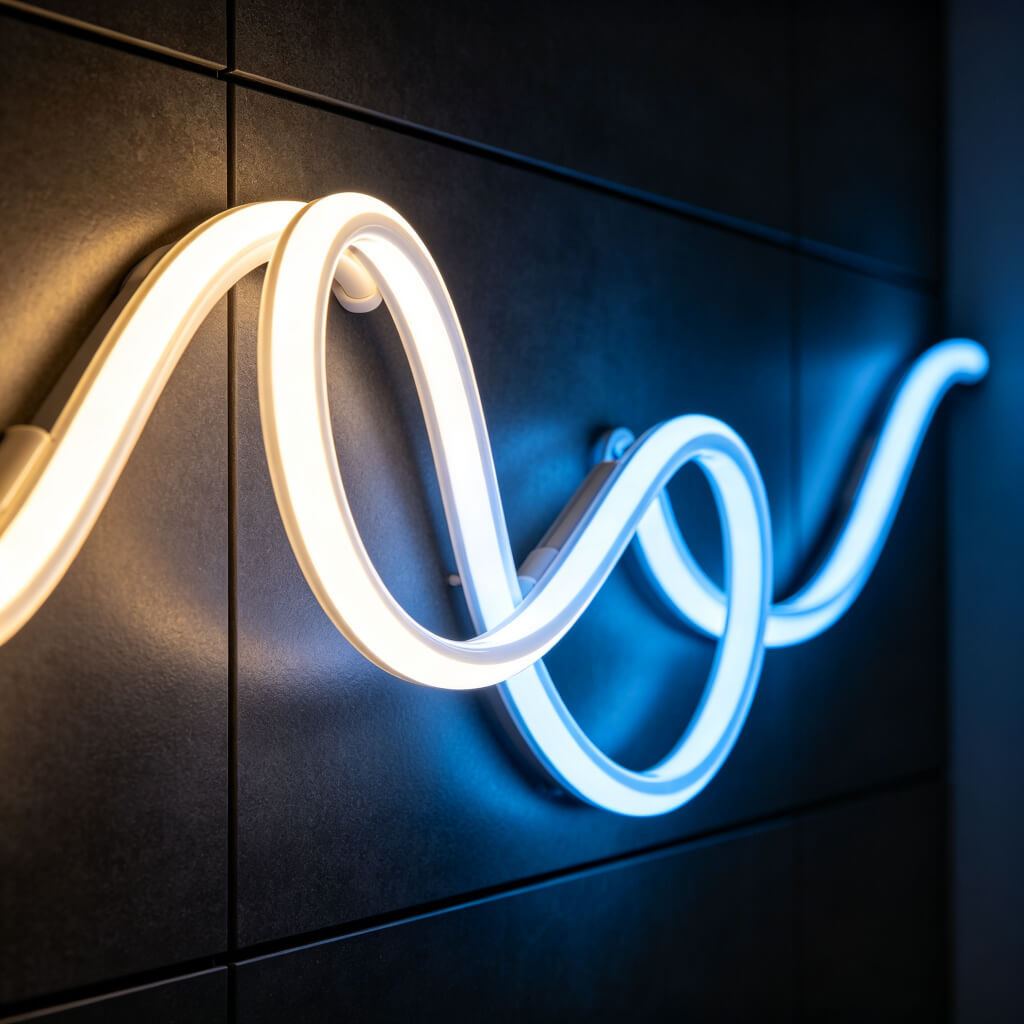
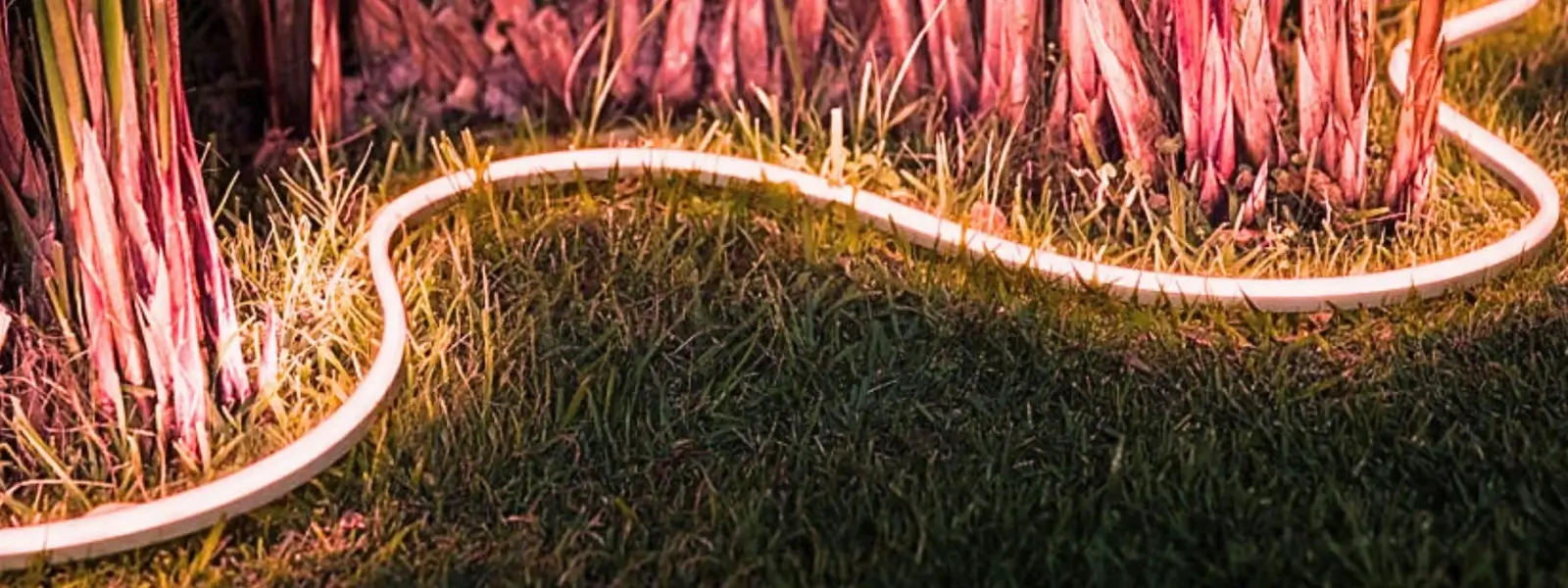
The most impressive pool projects layer perimeter lighting over underwater fixtures. Waterproof strips and neon flex can outline the coping, illuminate steps, backlight planters and extend light into the garden for a seamless resort feel.
7. Why Choose KayTai?
KayTai is a factory-direct manufacturer of LEDストリップライト and LED neon flex, serving pool contractors, wholesalers and importers since 2011.
✓ Certified IP65–IP68 Waterproofing
A full range of IP ratings so you can use the same product family indoors, outdoors and underwater.
✓ Quality Components as Standard
Quality chips on 2oz copper PCB with strict color consistency and batch records — see our quality system。
✓ CEおよびRoHS認証済み
Certificates and test reports available to support your market entry and compliance.
✓ 72-Hour Stress Testing
Moisture, heat and flicker testing on every batch before it ships.
✓ OEM / ODM サービス
customize lengths, colors and connectors for your project, with samples and technical support.
よくある質問
▶What is the best lighting for a swimming pool?
LED is the best all-round choice. It is energy-efficient, long-lasting, safe and available in waterproof IP68 fixtures. Warm to neutral white around 3000K gives the most flattering pool light.
▶Are LED pool lights worth the money?
Yes. Although the upfront cost is higher than halogen, LEDs use far less energy and last five to ten times longer. The break-even point arrives quickly, after which you save on both energy bills and replacement labor.
▶How many lights do I need in my pool?
It depends on pool size, shape and existing ambient light. A small circular pool may need a single strong fixture, while large or L-shaped pools need one per corner and along long walls.
▶What color light is best underwater?
In our pool projects we specify warm to neutral white (2700K–4000K) for underwater fixtures. It flatters the water, avoids harsh glare at night, and keeps swimmers comfortable — cool daylight tones tend to look flat and clinical under water.
▶Can I replace old pool lights with LEDs?
In most cases, yes. Universal LED brackets fit existing niches and installation can usually be done without draining the pool. Always follow electrical safety codes and use a certified electrician.
▶What IP rating do pool lights need?
Lights submerged in the pool must be rated IP68, while fixtures above the deck can use IP65. Always verify the rating covers the exact installation environment.
Ready to Design Your Pool Lighting?
Tell us about your project — we’ll recommend the right LED strips, IP rating and controllers for your pool. Free samples are available.
ケイタイに連絡する
The IP rating guidance for pool zones is exactly what I needed. Explaining ingress protection around water clearly is hard, but this does it well. The wiring advice is practical for installers rather than generic.
Good coverage of underwater versus perimeter lighting options. The low-voltage safety section is reassuring for a homeowner project. A solid, well-structured guide overall — I will share it with our pool contractor.
The IP68 and wet-location section answered the question I always get from customers about underwater installs. The note on transformer placement outside the flooded zone is a detail many pool guides omit. Bookmarking this for quoting pool lighting jobs.