
Two LED strips can look almost identical — and perform completely differently. The difference shows up in numbers: lumens, lux, candela, and brightness.
These four terms describe how much light a product emits, how intense it is, how much reaches a surface, and how bright it appears. Once you understand them, comparing any LED product becomes easy.
01 Why Light Measurement Matters
Humans have always judged light by how it looks — but “looks bright” is not a reliable unit. It is influenced by color, glare, and the surface being lit. That is why lighting professionals use objective, measurable units.
Total Light Output
The total amount of visible light a source emits — like the total water a tap releases.
Light Intensity
How concentrated the light is in one direction — like the pressure of a hose.
Light on a Surface
How much light lands on a given area — like how wet the ground gets.
Perceived Light
How bright a surface appears to your eye — like how blinding the glare is.
Each unit answers a different question, and together they let you compare LED strips, bulbs, and fixtures on a level playing field.
02 Lumens: The Total Light Output
Lumens (lm) measure the total amount of visible light a source emits in all directions. Think of it as the “total light budget” of a lamp or strip.
How Lumens Are Measured
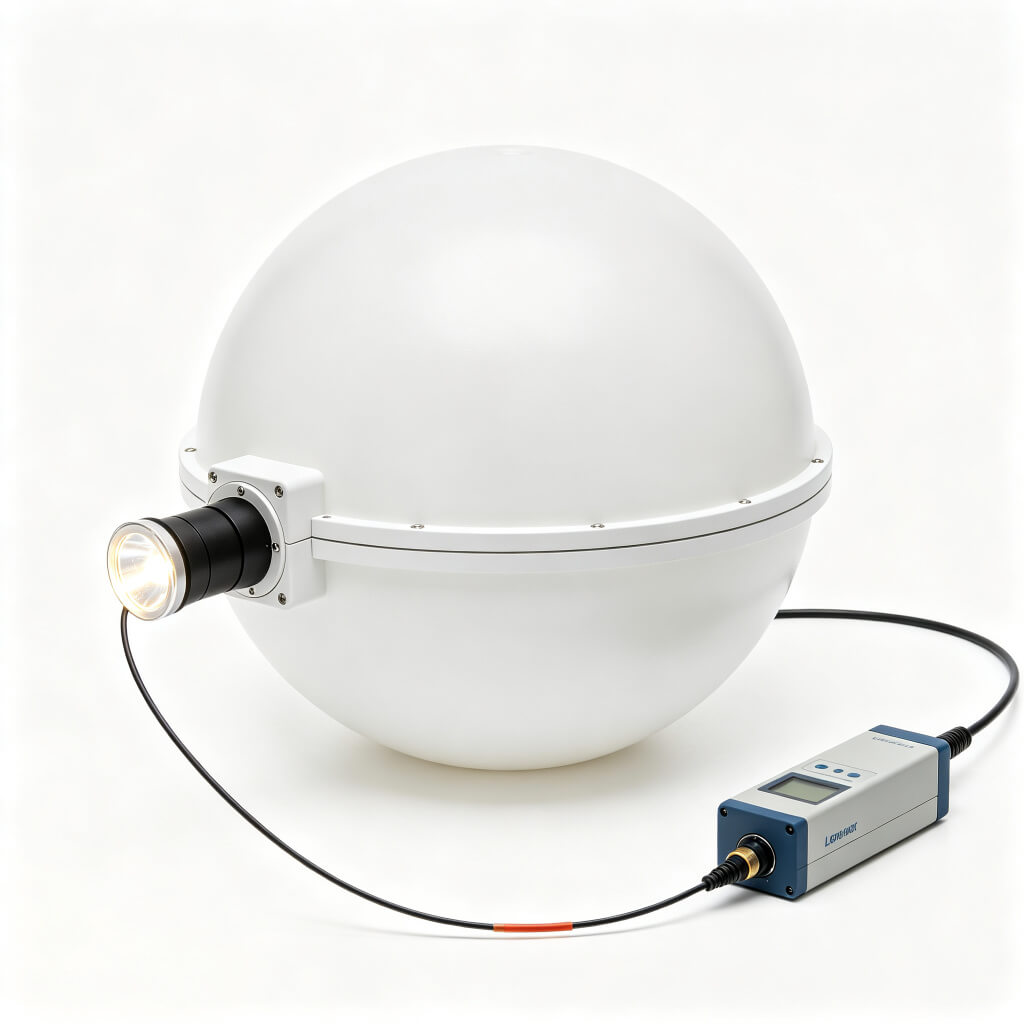
Lumens are measured inside an integrating sphere — a hollow white sphere with a light source mounted inside. The sphere collects and mixes all the light, and a spectrometer records the total luminous flux.
You can also estimate it mathematically: luminous flux = illuminance (lux) × area (m²).
When choosing an LED strip, lumens per meter (lm/m) tells you how bright each meter is — the most useful number for strip buyers.
03 Candela: Light Intensity
Candela (cd) measures luminous intensity — how much light is emitted in a specific direction. One candela is roughly the light of one standard candle.
Candela is the unit behind beam angles:
High Candela
A spotlight concentrates its light into a small angle — high intensity, bright spot. Great for highlighting.
Lower Candela
The same light spread over a wider angle — lower intensity per direction. Great for ambient lighting.
Mathematically: candela = lumens ÷ steradians (the solid angle of the beam). For LED strips, candela matters less than for spotlights — but it explains why the same strip looks brighter through a focusing lens.
04 Lux: The Light on a Surface
Lux (lx) is the most practical unit for real rooms. It measures how much light actually lands on a surface: 1 lux = 1 lumen per square meter.
The Inverse Square Law
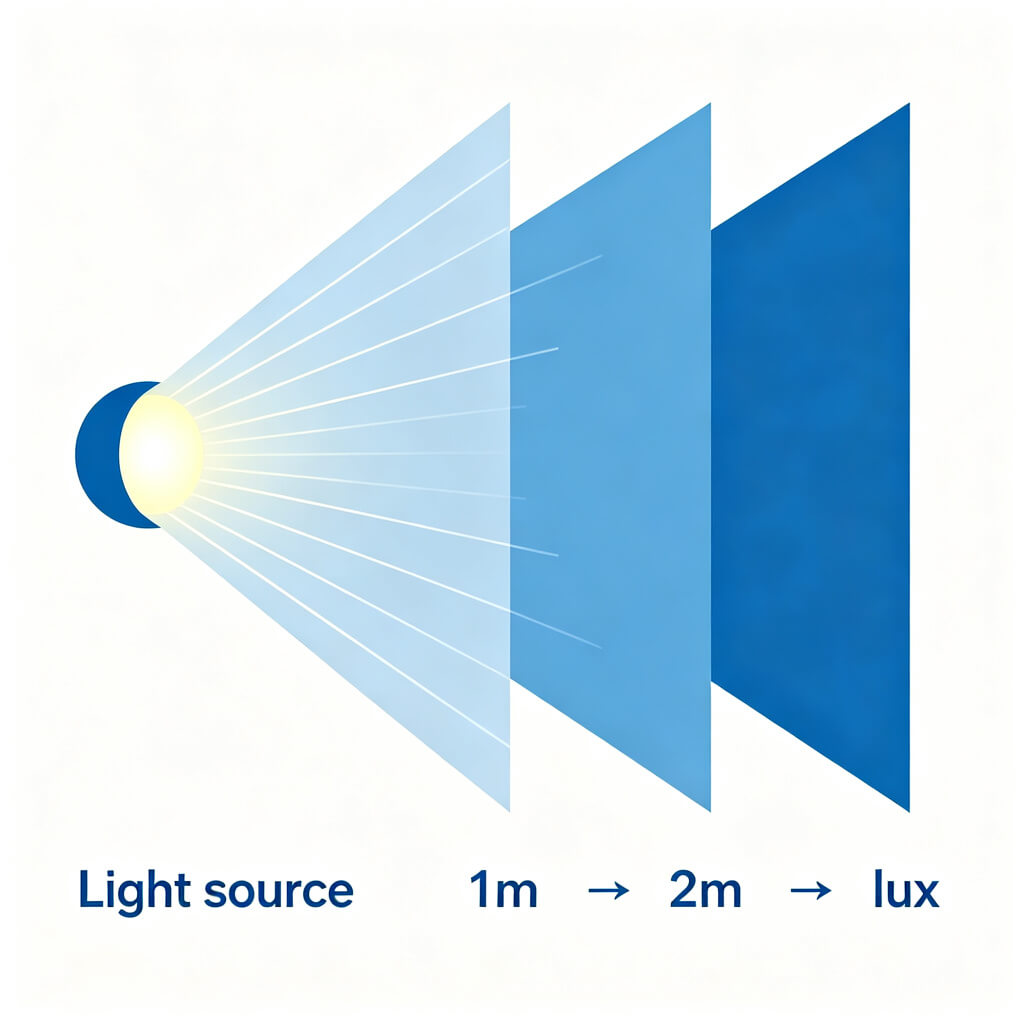
Light falls off quickly with distance. If you double the distance from a light source, the illuminance drops to one quarter.
This is why a strip mounted close to a countertop lights it brilliantly, while the same strip across a room seems much dimmer.
Recommended illuminance by space:
| Application | Recommended Lux |
|---|---|
| Warehouse / Storage | 100 – 200 lux |
| Corridors & Stairways | 150 – 200 lux |
| Living Room (general) | 200 – 300 lux |
| Kitchen (general) | 300 – 500 lux |
| Kitchen (task) | 500 – 750 lux |
| Office / Study (task) | 500 – 750 lux |
| Detailed / Precision Work | 750 – 1,000+ lux |
| Retail Display | 1,000+ lux |
05 Brightness: What Your Eyes Actually See
Brightness (cd/m²) is luminance — how bright a surface appears to your eye, rather than how much light it emits. It depends on both the light hitting the surface and how much that surface reflects.
Glare Risk
A very bright source on a dark background (like a bare bright strip) can cause glare and discomfort.
Comfort
Light diffused across a surface (like behind an aluminum profile diffuser) looks pleasant and even.
Why This Matters for LED Strips
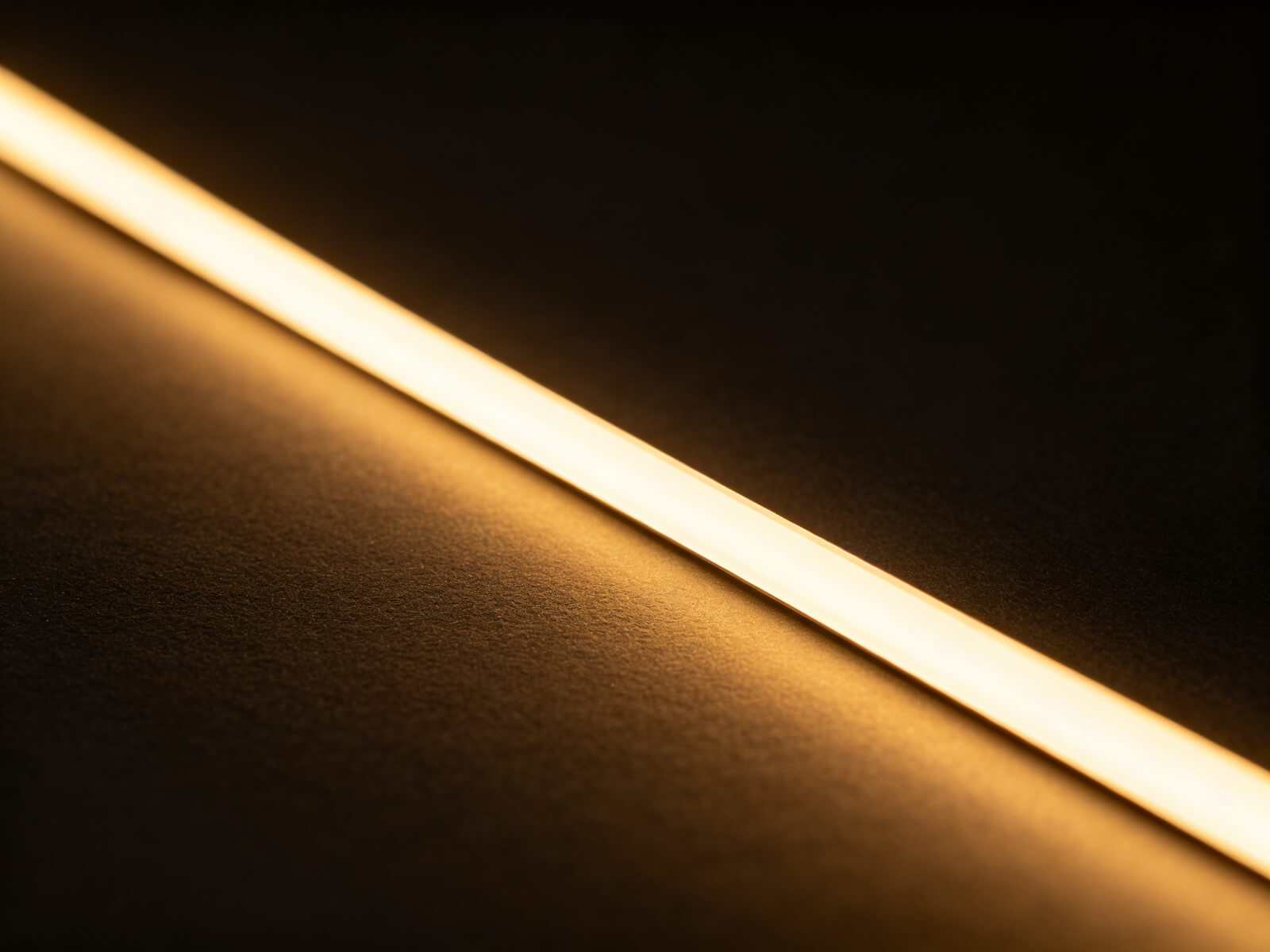
A bare bright COB strip can look harsh. Install it in an aluminum profile with a diffuser and the same strip produces soft, even, glare-free light.
That is why professional installations almost always pair strips with profiles — better comfort and a more premium finish.
06 Applying These Units to LED Strip Buying
Here is how to use the four units when you compare strips:
Brightness also depends on voltage — see our comparison of 12V vs 24V LED strips, and shop by brightness in our single-color LED strip range.
07 Light Measurement FAQ
Q1What is the difference between lumens and lux?
Lumens measure the total light a source emits; lux measures how much of that light lands on a surface. 1 lux = 1 lumen per square meter.
Q2How bright is an LED strip in lumens?
It depends on density and chip. A typical 5m strip of 60 LEDs/m ranges from about 400 to 800 lumens total. High-density strips can exceed 1,500 lm/m.
Q3What does lm/W mean?
Lumens per watt — the efficiency of the LED. More lm/W means more light per unit of electricity. Modern LED strips reach about 120–150 lm/W.
Q4How many lux do I need in a room?
Living areas need about 200–300 lux, kitchens and offices 300–750 lux, and detailed work up to 1,000 lux. See the table in section 04 above for the full guide.
Need Help Choosing Brightness?
Tell us your space and we will calculate the right strip, density, and length for you.

Finally a clear explanation of lumens vs lux. Knowing the difference avoids buying strips that are too dim for the area. The candela section is a good refresher for anyone working with spot lighting.
Clear explanation of light measurement units. The difference between lumens and lux is something many buyers get wrong, and this guide makes it easy to understand. Useful for comparing fixture specs properly.
The lux vs lumens distinction finally clicked for me after reading this. The room-by-room lux table is practical – I used it to size strips for a home office and avoided over-brightening the space. Clear and concise.