
Battery-powered LED strip lights solve a specific lighting problem: how to create a clean, controllable line of light where a wall outlet is missing, inconvenient or impractical. They are useful in fitted wardrobes, under shelves, on stairways, in temporary displays, inside vehicles and on outdoor structures that never received permanent wiring.
The important decision is not simply “AA or USB?” It is the complete power chain: battery chemistry, voltage, controller efficiency, LED load, dimming level, charging method and environmental protection. A kit can look identical to another product yet deliver dramatically different runtime if either the strip or electronics is poorly matched.
Quick answer: what runtime should you expect?
A small AA-powered decorative run may deliver several evenings of use at low brightness. A 10,000 mAh USB power bank can operate a modest 5 V strip for roughly 6–10 hours at full output, while a higher-power 5 m kit may finish in about 1–3 hours. These are planning ranges, not guarantees: calculate runtime from watt-hours and actual strip power, then add a 20–30% reserve.

Mục lục
What Is a Battery-Powered LED Strip Light?
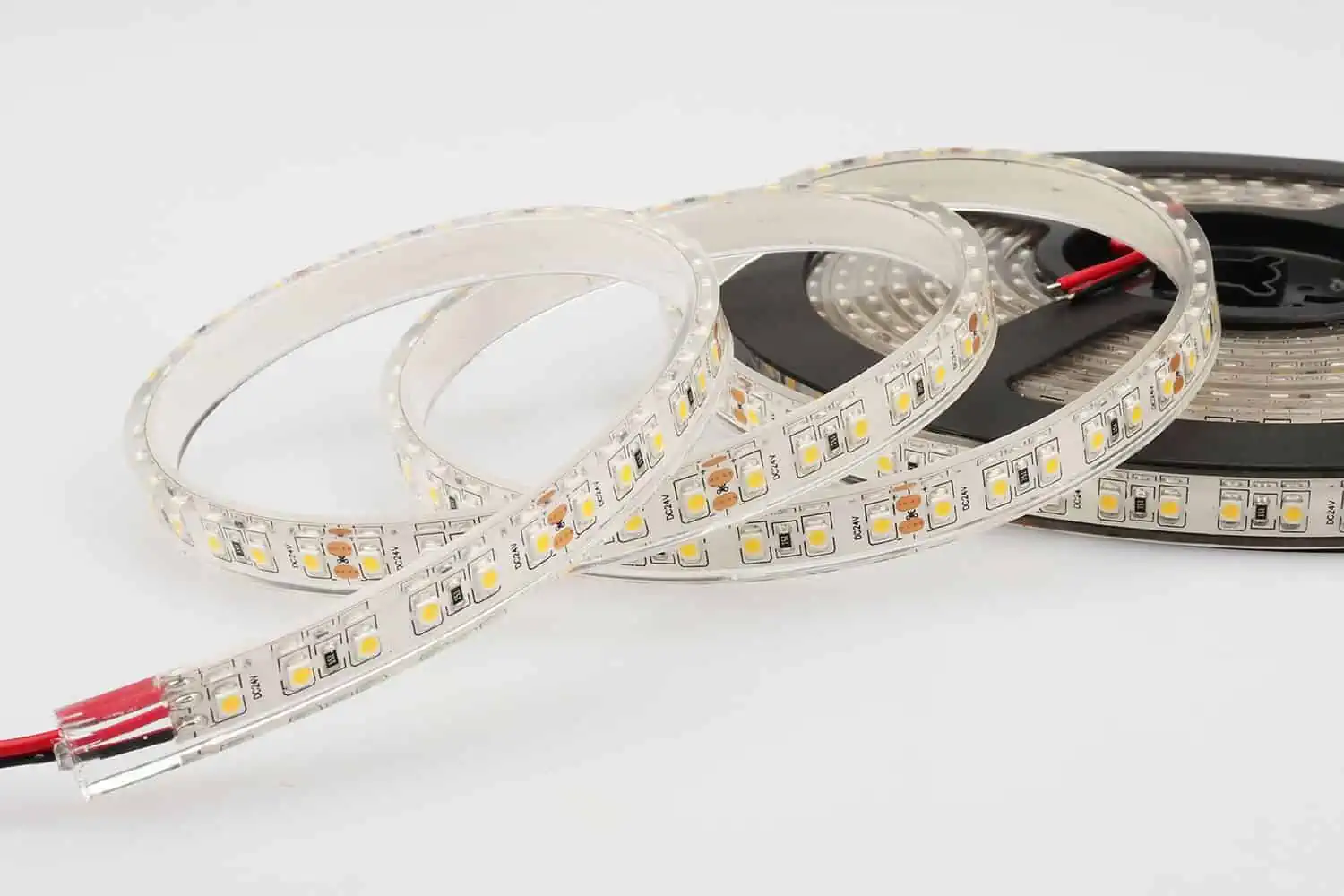
A battery-powered LED strip light is a low-voltage LED tape system supplied by a portable energy source rather than a fixed mains power supply. The strip itself is usually the same flexible circuit board used in conventional LED tape lighting. What changes is the source and control electronics in front of it.
A complete system normally contains five parts: the LED strip, a battery or battery pack, a voltage converter or current controller, a switch or wireless receiver, and an enclosure that protects the battery and wiring. In compact consumer products these parts are often integrated into one small control box. In commercial or custom projects they may be separate to improve serviceability and heat management.
LED strip
Defines light output, colour, beam appearance, cut points and the power required per metre. Check watts per metre, not only the nominal voltage.
Battery pack
Stores energy. Compare watt-hours, not only mAh, especially when the battery voltage differs from the strip voltage.
Controller
Regulates voltage or current, handles dimming and colour control and introduces conversion losses that reduce usable runtime.
Switch / sensor
A manual switch, remote, timer or PIR sensor controls use. Standby current matters in battery systems.
Enclosure
Protects cells, connectors and electronics from impact, moisture and accidental contact. The strip rating alone does not protect the battery box.
Charging path
Defines recharge time, connector durability and whether the product can safely run while charging.
“Battery-powered” does not automatically mean “wireless” or “maintenance-free.” Many systems still need a cable from the battery box to the strip. Some can use a power bank through USB; others require a regulated 12 V or 24 V pack. Always confirm the full voltage and current rating before connecting parts from different kits.
For a broader explanation of LED tape construction, see KayTai’s complete LED strip light guide.
Battery and Power Options Compared
There is no universal “best” battery. The right choice depends on whether the light runs every day, only during an emergency, or for a few hours at an event. It also depends on whether the user is willing to recharge, replace cells or manage a separate power bank.
| Power option | Typical use | Strengths | Limitations to plan for |
|---|---|---|---|
| AA / AAA alkaline holder | Closets, shelves, short decorative runs | Cheap, replaceable, easy to source | Voltage falls as cells discharge; frequently replaced; poor cold-weather capacity |
| Rechargeable AA / AAA | Frequently used small strips | Reusable and convenient | Lower nominal voltage than alkaline; needs a suitable charger and matched cells |
| Coin cell | Tiny accents and very short runs | Very compact | Low energy and current; unsuitable for bright or long strips |
| USB power bank | Rental rooms, events, short-term retrofit | Widely available; easy recharge; useful with 5 V USB strips | Cable strain, automatic shutdown at low current and output-voltage limits can cause surprises |
| 3.7 V Li-ion pack / 18650 | Compact rechargeable fixtures and sensors | Good energy density and rechargeability | Requires protection circuitry; charging and cell quality are critical |
| 12 V lithium or LiFePO4 pack | Outdoor, automotive, larger architectural runs | Higher power capability and serviceable capacity | Heavier and more expensive; needs proper fusing, charger and voltage regulation |
| Solar + battery | Garden edges, sheds and remote locations | No routine manual charging | Panel orientation, cloudy weather, winter output and battery enclosure design matter more than the panel’s peak rating |

Control method affects battery life almost as much as chemistry. A simple mechanical switch has negligible standby drain. A remote receiver, Wi-Fi module or motion sensor can consume energy continuously. For infrequently used lights, a receiver that stays awake can flatten a small pack even when the strip is off.
Manual switch
The simplest and usually the most efficient option for a single lighting zone.
Remote control
Convenient for reachable brightness and colour changes, but check receiver standby current.
Motion sensor
Ideal for stairs and closets. Short on-time and low standby draw can stretch a charge considerably.
Timer
Useful for shop displays, holiday lighting and repeatable daily schedules.
How Long Do Battery-Powered LED Strip Lights Last?
Two different lifetimes are often confused. LED lifespan refers to how long the strip emits light before unacceptable degradation: a quality strip may be rated for tens of thousands of operating hours. Battery runtime refers to how long one charge or set of cells can power the strip before the system reaches its cut-off voltage.
Use watt-hours for a realistic calculation
1. Convert battery capacity to watt-hours: Wh = nominal voltage × Ah. A 10,000 mAh power bank rated at 3.7 V contains about 37 Wh of nominal energy. The same mAh number at 12 V represents more total energy.
2. Estimate the LED load: watts per metre × metres. A 3 W/m strip cut to 2 m uses about 6 W before controller losses. Check the actual controller setting because dimming and colour modes change the load.
3. Apply usable capacity and efficiency: Runtime ≈ (battery Wh × usable fraction × controller/converter efficiency) ÷ strip watts. Start with 80–90% usable energy for a protected lithium pack and 75–85% conversion efficiency for a small DC converter.

| System | Approximate calculation | Planning result |
|---|---|---|
| 10,000 mAh USB power bank + 5 V, 5 W strip | 37 Wh × 0.85 usable × 0.80 conversion ÷ 5 W | About 5–6 hours at full output; longer when dimmed |
| 12 V, 6 Ah LiFePO4 + 6 W, 12 V strip | 72 Wh × 0.90 usable × 0.90 conversion ÷ 6 W | About 9–10 hours, subject to controller cut-off |
| 4 × AA alkaline + 3 W low-voltage strip | About 12 Wh theoretical × 0.50–0.75 derating ÷ 3 W | Roughly 2–4 hours at high output; cell quality matters |
| 1 m low-density 5 V accent strip at 1.5 W | 37 Wh power bank calculation at reduced load | Often 15–20 hours, but check the power bank’s minimum-load behaviour |
Why the “hours” on a product page can be misleading
Some listings quote runtime at the dimmest setting, call low brightness “normal,” or ignore converter losses. Others assume a larger battery than the one supplied. Ask for the exact strip wattage, tested battery watt-hours and brightness level used for the runtime claim.
| Typical setup | Useful full-brightness range | What usually changes the result |
|---|---|---|
| 1 m decorative closet or shelf run | 8–20 hours | Strip density, dimming level and standby draw |
| 1–2 m under-cabinet task strip | 4–10 hours | White-light power, battery capacity and efficiency |
| Miniature RGB accent with coin or AA cells | 2–8 hours | Colour mix, effect mode and receiver drain |
| 5 m high-output 5 V strip | 1–3 hours | Voltage drop, cable losses and controller current limit |
| 12 V architectural or vehicle run | 2–12+ hours | Pack size, strip watts per metre and dimming |
| Motion-sensor intermittently used strip | Days to weeks per charge | Triggers per day, on-time and standby current |
The line between runtime and LED life is also practical: batteries lose capacity over hundreds of charge cycles, while LEDs lose output slowly under heat and overcurrent. A lighting kit can still switch on after its battery is noticeably weaker, which is why a 10% brightness loss may be visible before the product fails entirely.
Brightness, Colour and Efficiency: What Is Enough?
Customers often compare strips by “number of LEDs,” but LED count alone does not define brightness. SMD size, chip efficiency, drive current, colour temperature, diffuser transmission and spacing all change the result. A dense strip at low current may produce less useful light than a lower-density strip with more efficient emitters and a better optical design.
| Lighting goal | Practical starting point | Battery implication |
|---|---|---|
| Decorative glow | Low to moderate output with a diffused finish | Choose lower power and accept a softer effect rather than maximum lumens |
| Closet visibility | Medium output, even coverage and a neutral-to-warm white | A PIR sensor and 1–2 m length often reduce energy use more than a larger battery |
| Under-cabinet task light | Higher output where possible, with a diffuser to control glare | Use short runs, high-efficiency LEDs and a pack rated for continuous current |
| Outdoor ambient lighting | Moderate output aimed at the surface, not into the viewer’s eyes | Account for waterproofing and cold-weather battery derating |
For functional white light, CRI matters in mirrors, wardrobes and food-prep areas. A CRI of 90 or above is a sensible target when colours must look natural. For bedrooms and evening use, 2700–3000 K usually appears warmer and more relaxed; 4000 K is a useful neutral choice for cabinets and utility spaces; 5000–6500 K can suit garages and task areas but may look clinical in living spaces.

White LED strips are usually the most efficient option for useful illumination. RGB and RGBCCT products add controllers and multiple channels, and some colour combinations draw more power than pure white. If runtime is the priority, a warm-white or neutral-white strip with a separate dimmer is often easier to size than an animated RGB kit.
For selecting a practical white tone, see KayTai’s guide to colour temperature.
Battery Power vs Plug-In LED Strip Lighting
Battery-powered strips are not simply “worse” or “better” than mains-powered systems. They remove one kind of constraint and introduce another. The correct choice is the system with the fewest operational compromises for the actual space.
| Decision | Battery-powered | Plug-in / mains-driven |
|---|---|---|
| Installation freedom | Excellent where no outlet or wiring exists | Requires a nearby power source and cable route |
| Continuous runtime | Limited by stored energy | Continuous while mains power is available |
| Brightness ceiling | Lower for compact, portable kits | Higher and more consistent for larger runs |
| Maintenance | Recharge or replace batteries | Occasional cleaning and electrical inspection |
| Portability | High; can move between rooms or events | Usually fixed after installation |
| Initial cost | Often lower for small, short-term jobs | Can be more economical for permanent daily use |
| Reliability risk | Battery ageing, charging and water ingress | Driver failure, wiring and power availability |
| Best fit | Retrofit, rentals, temporary, low-to-medium duty | Permanent, high-output or long-duration lighting |
If a light runs for many hours every day, a fixed low-voltage power supply often becomes more economical and consistent. If the requirement is “light now, without opening the wall,” a battery system can be the practical answer. For larger permanent installations, compare total ownership over several years rather than purchase price alone.
Battery-Powered LED Strip Lights Outdoors: What IP Ratings Really Mean
An IP65 or IP67 LED strip is not a complete outdoor lighting qualification. The rating must also apply to the connectors, controller, switch and battery compartment. Water commonly enters through the weakest part of a kit, not through the LED surface.
| Rating | Protection usually described | Suitable battery-light use |
|---|---|---|
| IP20 | No meaningful water protection | Dry interiors only; keep away from condensation |
| IP54 | Dust protected and splash resistant | Sheltered interiors, not reliable rain exposure |
| IP65 | Dust-tight and protected against water jets | Covered patios and eaves with a separately protected battery box |
| IP67 | Dust-tight and protected against temporary immersion | Harsh exterior zones only when every connector and power component is also rated |
| IP68 | Immersion protection defined by the manufacturer | Do not treat as interchangeable; check depth and duration |
Mount above standing water
The battery box should sit under cover, away from pooling water and direct jets. Use a drip loop in the cable.
Seal cut ends
A cut IP65 strip loses protection unless the end is properly resealed. Never cut a fully encapsulated strip unless the manufacturer permits it.
Control condensation
A sealed enclosure can trap moisture. Use a suitable enclosure, desiccant where appropriate and inspect after extreme temperature changes.
Plan for cold
Lithium cells lose available capacity in cold weather and must not be charged outside the manufacturer’s temperature range.
For solar products, size the panel and battery for the shortest useful day, not the brightest summer day. A nominal panel rating is generated only under test conditions; shade, angle, dirt and winter sun reduce real input. A larger battery can carry the light through several cloudy days, which is often more valuable than a slightly brighter strip.
KayTai’s waterproof LED strip selection guide explains how sealing method changes both protection and cutability.
How to Power a 5 m Battery LED Strip Without Disappointment
A five-metre product is one of the most common customer requests, but it is also where runtime and voltage-drop expectations often break down. The first step is to read watts per metre, not the length alone.
For example, a 5 V USB strip rated at 4 W/m requires about 20 W for 5 m. A 10,000 mAh power bank contains roughly 37 Wh, so even before losses the absolute energy limit is less than two hours at full output. If the controller limits output or the power bank shuts down under high current, observed performance may be different again.
| 5 m strip rating | Approximate full-run load | Design response |
|---|---|---|
| 1–2 W/m | 5–10 W | Use one suitably rated controller; verify the power bank’s low-current shut-down |
| 3–5 W/m | 15–25 W | Prefer a larger pack or split into two zones; check connector and controller current |
| 6 W/m or more | 30 W+ | A compact USB battery is usually the wrong platform; use a properly rated external pack and power distribution |
| 5 V long run | Any rating | Voltage drop can make the far end dim; use short feeds, multiple zones or a higher-voltage system |

A 9 V battery connected to a 12 V strip may make the strip glow, but the result is not a validated design. Effective brightness drops, the cell drains quickly and the controller may operate outside its intended range. Use the specified voltage or a correctly rated converter. For permanent 12 V and 24 V systems, the LED power supply selection guide explains current margin and connection practice.
The 5 m rule: divide before you buy
Split the installation into short electrical zones wherever possible. Two 2.5 m strips with their own feeds are easier to control, suffer less voltage drop and let one zone run without wasting energy on the full length.
Installation, Charging and Placement Checklist
A battery lighting system succeeds or fails at the installation stage. Test the complete electrical chain before removing adhesive backing, and plan how the battery will be reached without disturbing the strip.
Test on a bench
Connect the strip, controller and charged battery before mounting. Check colour, dimming and remote range.
Measure the cut interval
Cut only at printed marks. Preserve enough cable and clearance to reconnect or conceal the end.
Clean and dry the surface
Dust, oil and moisture cause adhesive failure. Use the mounting method appropriate to the substrate.
Place the battery box first
Choose an accessible, protected location. Avoid heat sources, sharp edges and standing water.
Strain-relieve the cable
Prevent the connector from carrying the cable weight. Add a drip loop outdoors.
Control the light direction
Aim strips toward a surface or diffuser. Direct view of individual emitters creates glare and reveals spacing.
Seal outdoor entries
Protect every connector and enclosure. Recheck after rain, cleaning and seasonal temperature changes.
Charge safely
Use the supplied charger or a compatible certified charger. Do not charge a cold, swollen or damaged lithium pack.
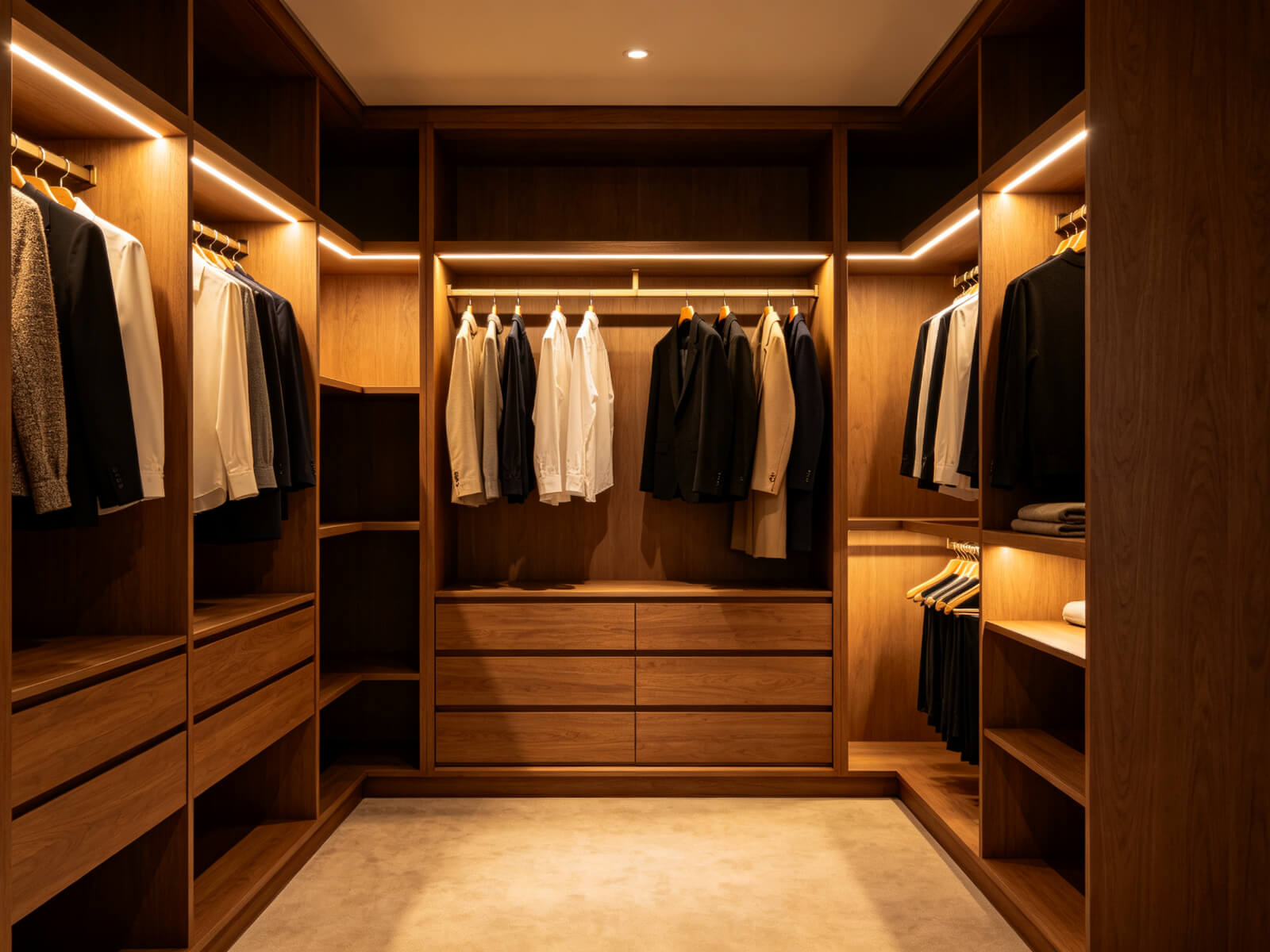
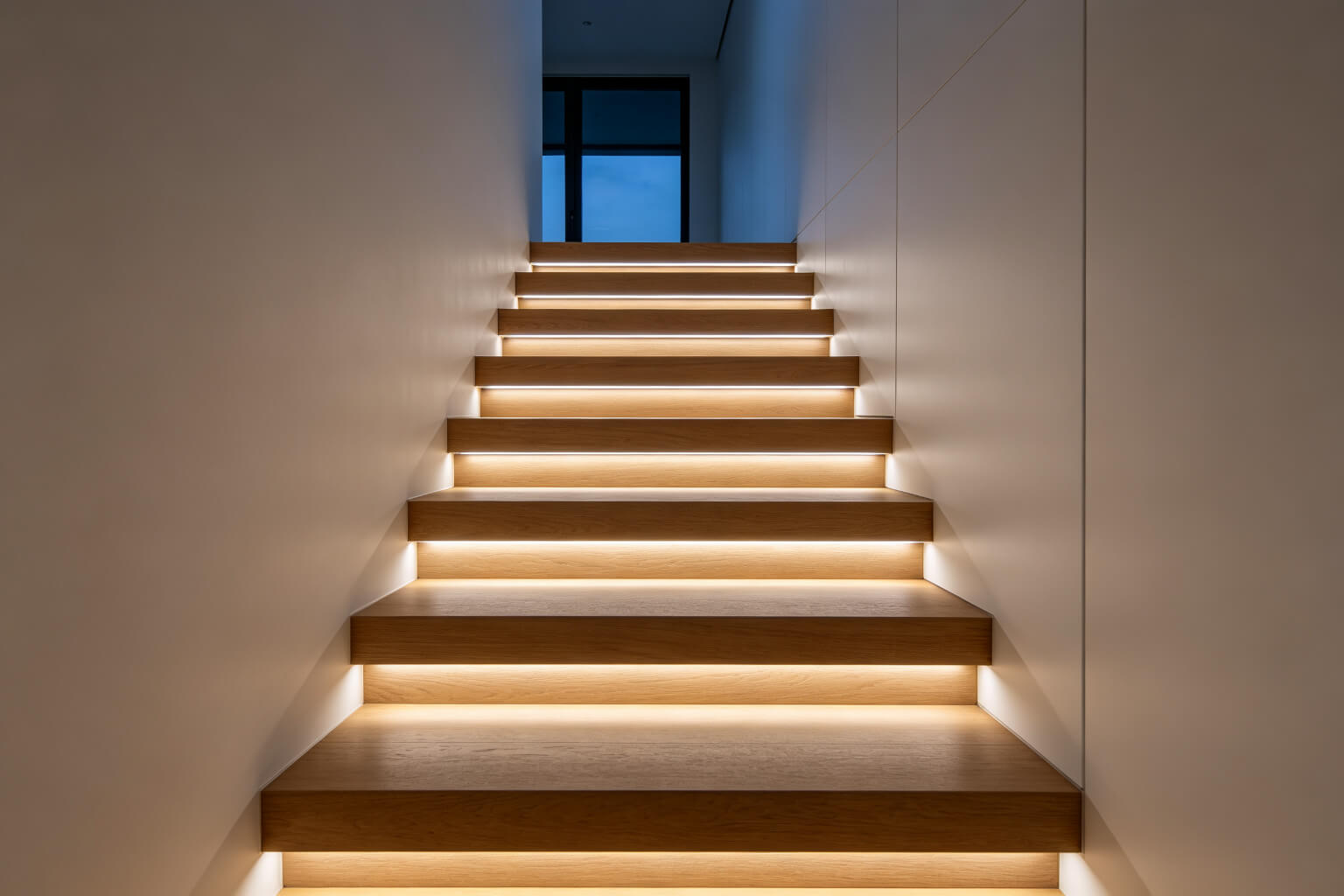

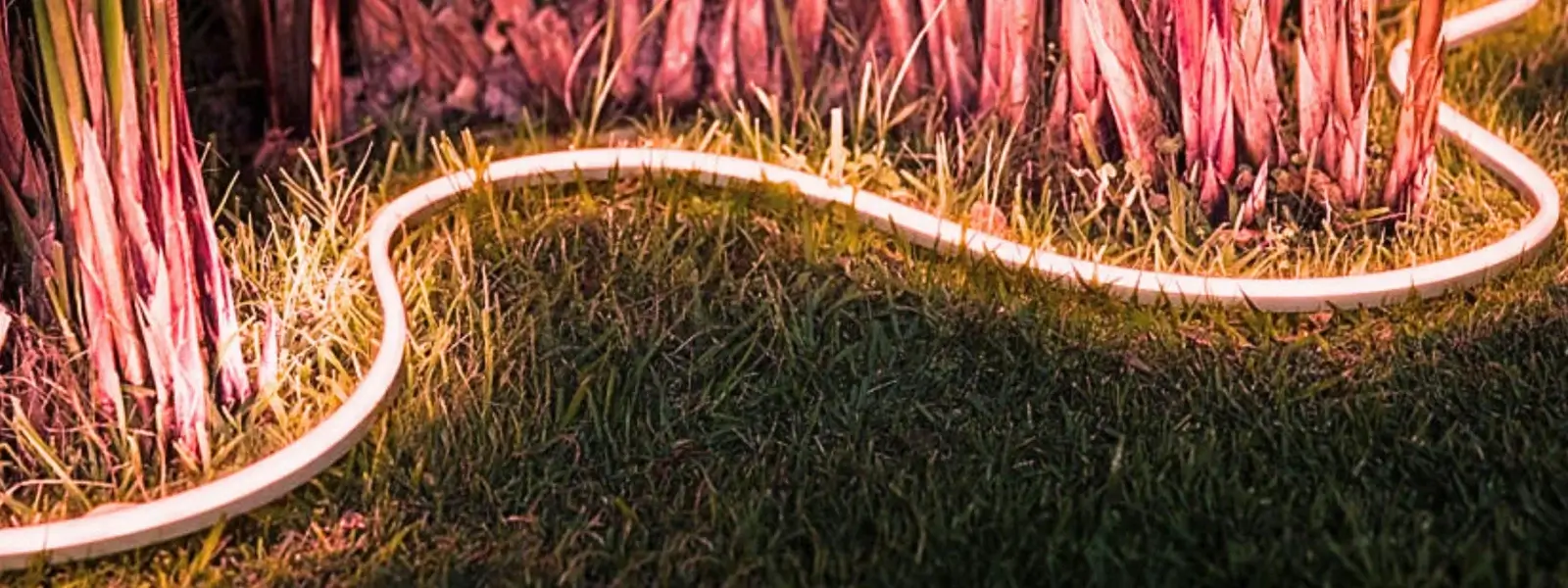


Avoid putting a thin adhesive strip directly over rough brick, fresh paint or a damp exterior surface. Adhesive failure is common; a channel or mechanical clip may be the better long-term method. When using an aluminum profile, follow the relevant LED profile channel guide for thermal and diffuser considerations.
Best Applications for Battery-Operated LED Strip Lights
The strongest use cases share three traits: there is no convenient outlet, the lighting is intermittent or portable, and installation must avoid structural work. These are the jobs where the battery advantage outweighs maintenance.
| Ứng dụng | Recommended starting setup | Main design concern |
|---|---|---|
| Wardrobe or closet | 1–2 m warm-white strip, PIR switch, rechargeable AA or Li-ion pack | Sensor placement, shelf shadows and safe door clearance |
| Stairway or hallway | Short tread/riser runs with motion sensor and timer | Glare, trip safety and standby consumption |
| Rented room or temporary room | USB 5 V strip plus power bank | Cable management, removable mounting and realistic runtime |
| Market stall or exhibition | Large rechargeable 12 V pack with fused distribution | Transport, charging turnaround and connector reliability |
| Patio or garden structure | IP65+ strip with sheltered battery box or solar pack | Water ingress, cold-weather capacity and panel charging |
| Car, van or camper | 12 V strip with regulated, fused connection | Voltage fluctuation, wire security and preventing battery drain |
| Emergency backup | Dedicated low-power strip and stored rechargeable pack | Periodic charging, unambiguous switch and safe storage |
If the requirement is permanent task lighting for a kitchen or workspace, compare battery power with a conventional low-voltage system. KayTai’s under-cabinet lighting guide explains the lighting levels and installation details that matter for daily use.
Why Battery-Powered LED Strips Dim, Flicker or Last Too Little
| Symptom | Likely cause | What to do |
|---|---|---|
| Far end is dimmer | Voltage drop or undersized feed cable | Shorten the run, use heavier cable or feed both ends / multiple zones |
| Runtime collapses after a few months | Battery ageing, poor charging cycle or excessive heat | Check capacity and charger; replace worn cells; improve ventilation |
| Battery box becomes hot | Overcurrent, short circuit, wrong voltage or damaged cells | Disconnect immediately; inspect polarity, current rating and battery condition |
| Lights flicker | Low battery voltage, controller incompatibility or poor connector | Charge the pack, inspect contacts and test a known-compatible controller |
| Remote works only nearby | Weak receiver battery, obstruction or sensor/controller interference | Move the receiver, replace its battery and keep metal obstacles clear |
| Sensor lights turn on randomly | Drafts, heat sources, pets or sensor aiming at a busy path | Adjust sensitivity and mask areas outside the intended detection zone |
| Power bank switches off | Low-current automatic shut-off | Use a power bank with always-on/low-current mode or add a suitable load |
| Condensation inside a strip/box | Water vapour trapped during sealing or a failed seal | Dry, reseal and use a suitable enclosure; do not operate a wet electrical assembly |
For flicker caused by a mains dimmer, driver mismatch or PWM control, the more detailed LED strip dimming guide covers compatibility testing.
Battery-Powered LED Strip Buying Checklist
Use this checklist before purchasing a ready-made kit or commissioning a custom battery-powered light. A product that answers these questions is far easier to operate predictably than one marketed only by LED count and colour modes.
Watts per metre
Confirm the load at maximum brightness and the current at the intended voltage.
Battery watt-hours
Ask for nominal voltage and Ah. Do not compare mAh across different battery voltages.
Controller rating
Ensure it can carry the full strip current with a safety margin.
Runtime basis
Check whether the claimed hours use full brightness or a dim scene.
Charging safety
Use a protected, certified pack and verify the charging temperature range.
IP protection
Evaluate the complete assembly, including connectors, switch and battery enclosure.
Light quality
Review CCT, CRI, beam appearance, diffuser and visible flicker.
Serviceability
Can the battery be replaced? Is the pack accessible? Are connectors standard and secure?
What buyers should request before placing a larger order
Ask for a measured runtime at defined full and dimmed settings, strip watts per metre, battery Wh and chemistry, controller standby current, charging time, IP rating of the full assembly, and a wiring diagram. For outdoor projects, request connector and enclosure details, not only the LED tape rating.
Frequently Asked Questions
▶Can I power LED strip lights from a USB power bank?
▶How long do battery-powered LED strip lights last on one charge?
▶Can I leave battery-powered LED lights on all night?
▶Are battery-powered LED strips safe?
▶Can I cut battery-powered LED strip lights?
▶Are waterproof battery LED strips suitable for permanent outdoor use?
▶Does dimming make a battery-powered strip last longer?
▶What is the best battery for LED strip lights?
▶Why do battery-powered LED lights get dimmer over time?
▶Can battery-powered strips work in winter?
Need a Battery-Ready LED Strip Solution?
Tell KayTai your voltage, strip length, brightness, runtime target, mounting environment and enclosure requirements. We can help match the LED strip, controller and battery pack as one system.
Request a Battery-Powered LED QuoteExplore KayTai’s LED strip light range or read the complete LED strip buying guide for help comparing light output, colour and installation methods.

Useful guide for portable lighting setups. The runtime calculations are practical for events and displays. Knowing the limits of battery power helps plan temporary installations realistically.
Interesting guide on battery power for LED strips. The runtime calculations are practical for portable or temporary setups. Good to know the limits before planning an installation.
I work on portable display setups in Sweden where mains power is not always available. This guide’s battery capacity math helped me size a pack for a three-hour event correctly. The connector advice also saved me from a loose-joint failure mid-show.