
LED stripelyset er et av de yngste - og raskest utviklende - belysningsproduktene som noen gang er laget. På bare to tiår gikk det fra et nisje-tilbehør til en av de mest installerte belysningsproduktene i verden.
Her er historien om hvordan LED-striper utviklet seg, hva som endret seg ved hvert trinn, og hvor teknologien er på vei videre.
01 De tidlige dagene med LED-strips
LED-strips dukket først opp på begynnelsen av 2000-tallet, bygget ved å montere små LED-brikker i rader på et stivt eller semi-fleksibelt bord. De tidligste stripene var ensfarget, ofte rød eller blå, og ble hovedsakelig brukt til skilting og aksentbelysning av kjøretøy.
Fra stive stenger til fleksibel tape
Gjennombruddet var fleksibel PCB — et tynt, bøybart kretskort som kan rulles, kuttes og installeres nesten hvor som helst. Kombinert med en klebe-og-klebende bakside, ble den moderne LED-tapen født.
Tidlige strimler var enkle: en farge, fast lysstyrke, loddet til en strømforsyning. Men de beviste et konsept - lys du kan kutte og plassere hvor som helst.
02 miniatyrisering og bedre chips
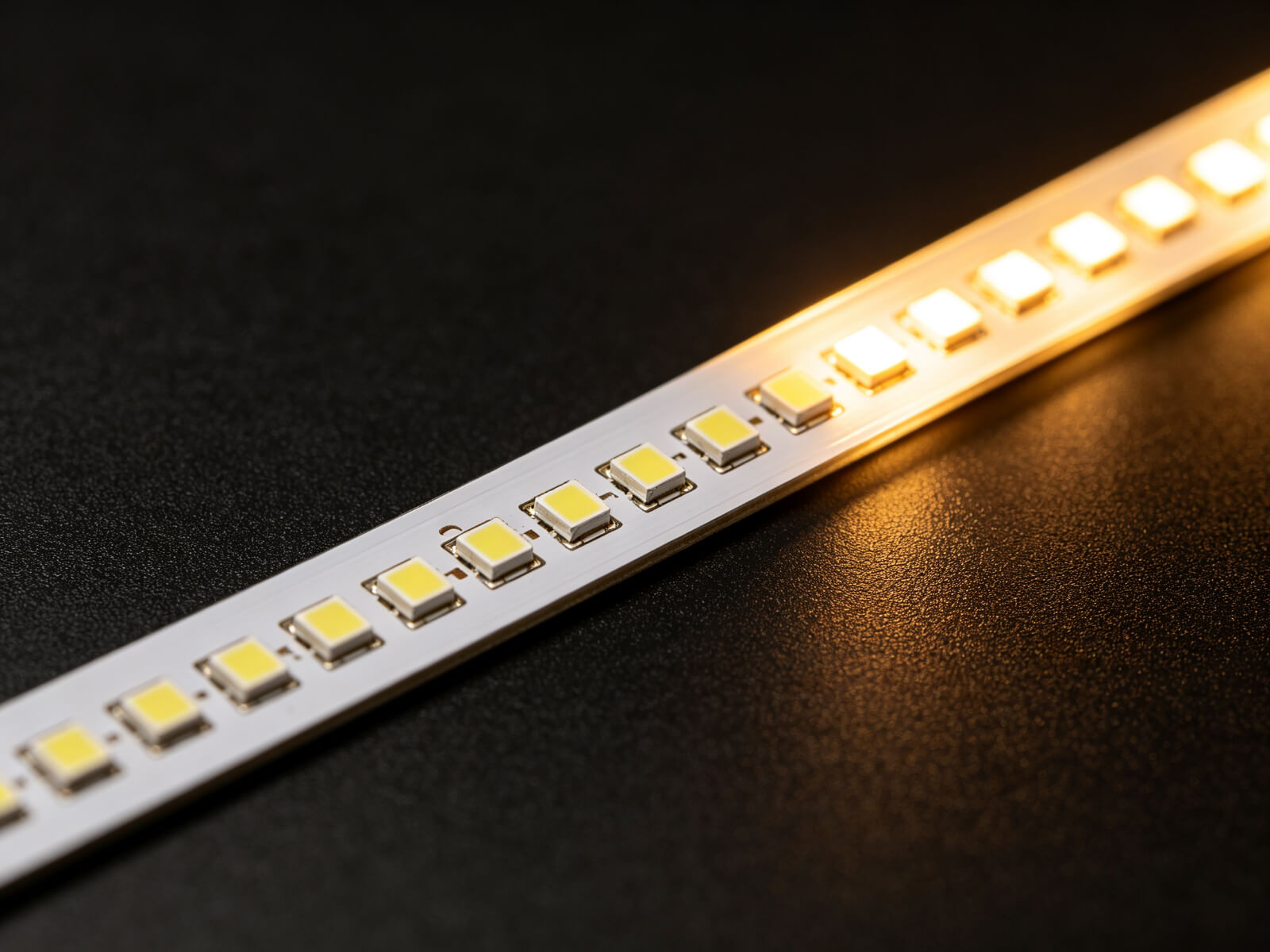
Etter hvert som LED-brikketeknologien avanserte, fikk strips mindre, tettere og mer effektiv. Den samme lengden på stripen holder nå mange flere LED-er, og produserer mer lys med mindre strøm og mindre varme.
To emballasjegjennombrudd drev endringen:
Arbeidshesten
Små overflatemonterte brikker loddet direkte til PCB - pålitelig, effektiv og rimelig. Se vår SMD LED guide.
Premium-oppgraderingen
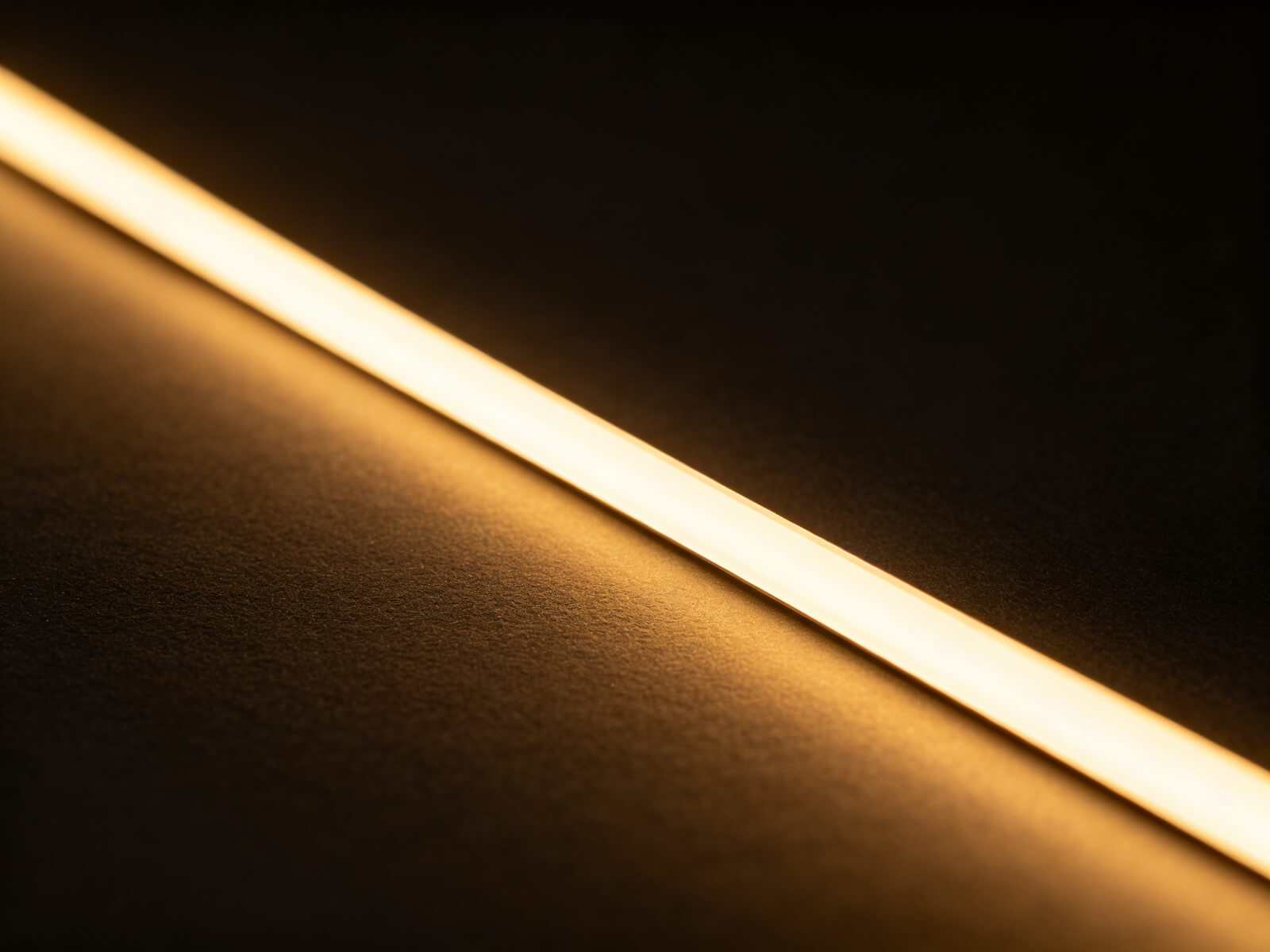
Chips-on-board pakket tett for en sømløs, prikkfri glød. Den raskest voksende stripekategorien for premiumprosjekter.
03 Fra fast farge til RGB og utover
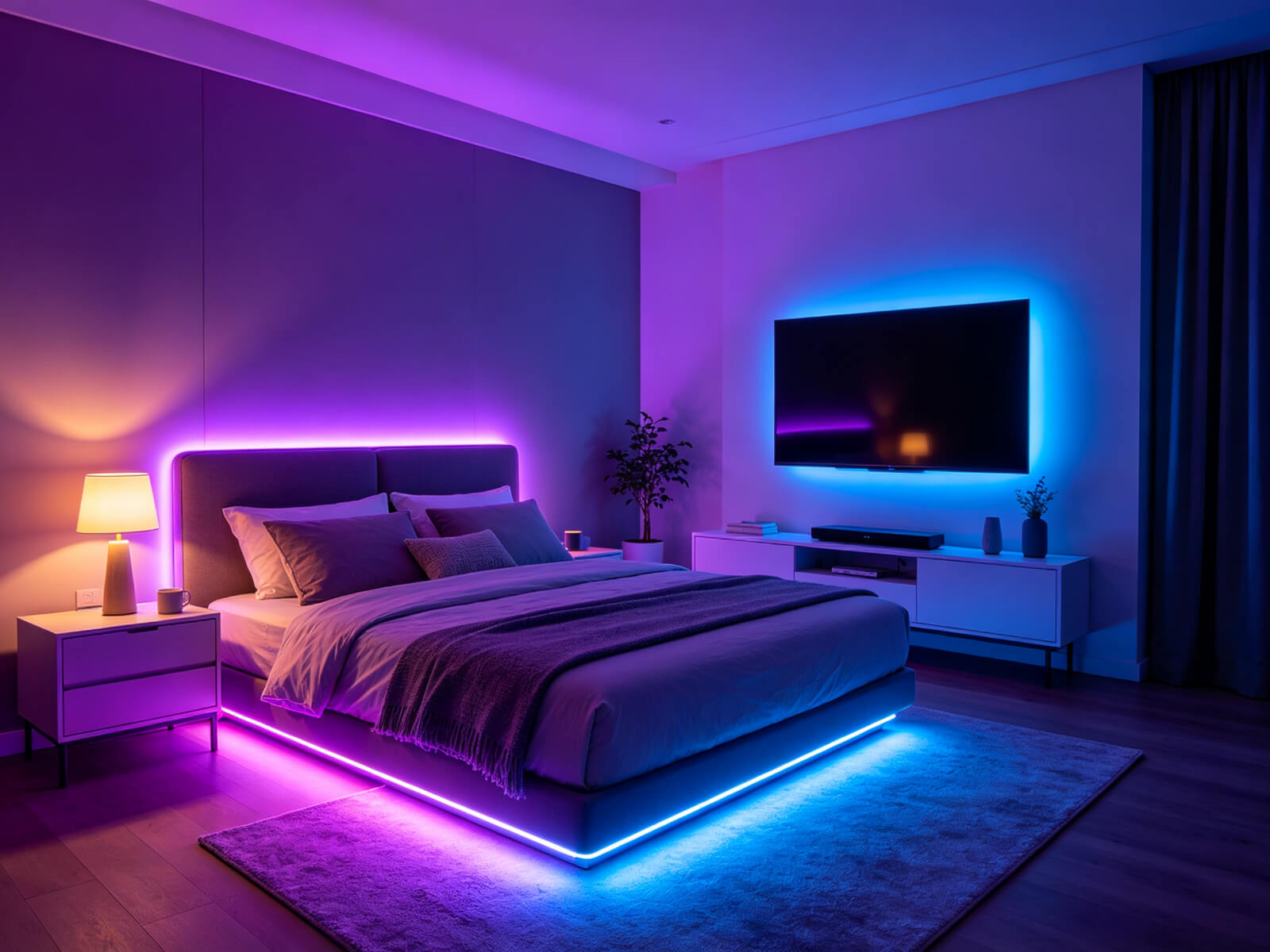
Ensfargede strimler var flotte - men brukerne ville ha mer. Det neste store spranget var fargeskiftende RGB. Ved å plassere røde, grønne og blå chips sammen og blande dem, kan strimler produsere hvilken som helst farge.
Fra RGB til RGBW og adresserbar
- RGB — røde, grønne, blå chips, 16 millioner farger
- RGBW — legger til en dedikert hvit brikke for ekte hvitt lys
- Adresserbar — hver LED styres individuelt for animasjoner og mønstre
- Avstembar hvit — skift CCT fra varm til kjølig uten farge
Utforsk vår RGBW LED striper og justerbare hvite striper.
04 effektivitetsgevinster: Mer lys, mindre kraft
Effektiviteten ble dramatisk forbedret med hver brikkegenerasjon. Moderne LED-strips rekkevidde 120–150 lm/W, sammenlignet med ca. 15 lm/W for en klassisk glødepære.
| Lyskilde | Typisk effektivitet | Levetid |
|---|---|---|
| Glødepære | ~15 lm/W | ~1000 timer |
| Halogen | ~20 lm/W | ~2000 timer |
| Fluorescerende | ~60 lm/W | ~10 000 timer |
| Tidlige LED-strips | ~60 lm/W | ~30 000 timer |
| Moderne LED strips | ~120–150 lm/W | ~50 000 timer |
Høyere effektivitet betyr lavere energiregning, mindre varme og lengre levetid — tre av de sterkeste grunnene til at LED erstattet alle eldre teknologier.
05 Den digitale kontrolltiden
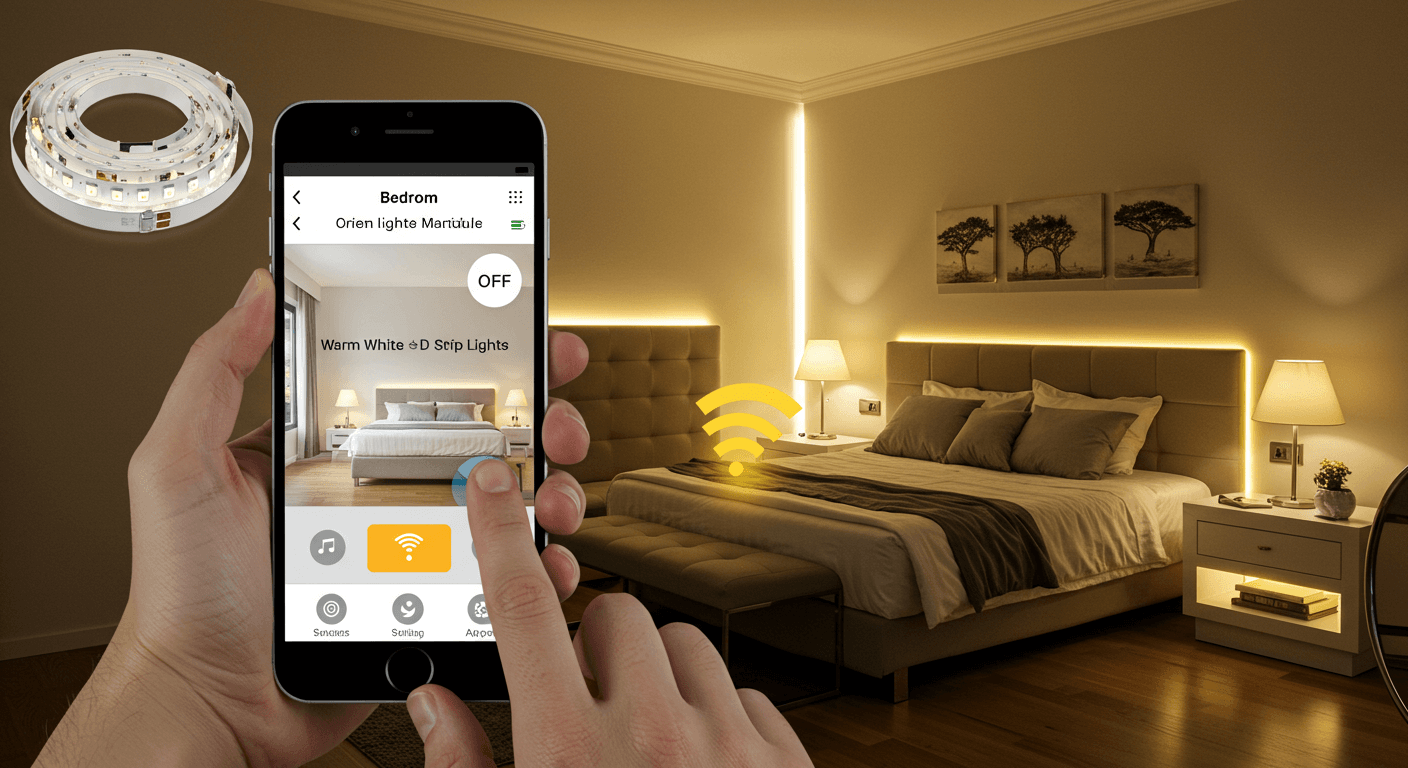
Den siste revolusjonen er kontroll. Tidlige striper var enten av eller på. Moderne strips kan styres av fjernkontroll, smarttelefon-app, stemmeassistent eller smarthjemautomatisering.
Kontrollalternativer i dag
- Fjernkontroll — dimming, CCT, fargescener ved å trykke på en knapp
- Smartphone-apper — Bluetooth- eller Wi-Fi-kontroll fra hvor som helst
- Stemmeassistenter — «snu kjøkkenstripen til varm hvit»
- Huber for smarte hjem — Zigbee, Matter og automatiseringsplaner
Det er her belysning blir en system — og hvorfor det er viktig å velge kompatible, kvalitetskontrollerte strips.
06 moderne striper og hva som skjer
Dagens LED-strips kombinerer alt du har lært de siste to tiårene: tette, effektive brikker, sømløs COB-glød, full fargekontroll og smart tilkobling.
Hvor teknologien er på vei
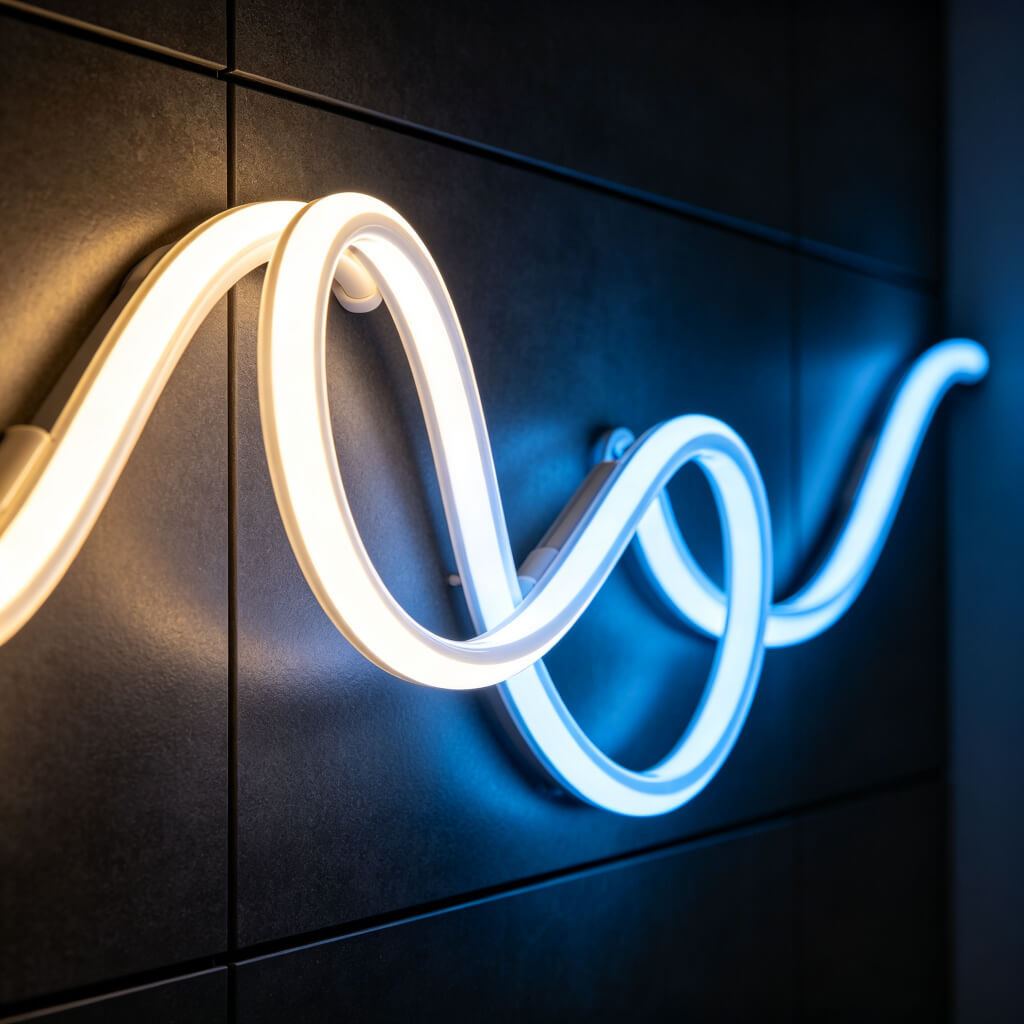
- Sømløst lys — COB og sideemitterende strimler erstatter design med synlige prikker
- Menneskesentrisk belysning — CCT og intensitet innstilt til døgnrytmen din
- Høyere integrasjon — sensorer og tilkobling innebygd i stripesystemet
- Bedre materialer — tynnere, mer fleksible, mer holdbare PCB
KayTai bygger alle moderne stripekategorier: ensfarget, avstembar hvit, RGBW, COB, sidevisning, og bøybar.
Hvorfor evolusjonshistorie hjelper deg med å kjøpe bedre
Å forstå utviklingen hjelper deg å unngå utdaterte produkter. Hvis en leverandør bare tilbyr gammeldagse lavtetthetslister, kjøper du siste tiårs teknologi.
Se dagens standard i vår LED stripelys oversikt og kjøpsguide.
07 LED Strip Evolution FAQ
Q1Når ble LED stripelys oppfunnet?
De første fleksible LED-stripene dukket opp på begynnelsen av 2000-tallet, en gang fleksible PCB-er og overflatemonterte LED-brikker ble praktiske og rimelige.
Q2Hva er den største forbedringen av LED-strips gjennom årene?
Tre forbedringer skiller seg ut: mye høyere effektivitet (120–150 lm/W), sømløst COB-lys og digital/smart kontroll. Sammen gjorde de striper fra aksenttape til et komplett belysningssystem.
Q3Er RGB-strimler nyere enn enfargede strimler?
Ja. Ensfargede striper kom først; RGB-miksing, RGBW, adresserbare og justerbare-hvite varianter fulgte ettersom brikker og kontrollere ble forbedret.
Q4Hva skal jeg se etter i en moderne LED-stripe?
Høy LED-tetthet, høy CRI (90+), tett binning (≤3 SDCM), god effektivitet og et fleksibelt PCB med pålitelig lim. Start med vår kjøpsguide.
Bygg med dagens LED-teknologi
Snakk med teamet vårt om moderne LED-strips av høy kvalitet for ditt prosjekt.

Fascinerende historie med utvikling av LED-striper. Å se hoppet fra tidlige brett til dagens fleksible strimler med høy tetthet forklarer mye om gjeldende priser og ytelse. Tidslinjen er godt strukturert og lett å følge.
Flott oversikt over hvordan LED-strips har utviklet seg. Avsnittene om forbedringer av brikkestørrelse og tetthet er innsiktsfulle. Det er nyttig kontekst når du skal velge mellom eldre og nyere produktgenerasjoner.
Interessant å se hvordan strimler flyttet fra enkeltfarge med lav tetthet til dagens adresserbare alternativer. Avsnittet om COB- og RGBIC-utvikling forklarer hvorfor de eldre stripene mine ikke kan sammenlignes. God kontekst for valg av moderne strips.