
Sisällysluettelo
- Why Use LED Strip Lights Under Kitchen Cabinets?
- What Do You Need for Kitchen Cabinets Lighting
- Best LED Strip Types for Kitchen Cabinets
- How to Choose the Right Strip for Your Kitchen
- Installation Tips for Kitchen Cabinet Lighting
- Kitchen Cabinet LED Strip Lights FAQ
- Need Help Choosing Kitchen LED Strips?
Lighting is one of the most crucial parts of the kitchen. It not only helps you see what you’re chopping up or stirring in the pot, but it also defines the distinct style and feels of your kitchen.
While many homes prioritize overhead lighting, you should also consider installing under cabinet illumination. This term refers to various light fixtures that are mounted on the underside of cabinets. These lights are useful for illuminating work areas, as decorative accents, or both. We compare numerous types of under cabinet lighting in this detailed overview. We also offer some useful purchasing tips for wholesale led strip lights, outlining the key qualities to look for when searching for the finest under cabinet lights.
In this guide, you’ll learn:
- Which LED strip type suits recessed, surface-mounted and decorative lighting
- How to calculate the strip length and wattage your kitchen needs
- How to control color temperature and brightness with a controller
- How to install under-cabinet strips for a clean, professional finish
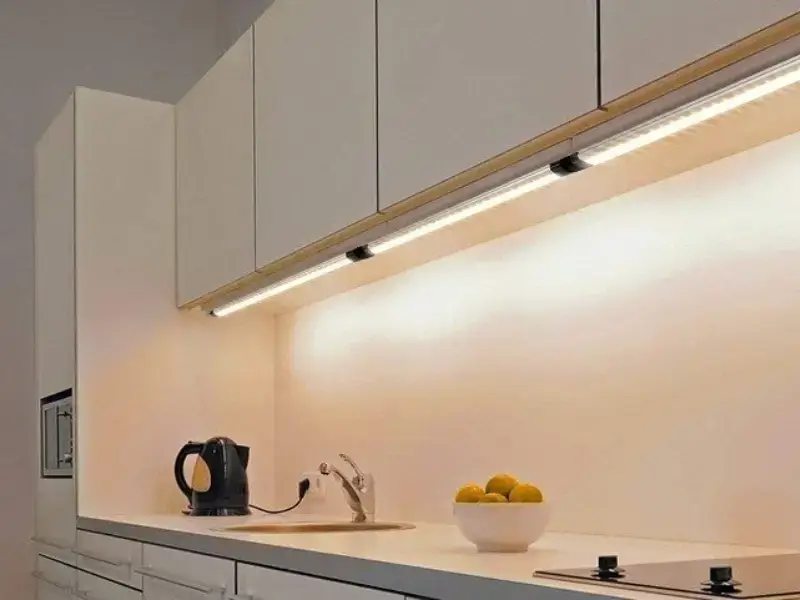
Why Use LED Strip Lights Under Kitchen Cabinets?
- Task lighting: A bright strip directly under the cabinet lights the countertop, so you can see exactly what you’re cutting and measuring.
- No harsh shadows: Overhead lights cast shadows onto the work surface; under-cabinet strips wash the counter with even, shadow-free light.
- Low profile: Strips are only a few millimetres thick and disappear under the cabinet – no bulky fixtures.
- Energy efficient: LED strips use a fraction of the power of halogen under-cabinet lights and run cool.
- Flexible color: Tunable white and RGBW strips let you switch from bright task light to warm mood light in seconds.
What Do You Need for Kitchen Cabinets Lighting
We recommend 3528 CCT Adjustable Strips for recessed lighting, 5730 LED Strips for surface mounted lighting, and Built-in 4-in-1 5050 RGBW Strip for decorative lighting when using LED light strips for wall lighting.
Depending on how strong you want the light, you may use anywhere from 60 LEDs/m to 120 LEDs/m for both of these strips.
The length of the strip will be determined by the dimensions of the wall. LED light strip connectors can be used to connect the strips as well as to connect the strips to a power source.
By calculating the entire length of the strip by the watts per meter, you can calculate the wattage necessary to run the strips. 20 m of 5730 LED light strip, for example, will require 20m x 13w/m = 260w.
Using LED light strip controllers, you can easily regulate the color temperature and brightness of the LED light strips. You can select COB led strip lights ja SMD led strip lights.


Best LED Strip Types for Kitchen Cabinets
Here’s a quick look at the three strip families we recommend for kitchens and where each one works best:
3528 CCT Tunable White – for recessed lighting
- Adjustable color temperature from cool white to warm white
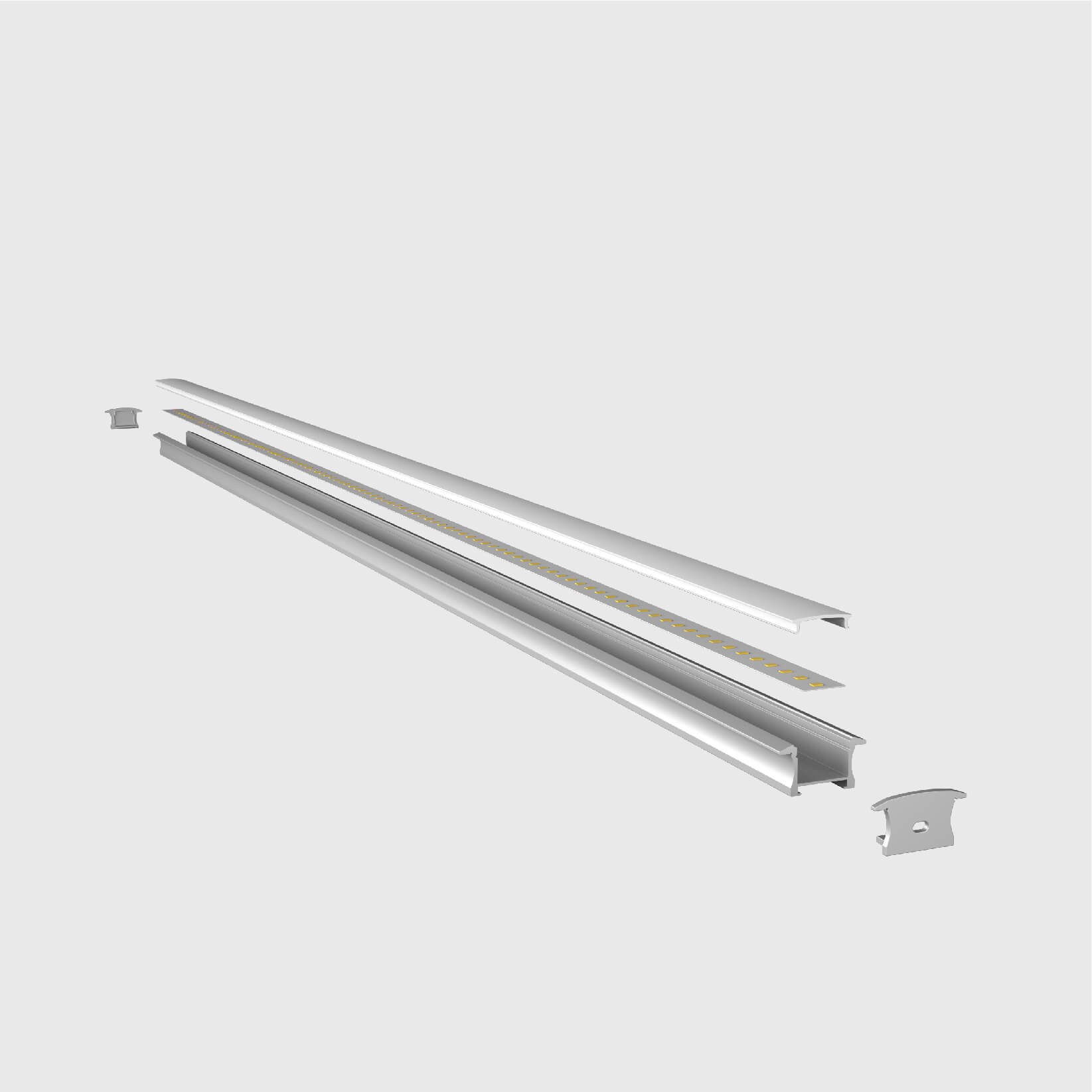
- Fits neatly inside a recessed channel or aluminum profile
- Great for bright, natural task light under cabinets
- See the full range in our tunable white LED strips category
5730 SMD LED Strips – for surface-mounted lighting
- Higher brightness per metre for open, surface-mounted runs
- Excellent even light for countertops and prep areas
- Simple to stick and run with a single-color LED strip
- Use 60-120 LEDs/m depending on how bright you need it
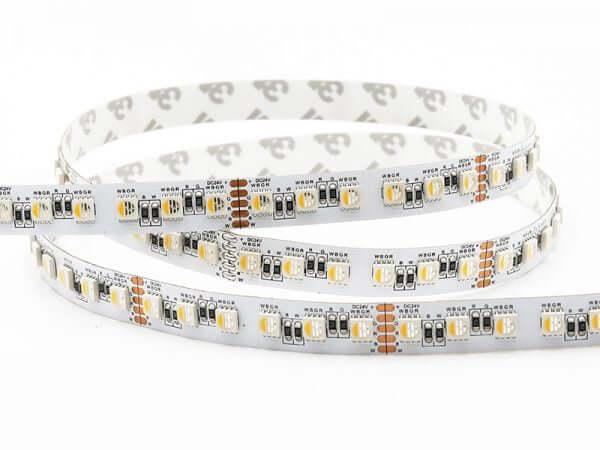
4-in-1 5050 RGBW – for decorative lighting
- White plus RGB in one strip for color accents and ambience
- Perfect for a warm glow under the kickboard or above cabinets
- Match your decor with any color via the RGBW color changing range
- Add a controller to dim and change scenes from your phone


How to Choose the Right Strip for Your Kitchen
- Measure first. Add up every run under cabinets, above cabinets and along kickboards, then add 10% for corners and cut-off waste.
- Match brightness to the job. Task areas under cabinets want 5730 or high-density 3528 at 120 LEDs/m; ambience can use fewer LEDs per metre.
- Pick the right color temperature. Cool white (4000-6000K) suits food prep; warm white (2700-3000K) creates a cozy dining mood. Tunable white covers both.
- Check the IP rating. A dry kitchen can use IP20; near a sink or extractor choose IP65+ for splash resistance.
- Don’t forget the accessories. You’ll want a compatible power supply, connectors, a controller and an aluminum profile with diffuser for the cleanest finish.
If you plan to run several strips, read our guide on cutting and connecting LED strip lights to keep the install clean and reliable.
Installation Tips for Kitchen Cabinet Lighting
A professional under-cabinet install is mostly about a clean surface and the right mounting hardware. Here are the steps that give the best result:
- 1. Clean and dry the surface. Wipe the underside of the cabinet to remove grease and dust so the adhesive bonds firmly.
- 2. Use an under-cabinet channel. A slim aluminum profile with a diffuser hides the diodes and spreads the light evenly.
- 3. Hide the wiring. Route wires along the back edge of the cabinet or through small holes in the corners.
- 4. Connect and test before sticking. Power up the strip and check every section lights up evenly before pressing it into place.
- 5. Add a controller. A dimmable tunable white or RGBW controller lets you switch scenes from the countertop.
Kitchen Cabinet LED Strip Lights FAQ
Quick answers to the questions we hear most about lighting kitchen cabinets with LED strips.
Q1. Which LED strip is best for under-cabinet lighting?
For task lighting, a 3528 tunable white strip at 120 LEDs/m is a great balance of brightness and even light. For maximum brightness on a surface-mounted run, go with 5730 SMD.
- 3528 CCT – best for recessed channel installs
- 5730 SMD – brightest for open runs
- 5050 RGBW – best for decorative color accents
Q2. How many LEDs per metre do I need?
For most kitchen countertops, 60 LEDs/m is adequate; 120 LEDs/m gives a denser, more continuous line of light with fewer visible hot spots.
- 60 LEDs/m – standard task lighting
- 120 LEDs/m – denser, more uniform glow
- Density matters more than the wattage alone
Q3. Can I connect multiple strips under different cabinets?
Yes. Use LED strip connectors or solder the joints, then feed power from a single supply sized for the total wattage.
- Add up the full strip length first
- Size the power supply at 120% of total watts
- Feed power from both ends on long runs
Q4. Do I need a diffuser for under-cabinet strips?
Not required, but highly recommended. A diffuser in an aluminum profile softens the light and eliminates the dotted LED look.
- Hides the individual diodes
- Spreads light evenly across the countertop
- Also helps dissipate heat for longer life
Need Help Choosing Kitchen LED Strips?
Tell us your cabinet sizes and lighting style – our factory team will recommend the right strips, wattage and accessories, and send a free quote.
Want to go deeper? Read our complete LED color temperature and CRI guide for the full technical breakdown.

Nice kitchen lighting ideas. The under-cabinet placement suggestions are practical, and the color temperature advice works well for food prep. The diffuser recommendations give a clean look.
Nice kitchen lighting ideas. Under-cabinet placement is practical and the colour temperature advice suits food prep. Diffuser recommendations give a clean look.