LED stands for Light Emitting Diode — a semiconductor device that turns electricity directly into light. If you have ever switched on an LED strip, a smartphone flash, or a modern streetlight, you have already used LED technology.
But what exactly makes an LED different from an old incandescent bulb? Why do LED strips last for decades while saving energy? And what should you look for when buying LED products for your home or project?
In this guide, the KayTai team breaks down everything you need to know about LEDs — how they work, their advantages and limitations, how they compare with traditional lighting, and why they power the most versatile lighting product on the market: Strisce luminose a LED.
01 What Is an LED?
An LED, or Light Emitting Diode, is a tiny semiconductor component that produces light when an electric current passes through it. Unlike incandescent bulbs that heat a filament until it glows, or fluorescent tubes that excite gas with high voltage, an LED has no filament and no gas. Light is created directly inside the semiconductor material.
This simple difference has a huge impact. Because nothing needs to be heated up, an LED:
- Glows instantly — no warm-up time when you switch it on
- Runs cool — minimal heat means less wasted energy
- Lasts up to 50,000 hours — decades of typical use
- Never burns out like a filament
- Survives vibration and shock — perfect for flexible strips
- Runs on low voltage — safer in homes and tight spaces
At KayTai, we manufacture the LED chips, circuit boards, and finished Strisce luminose a LED that rely on this technology every single day.

02 How Does an LED Work?
Inside an LED, two types of semiconductor material are joined together: an n-type layer that is rich in free electrons and a p-type layer that has “holes” (missing electrons). When you apply electricity, electrons jump across the junction and recombine with holes. Each recombination releases a tiny packet of energy — and that energy is emitted as light.
The color of the light depends on the semiconductor material and its bandgap. A larger bandgap releases more energy and produces shorter wavelengths (blue or violet light); a smaller bandgap produces longer wavelengths (red or orange light).
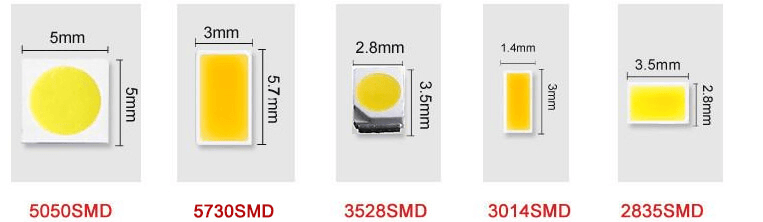
That is why different LED colors use different materials — and why a single LED strip can be engineered for warm white, cool white, RGB, or even specific SMD LED types like 5050, 2835, or 3030.
Want to go deeper? Our guide on come sono realizzate le strisce LED walks through the full manufacturing process.
03 Key Advantages of LED Lighting
These are the six reasons LED has become the world default lighting technology:
Energy Efficient
LEDs convert up to 80–90% of electricity into light, wasting far less energy as heat than incandescent or halogen bulbs.
Ultra-Long Life
With a lifespan of up to 50,000 hours, an LED can run for more than five years of continuous use — no frequent bulb changes.
Instant & Cool
LEDs light up instantly with no warm-up, and they stay cool to the touch, reducing heat build-up in cabinets and ceilings.
Durable & Safe
No fragile filament or glass means LEDs resist vibration, shock, and impact. Low voltage also eliminates spark risks.
Recyclable & Clean
LEDs contain no toxic gases or mercury and are fully recyclable — a genuinely greener lighting choice.
Unlimited Design
From flexible strips to neon flex, LEDs can bend, cut, dim, and change color — something no filament bulb can match.
This flexibility is exactly why LED strips have become the go-to for modern lighting projects of every size.
From Chips to Finished Strips
The performance you get from an LED depends heavily on quality — the chip brand, the binning, the PCB, and the assembly. That is why we engineer every step in-house.
- Chip selection — premium chips from Osram, Philips, Epistar and Everlight
- Color consistency — low-SDCM binning so every reel matches
- Thermal design — quality PCBs that keep light stable for years
- Full testing — every strip is checked before it ships
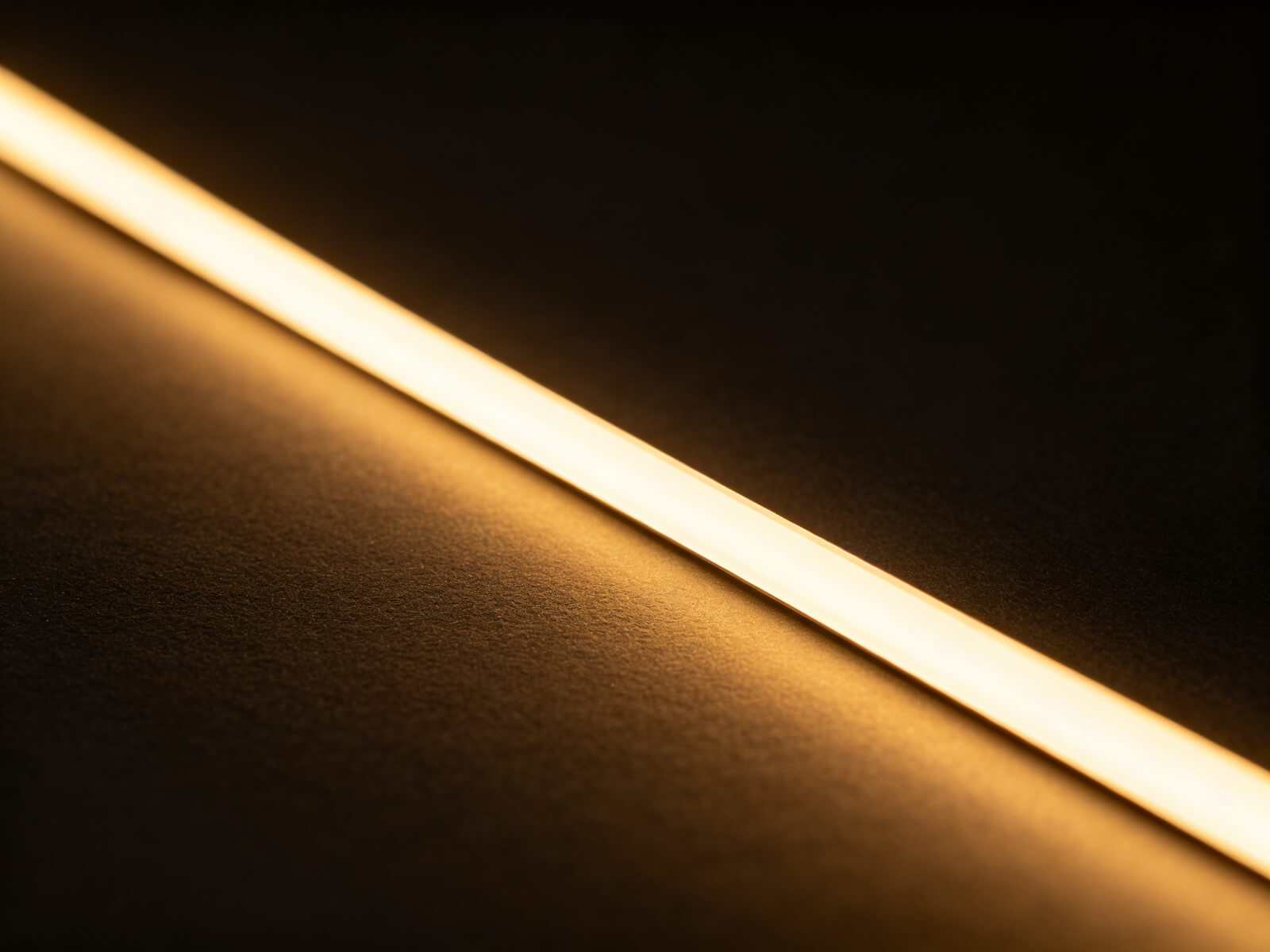
Explore the result: Strisce LED COB with a seamless, dot-free glow, or single-color strips for everyday projects.
04 The Honest Limitations of LED
No lighting technology is perfect, and as a manufacturer we prefer to be straight with you. Here are the three real limitations to plan around:
Higher Upfront Cost
LEDs cost more to buy than bulbs, but they repay the difference many times over in energy and lifespan savings.
Not All LEDs Dim
Cheaper drivers may flicker or buzz when dimmed. Choose quality strips and a compatible dimmable power supply for smooth control.
Directional Beam
LEDs emit light in a focused direction rather than 360 degrees — usually an advantage, but it changes how fixtures must be aimed.
05 LED vs Traditional Lighting: Side by Side
To see why LEDs won the lighting race, compare a 60W-equivalent LED bulb with an incandescent bulb of the same brightness:
| Feature | Incandescent | LED |
|---|---|---|
| Lifespan | ~1,000 hours | Up to 50,000 hours |
| Energy for 700+ lumens | 60 W | ~10 W |
| Heat emitted | High (90% wasted) | Molto basso |
| Instant on | No warm-up | Instant |
| Dimmerabile | Yes | With compatible driver |
| Fragile | Glass + filament | Solid state, durable |
| Yearly running cost (5 hrs/day) | Much higher | Up to 85% lower |
Across a year, a single LED bulb can save roughly the same energy that it would take to run a small appliance — and the savings multiply with every strip, panel, or fixture you install.
06 LED Strips: The Most Versatile Form of LED
While LEDs appear in bulbs, panels, and tubes, the most versatile form is the Striscia LED — hundreds of tiny chips mounted on a flexible PCB that you can cut, bend, and stick almost anywhere.
Endless Applications
- Ambient lighting — living rooms, bedrooms, and hallways
- Task lighting — under kitchen cabinets and desks
- Accent lighting — shelves, mirrors, stairs, and coves
- Color effects — RGB and addressable strips for gaming and entertainment
- Architecture — recessed lighting with aluminum profiles
Choosing the right strip matters. Start with our LED strip buying guide or explore the PANNOCCHIA, RGBW, and single-color ranges.
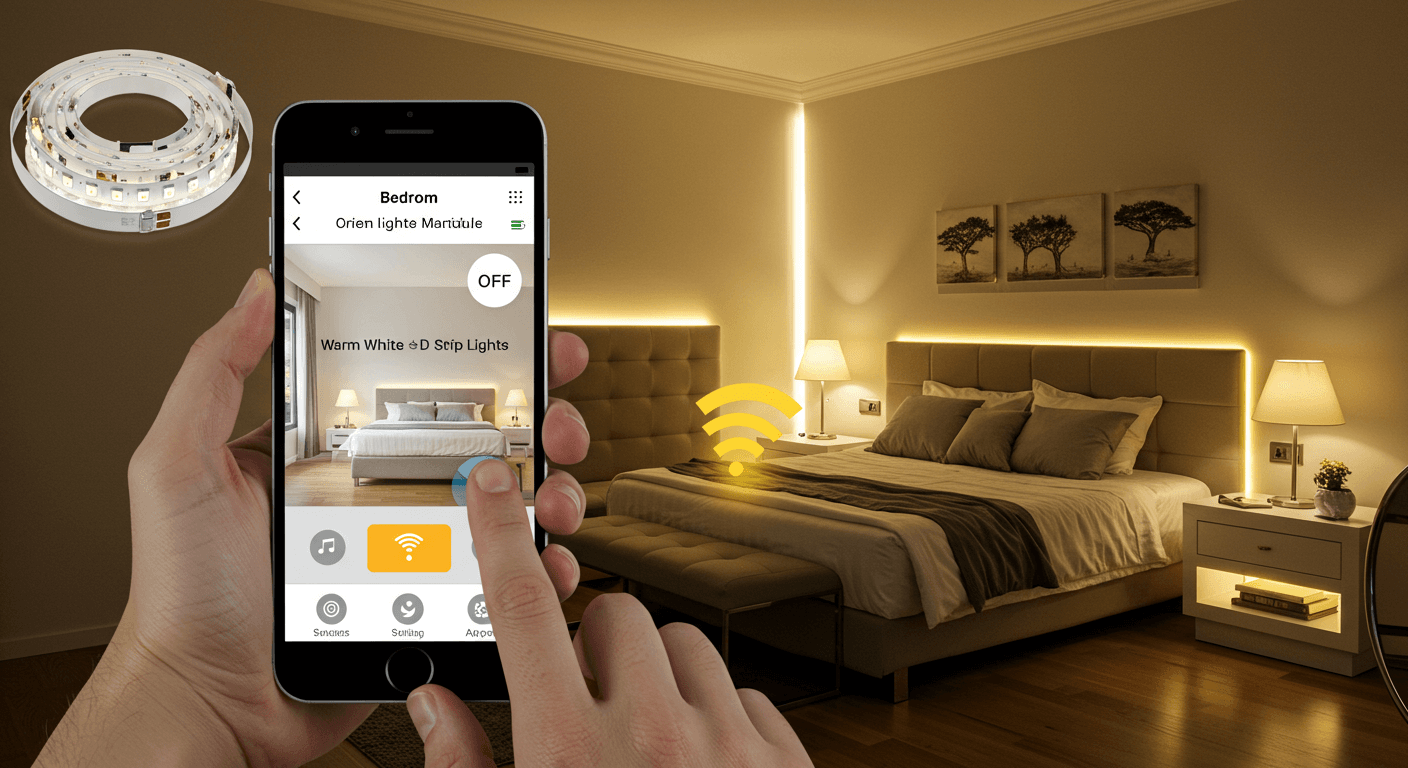
Color That Matches Your Mood
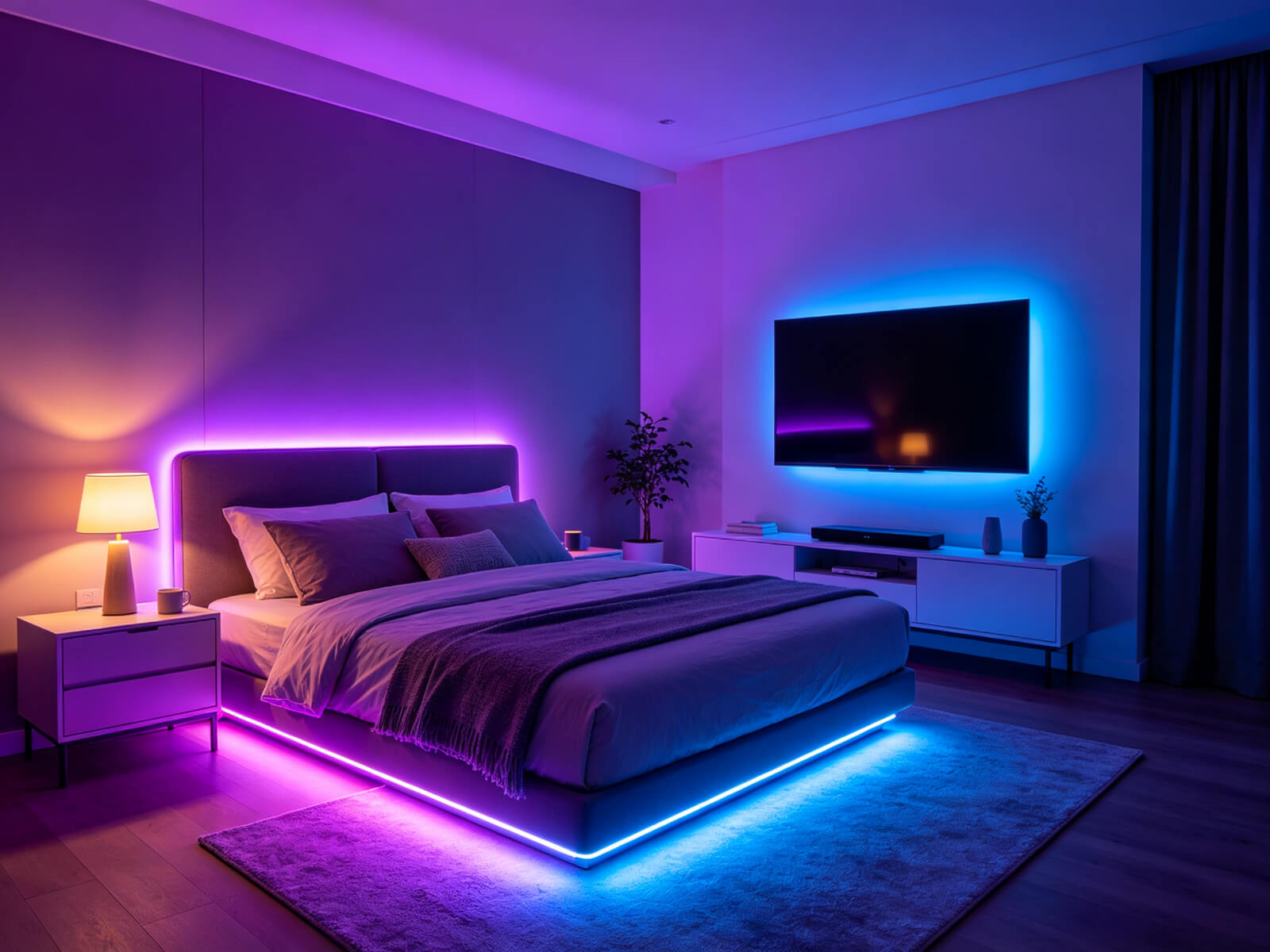
Today LED strips go far beyond a single white. Tunable white strips shift from cozy 2700K to crisp 6500K, while RGBW strips mix millions of colors. Understanding color temperature is key — read our guide on 2700K contro 3000K contro 5000K contro 6500K to choose the right tone.
See our strisce LED bianche regolabili for dynamic, adjustable white light.
07 Why Choose KayTai for LED Lighting?
KayTai is a professional LED strip manufacturer based in China, serving global commercial, architectural, and retail projects since day one. When you buy from KayTai, you get a factory partner — not just a product.
We support OEM & ODM customization, custom lengths, CCT, and packaging — and we back every order with rigorous quality control.
08 LED FAQ
Q1What does LED stand for?
LED stands for Light Emitting Diode — a semiconductor device that produces light when an electric current passes through it, with no filament or gas.
Q2How long do LED lights last?
Quality LEDs last up to 50,000 hours. Used 5 hours a day, that is more than 27 years of service — far beyond incandescent (~1,000 hours) or CFL (~8,000 hours).
Q3Are LED strip lights worth it?
Yes. LED strips are cheap to run, last for decades, install in minutes, and adapt to almost any space. For most projects they pay for themselves in energy savings alone. Start with our buying guide.
Q4Are LEDs safe and environmentally friendly?
LEDs contain no toxic gases or mercury, are fully recyclable, run on low voltage, and generate very little heat — making them one of the safest and greenest lighting options available.
Still Have Questions?
Our lighting engineers answer within one working day — send us your project details.

A solid introduction to LED basics. The semiconductor explanation is simple enough for customers while still being accurate. Useful to share with clients who are new to LED lighting.
Great beginner introduction to LED technology. The way it explains the semiconductor basics without getting too technical is perfect for customers new to LED lighting.
Great beginner guide. The breakdown of how an LED chip works and what forward voltage means helped me understand specs before my first project. The terminology section is a useful bookmark for anyone starting out.