Hvis du ønsker å bruke din LED stripe med en LED aluminium kanal, må du velge riktig profil LED diffuser. Det finnes mange typer LED-profildiffusorer på markedet. Hver modell har sine egne fordeler. For å gjøre avgjørelsen din enklere, vil vi se nærmere på disse modellene sammen med en forklaring av hver funksjon i detalj.
I denne guiden lærer du:
- Hvordan de fire hoveddiffusormaterialene (PVC, PMMA, PC, silikon) sammenlignes
- Hva hver diffuserfinish – klar, frostet, opal, melkeaktig, svart, silisium og linse – er best for
- Enten du faktisk trenger en diffuser til LED-stripeprosjektet ditt
- Hvordan velge riktig diffusor for applikasjonen din uten å miste for mye lysstyrke

1. Sammenlign ulike materialer av LED-diffusere
Hovedmaterialene til LED-profildeksel på markedet er PC, PMMA, silikon og PVC. Profildiffusorene/dekslene av forskjellige materialer spiller ikke bare forskjellige roller i anti-ripe, anti-ekstrudering og anti-aldring, men har også innvirkning på effekten av belysning. La oss her lære om fordeler og ulemper med hvert LED-profildekselmateriale.

PVC
Den er ganske flammebestandig og har stivhet, motstandsdyktig mot alkalier og syrer. Prisen på PVC er svært lav, men fuktopptaket og varmebestandigheten er dårlig, og veldig lett å gulne etter bruk i en periode, så stadig færre teknikere velger PVC som lampeskjerm.
PMMA (akryl)
Den er hard og ripebestandig, har god gjennomsiktighet, isolasjon og mekanisk styrke, og er enkel å behandle. Men lav kjemisk motstand og ikke særlig motstandsdyktig mot støt.
PC
Den er preget av den største motstanden mot alkalier, syrer og bensin. Den er flammehemmende, ripebestandig, og har meget gode optiske egenskaper. Den er imidlertid ikke motstandsdyktig mot fuktighet – den blir sprø.
Silikon
Den er fleksibel, flammehemmende, friksjonsbestandig og svært miljøvennlig. En silikonprofildiffusor er enklere å installere, men har lavere lysgjennomgang og høyere pris enn en PC. Som en lampeskjerm brukes den vanligvis til sirkulær aluminiumsekstrudering.
Materialsammenligning på et øyeblikk
| Materiale | Nøkkelstyrker | Se opp | Typisk bruk |
|---|---|---|---|
| PVC | Flammebestandig, stiv, lav pris | Blir gul, dårlig varme-/fuktbestandighet | Budsjett innendørs deksler |
| PMMA (akryl) | Hard, ripebestandig, klar, enkel å behandle | Lav kjemisk og slagfasthet | Klare og frostede profiler |
| PC | Flammehemmende, ripebestandig, flott optikk | Blir sprø hvis den ikke er fuktbeskyttet | De fleste premium diffusorer |
| Silikon | Fleksibel, flammehemmende, miljøvennlig, enkel installasjon | Lavere transmittans, høyere pris | Sirkulære / buede profiler |
2. Sammenlign forskjellige LED-profildiffusere
Ulike LED-profildiffusorer kan brukes til forskjellige formål. Du kan for eksempel bruke dem til å lyse opp en scene eller til reklameformål. Du kan også bruke denne typen diffusorer om natten for å lette uteområdet eller garasjen. Det finnes forskjellige typer tilgjengelig på markedet som en gitterløs diffusor og sirkulær diffusor som gir en jevn fordeling av lyskilden.
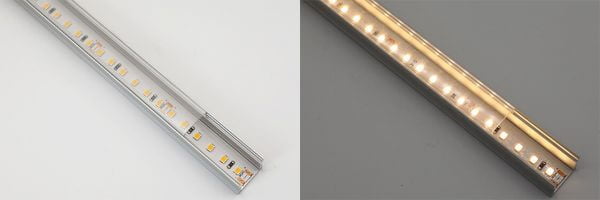
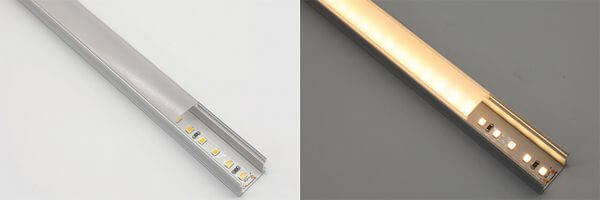
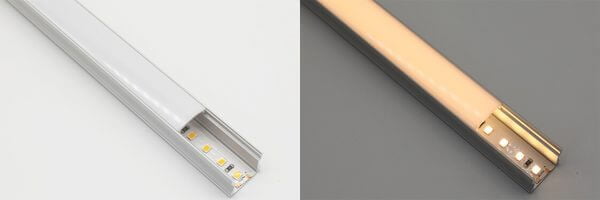
Hvert av de ovennevnte profildekslene spiller sin rolle i LED-belysning, som ikke bare er utseendet til selve installasjonen når belysningen er AV, men hver type sprer lyset på en annen måte når belysningen er slått PÅ. Nedenfor sammenligner vi de vanligste LED-profildiffusorene side om side.




Diffusertyper på et øyeblikk
| Type | Overføring | Hotspots skjult | Best for |
|---|---|---|---|
| Klar | ~90–95 % | Ingen | Indirekte buktbelysning, maks lysstyrke |
| Frostet | ~85–90 % | Delvis | Oppgavebelysning, underskap |
| Opal | ~75 % | Ja | Direkte utsikt, kjøkken, detaljhandel |
| Melkeaktig | ~65–70 % | Ja, fullt ut | Helt prikkfritt dekorativt lys |
| Svart | ~60 % | Ja | Premium og skjult utseende når den er av |
| Silisium | ~70–75 % | Ja | Buede og sirkulære profiler |
| Linse | N/A (fokuserer stråle) | Ingen | Spotlight-effekter, 10-60° stråle |
3. Trenger du en diffuser for LED-strips-lys?
En diffuser med diffusert LED-profil er ganske enkelt et flatt plastark som er kuttet på en veldig spesifikk måte. Formen på utskjæringen lar lys passere gjennom, men leder det også på en måte som skaper en myk, jevn glød over overflaten til et objekt. Denne typen lysdiffusorer kan brukes på omtrent alt der du ønsker en slags myk, jevn glød – for eksempel et kontorbord eller kjøkkenbenkeplate – men de er spesielt ideelle for bruk med innendørslys og dekorativ belysning som trenger en form for forbedring.
Når du skal lyse opp et rom med LED-lys, er det viktig å vurdere hva slags lys du ønsker. Hvis du leter etter en myk, jevn glød, er diffus belysning veien å gå.
Diffused belysning er det ideelle valget for de fleste applikasjoner der du ikke trenger en skarp spotlight. Det er også det beste valget for jevn belysning av store områder og dekorere rom uten å overvelde mindre rom som bad eller garderobeskap.
Hvis du ser etter mer intenst lys i et bestemt område, bør du vurdere et LED-panel montert over eller under armaturet. Dette kan være nyttig hvis armaturet ditt ikke er høyt nok til å nå høyt nok opp til å skinne ned på arbeidsområdet eller veggplassen under den.
Diffusorer er den vanligste typen lysspreder. De skaper en myk, jevn lyskilde som ofte brukes på kontorer, butikker og andre kommersielle områder.
Diffusorer kan brukes i alle typer belysningsapplikasjoner, inkludert innfelte og innfelte armaturer. Den beste måten å spre lys på er å bruke flere lag med diffusorer.
Antall lag avhenger av størrelsen og formen på armaturet, men du bør alltid bruke minst to lag for optimalt resultat.

Trenger du alltid en? En rask tommelfingerregel
- Installasjoner med direkte visning trenger en diffusor: hvis profilen er i siktelinjen din, bruk opal eller melkeaktig for å skjule LED-punktene og redusere gjenskinn.
- COB-strimler er allerede prikkfrie: en COB LED stripe ser kontinuerlig ut alene, så et klart eller frostet deksel er ofte nok – et melkeaktig deksel koster bare lysstyrke.
- Skjult / indirekte lys kan hoppe over det: for buktbelysning eller bak en baffel der stripen aldri ses direkte, holder et klart deksel maksimal effekt.
- Blending og anstrengelse av øynene: hvis du eller kundene dine ser på lysene i timevis (kontorer, detaljhandel, kjøkken), anbefales en diffusor på det sterkeste for å beskytte øynene.
4. Hurtigguide: Hvordan velge riktig diffusor
Match applikasjonen din med diffusoren som gir det utseendet du ønsker uten å kaste bort lysstyrken:
| Din søknad | Anbefalt diffusor | Hvorfor |
|---|---|---|
| Arbeidslys under skapet | Frostet eller opal | Lys, men behagelig for øynene, ingen prikker |
| Synlig lineært lys (stue, soverom) | Opal eller melkeaktig | Helt prikkfri, glatt moderne linje |
| Vik / indirekte taklys | Klar | Strip er skjult, behold maksimal lysstyrke |
| High-end / skjult utseende når av | Svart (røyk) | Usynlig når den er av, arkitektonisk utseende |
| Buede eller sirkulære profiler | Silisium | Fleksibel, følger kurven |
| Aksent veggvask / galleri | Linse | Fokuserer strålen for en spotlight-effekt |
Hvis lysstyrken betyr mest, velg den minst ugjennomsiktige diffusoren som fortsatt skjuler prikkene for visningsavstanden din. Hvis det prikkfrie utseendet betyr mest, gå melkeaktig eller opal og velg en litt lysere enfarget LED stripe for å kompensere for lystapet.
For en komplett installasjonsveiledning, se vår Kjøpeveiledning for LED aluminiumsprofil. Hvis du skal tenne et kjøkken, vår belysningsguide for kjøkken under skap dekker de beste stripene for den jobben, og når du har diffusoren din kan du følge med hvordan kutte og koble til LED stripelys for å installere det rent.
5. LED Diffuser FAQ
Raske svar på spørsmålene kundene stiller oss mest om LED strip diffusorer.
Q1. Reduserer en diffusor LED-strimmelens lysstyrke?
Ja, enhver diffusor absorberer litt lys. Et klart deksel taper bare 5-10 %, mens et opal- eller melkeaktig deksel kan miste 25-35 %. Hvis du trenger en spesifikk lysstyrke, velg en lysere stripe for å kompensere.
- Klart: ~5-10 % lystap
- Frostet: ~10-15 % lystap
- Opal/melkeaktig: ~25-35 % lystap
Q2. Hvilken diffuser gir et helt prikkfritt utseende?
Melkeaktige og opale deksler skjuler LED-punktene fullstendig. Frost skjuler dem bare delvis - det avhenger av gapet mellom stripen og dekselet og LED-tettheten til stripen.
- Melkeaktig: skjuler prikker fullstendig, mykere utgang
- Opal: skjuler prikker, holder mer lysstyrke
- Frostet: delvis – bruk tette striper (120 lysdioder/m)
Q3. Trenger COB LED-strips en diffusor?
Ikke for å skjule prikker – COB-strimler produserer allerede en kontinuerlig, prikkfri lyslinje. Et klart eller frostet deksel er vanligvis nok, og det holder mer lysstyrke enn et melkeaktig deksel.
- COB-strimler er allerede sømløse
- Klar/frost holder mer lysstyrke
- Melkeaktig bare hvis du ønsker en ekstra myk glød
Q4. Hva er forskjellen mellom opal og melkeaktig diffusor?
De ser like ut, men har forskjellige ugjennomsiktighet. Opal overfører ca. 75 % av lyset, melkeaktig ca. 65-70 %. Milky er mer ugjennomsiktig og skjuler prikker litt sterkere, på bekostning av litt lavere lysstyrke.
- Opal ~75% transmittans
- Melkeaktig ~65-70% transmittans
- Milky skjuler prikker litt bedre
Q5. Kan en diffusor kuttes til min lengde?
Ja. De fleste profildiffusorer kan skjæres i lengde med en fintannsag eller snittkniv, eller leverandøren din kan forhåndsskjære dem til nøyaktige lengder for en renere egg.
- Kutt med en fintannsag eller skjærer
- Forkuttede lengder unngår flisete kanter
- Bestill endestykker for å fullføre begge ender
6. Konklusjon
Alle som bruker LED-profillys i aluminium bør spre dem. LED-lys er veldig sterke, og de kan føre til anstrengelser for øynene når du ser direkte på dem. Å spre dem på en eller annen måte (som denne diffuseren) vil gjøre dem mindre intense, noe som gjør det lettere å se på lysene hele dagen lang.
Det riktige valget kommer vanligvis ned til to spørsmål: hvor lyset er synlig fra, og hvor mye lysstyrke du trenger. Synlige installasjoner vil ha opal eller melkeaktig; skjulte installasjoner kan bruke clear; førsteklasses design elsker den svarte finishen. Uansett hva du velger, beskytter en kvalitetsdiffusor øynene, skjuler prikkene og får enhver LED-stripeinstallasjon til å se langt mer profesjonell ut.
Bla gjennom vår LED aluminiumsprofil rekkevidde for å finne profiler, diffusorer og endestykker tilpasset ditt prosjekt, eller ta kontakt så hjelper vi deg spesifisere de riktige delene for bestillingen din.
Trenger du hjelp til å velge diffusor?
Fortell oss din søknad, stripetype og ønsket utseende – teamet vårt vil anbefale riktig profil og diffusor og sende et gratis tilbud på ditt prosjekt.
Diffusorguiden er veldig nyttig. Forklaringen på opal kontra klar sammenligning og lysspredning er tydelig. Hjalp meg med å velge riktig finish for en buktinstallasjon.
Diffusorguiden er veldig nyttig. Opal versus klar og lett spredning forklares tydelig. Hjalp meg med å velge riktig finish for en buktinstallasjon.