
Iluminação comercial com faixa de LED: o guia completo para varejo, restaurantes e espaços comerciais
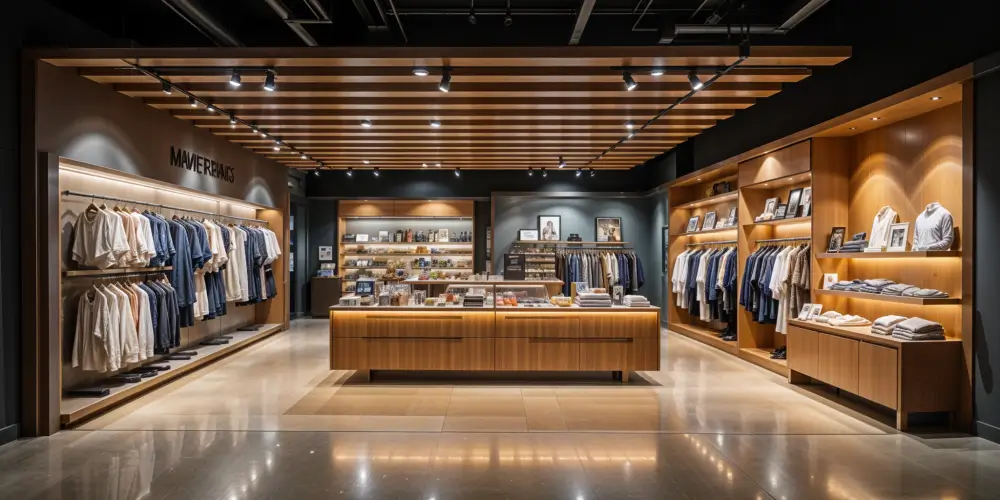
Commercial LED strip lighting is no longer an afterthought in shopfitting. Retailers, restaurant chains, hotel operators and exhibition designers now use LED strips as a core lighting tool — to guide customers, present products accurately, build atmosphere and cut energy bills at the same time.
This guide covers everything you need to specify commercial LED strip lighting with confidence: why commercial lighting is different, lighting layers, color temperature by venue, CRI, strip selection (COB vs SMD vs RGBW vs tunable white), IP protection, installation, dimming and smart controls, plus real application examples and the most common mistakes to avoid.
Índice
- 1. Why Commercial Lighting Is Different
- 2. Lighting Layers: Ambient, Task and Accent
- 3. Color Temperature by Venue
- 4. CRI: Why 90+ Matters for Retail and Food
- 5. Choosing the Right Strip: COB vs SMD vs RGBW vs Tunable White
- 6. IP Ratings: From Shelves to Kitchens and Facades
- 7. Installation: Channels, Diffusers and Profiles
- 8. Dimming and Smart Controls for Commercial Projects
- 9. Real Commercial Applications
- 10. Common Mistakes to Avoid
- 11. Recommended KayTai LED Strips
- 12. FAQ
1. Why Commercial Lighting Is Different
Home lighting needs to be comfortable. Commercial lighting must sell. Every light level, color tone and highlight in a store, restaurant or hotel lobby is a design decision that affects dwell time, purchase behavior and brand perception.
Higher sales per visitor
Well-lit displays draw the eye to hero products and seasonal offers. Retail studies consistently link better lighting to longer dwell time and higher conversion.
Brand atmosphere
A boutique and a supermarket can sell the same item — the light tells the story. Warm tones say premium, crisp white says fresh and modern.
Energy savings
Modern LED strips deliver 100+ lm/W with dimming and zoning. Commercial operators typically cut lighting energy 40-70% versus legacy fixtures.
Unlike residential projects, commercial lighting is also a maintenance and liability issue: long operating hours, public-facing installations and strict local codes mean reliability, certification and heat management matter as much as looks. Start with a solid design framework — our linear lighting guide for commercial ceilings shows how the same principles scale to ceiling-level systems.
2. Lighting Layers: Ambient, Task and Accent
Every commercial space works with three lighting layers. LED strip is uniquely good at all three because it is thin, flexible and dimmable.
Ambient (base light)
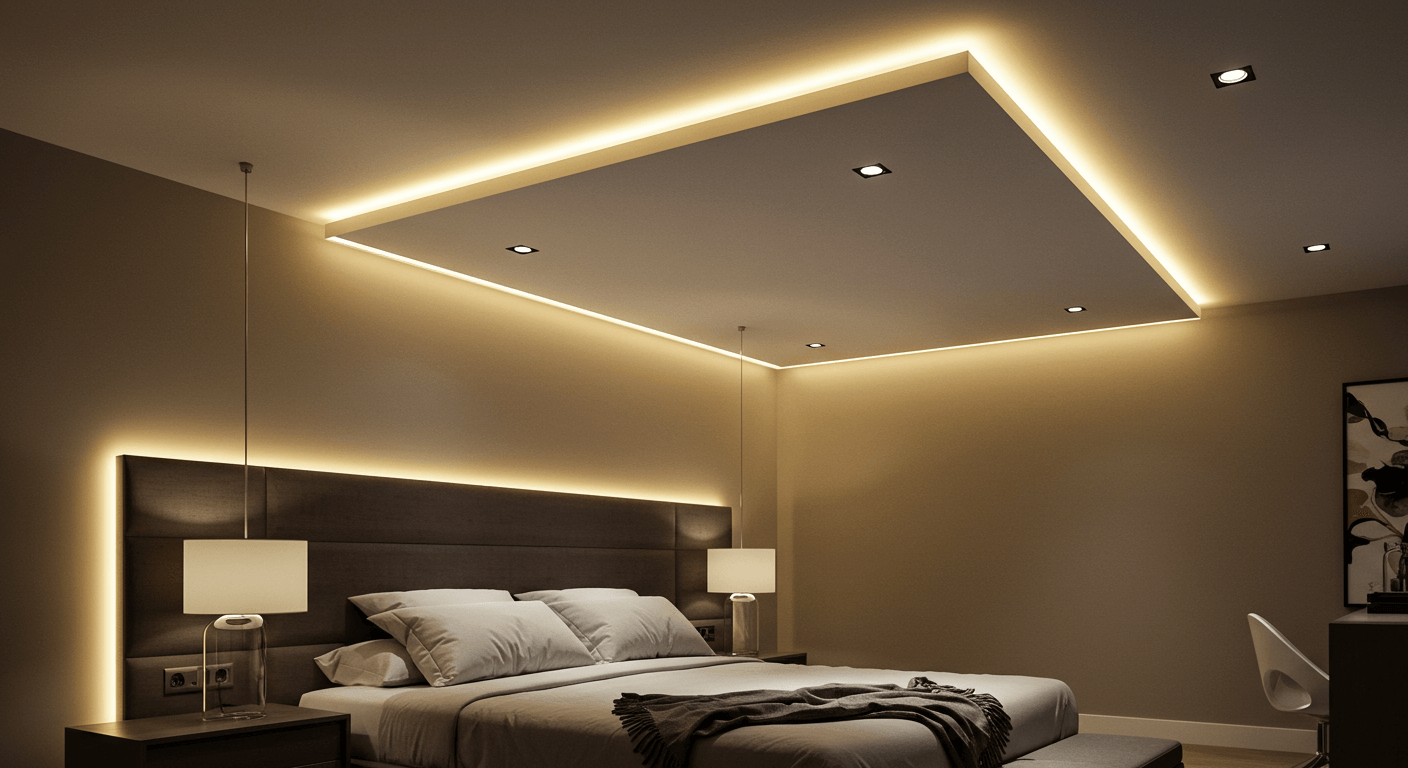
Uniform general light from ceiling coves, tray ceilings or linear pendants. Sets the baseline brightness and fills shadows.
Task (work light)
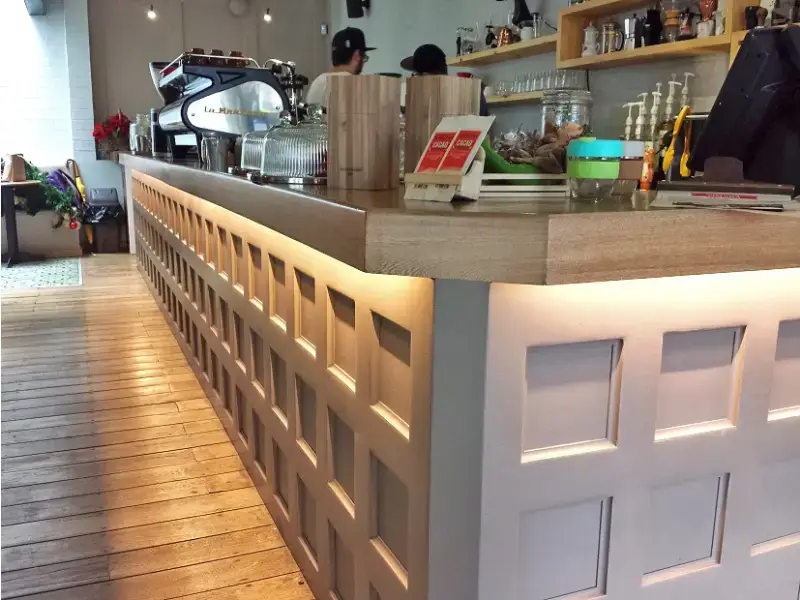
Focused light where precision happens: counters, prep areas, bar tops, checkout and detail work.
Accent (display light)
Highlighting merchandise, artwork, signage and architectural lines — the layer that creates the ‘wow’.
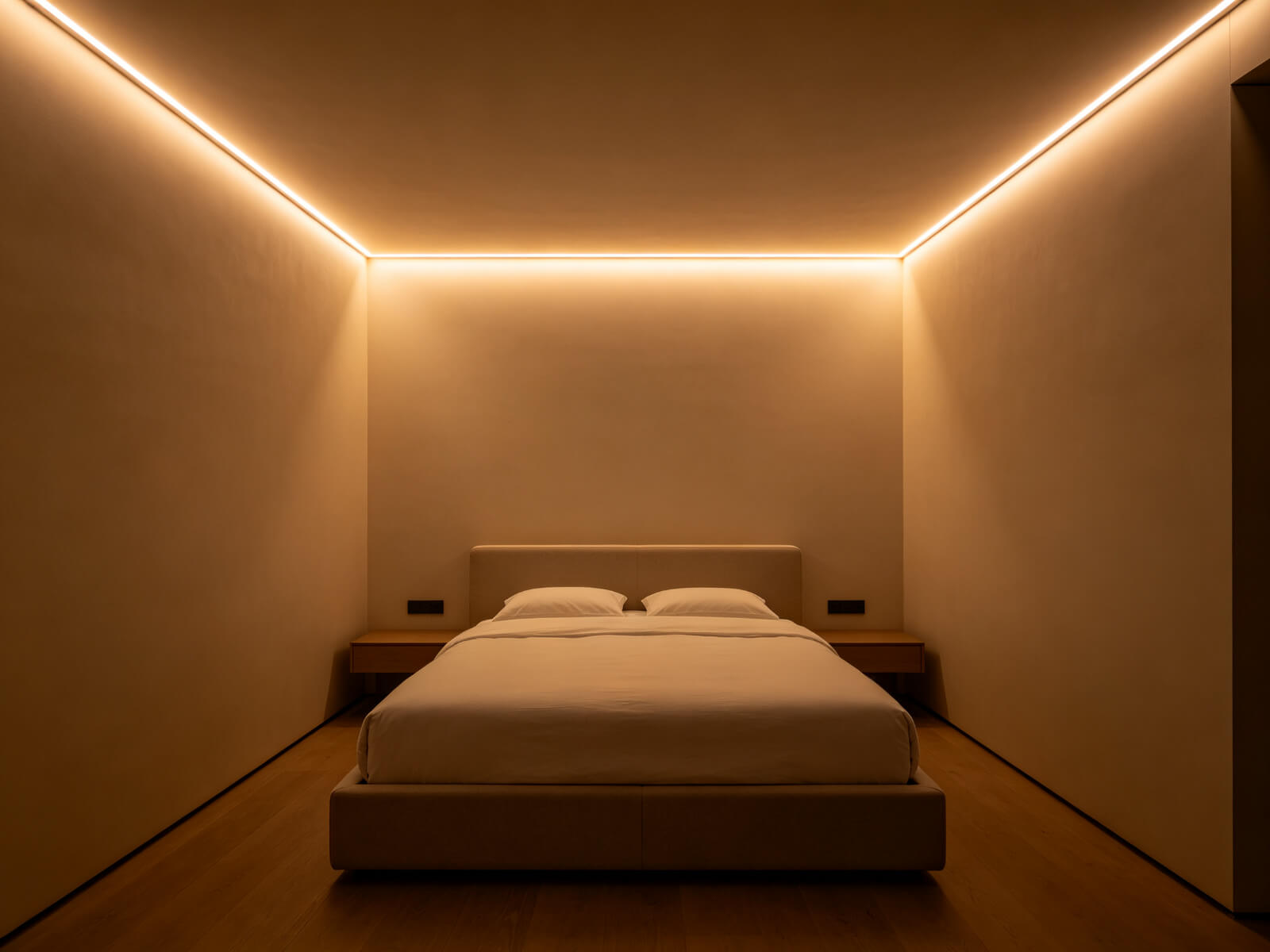
Layer ratios depend on the venue: fashion retail leans on accent (60/30/10), restaurants on ambient warmth, supermarkets on task plus high uniformity. The key is that every layer is separately switchable and dimmable — that is what makes a commercial lighting system flexible across dayparts and seasons.
3. Color Temperature by Venue
Color temperature (CCT) is the single most visible specification in commercial lighting. Choosing the wrong tone makes a premium brand feel cheap — or a fresh-food counter look dull. Use this table as your starting point:
| Venue | CCT recomendado | Por que |
|---|---|---|
| 2700 K | Warm, intimate and premium; flatters fabric and skin tones | |
| 3000 K | The retail workhorse — warm but still crisp on merchandise | |
| 3500 K | Neutral, clean, energetic modern feel | |
| 4000 K | Fresh, bright and color-accurate for packaging and produce | |
| 5000 K+ | Daylight-like rendering that makes gems and artwork sparkle | |
| 2700 K | Flattering, relaxed, romantic atmosphere | |
| 3000 K | Inviting without feeling dark | |
| 4000 K | Bright, hygienic and efficient for prep and service | |
| 3000 K | Welcoming and luxurious | |
| 4000 K | Alert, neutral and productivity-friendly |
Golden rule: never mix more than two color temperatures in one visible room — color mismatch is the most visible sign of an unprofessional install. When a space needs to change mood across the day (breakfast café to evening bar), a tunable white system is a better answer than mixing fixed strips.
4. CRI: Why 90+ Matters for Retail and Food
CRI (Color Rendering Index) tells you how true colors look under a light. In commercial spaces, CRI is a direct sales tool:
Food
Fresh meat, produce and baked goods must look appetizing. CRI 90+ keeps reds and greens vivid instead of muddy.
Fashion
Fabrics and leather change perceived value with rendering. High-CRI strip is standard in boutiques and showrooms.
Jewelry & electronics
Reflective and colored surfaces need accurate light — CRI 95-97 products are common in premium retail.
Especificações CRI ≥ 90 for any area where customers see products or food. CRI 80 strip is acceptable for corridors, storage and back of house. If you need to compare rendering quality across suppliers, our color temperature and CRI guide explains the full picture.
5. Choosing the Right Strip: COB vs SMD vs RGBW vs Tunable White
Commercial projects usually choose between four strip families. Here is how they compare:
| Tipo de tira | Melhor para | Key spec to check |
|---|---|---|
| Coves, continuous lines, general ambience | LEDs/m (120-240), lm/W efficiency, CRI 80-97 | |
| Visible low-height lines, premium shelving | Dot-free appearance, CRI 90+, lumen density | |
| Mood change across the day, HCL | CCT range (2700-6500 K), 2-wire controller | |
| Brand moments, signage, entertainment | 4-in-1 vs 5-in-1 chips, controller protocol | |
| Kitchens, outdoor signage, facades | IP20 vs IP65 vs IP68, silicone coating quality |
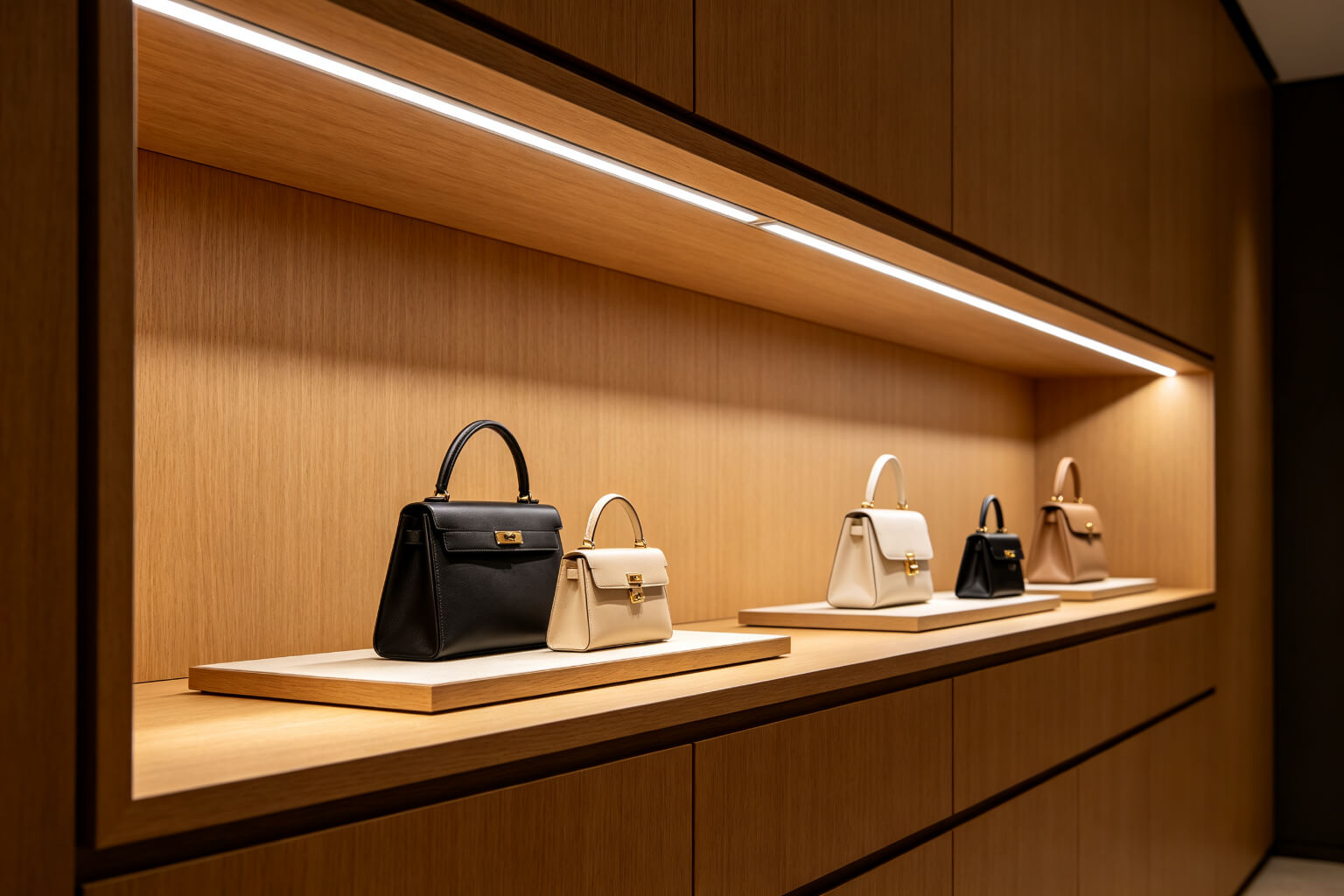
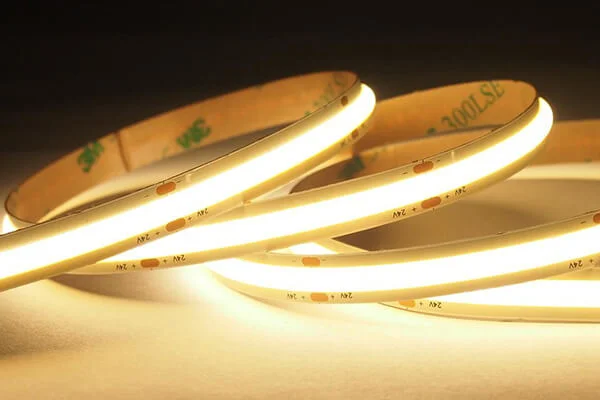
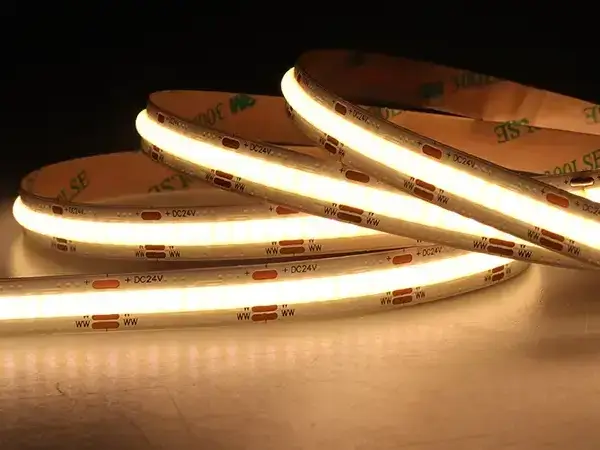
ESPIGA (chip-on-board) strips are the fastest-growing choice for premium retail because they produce a continuous, dot-free band of light — ideal for shelves, displays and coves where the strip itself is visible. SMD2835 remains the efficiency champion for long hidden runs. If you are new to strip specification, start with the complete LED strip light guide.

6. IP Ratings: From Shelves to Kitchens and Facades
IP (Ingress Protection) rating decides where a strip can live. Commercial installs fail most often because the right strip ended up in the wrong environment:
| Classificação IP | Typical commercial use | Notas |
|---|---|---|
| Shelves, coves, display cases indoors | Uncoated; keep away from moisture and dust | |
| Kitchens, bar splash zones, prep areas | Silicone-coated; wipeable and splash-safe | |
| Outdoor signage, facades, pools, water features | Fully sealed; check UV resistance for outdoors |
In kitchens, even IP65 strip in an open channel will accumulate grease — pair it with a sealed profile. For outdoor logo lighting and facades, combine IP68 strip with a UV-stable silicone sleeve. See how far linear lighting can go on building facades e pool lighting projects.

7. Installation: Channels, Diffusers and Profiles
Commercial installs are built to last years and be seen by the public. That means LED strip almost never mounts bare — it goes into an aluminium channel with a diffuser:
Gerenciamento de calor
Aluminium profiles dissipate heat, protecting LEDs and extending lifetime in long-running commercial hours.
Clean, professional finish
Recessed or surface channels hide edges and wiring for a shopfitter-grade look.
Controle de brilho
Frosted or opal diffusers spread light evenly and cut the point brightness of each LED.
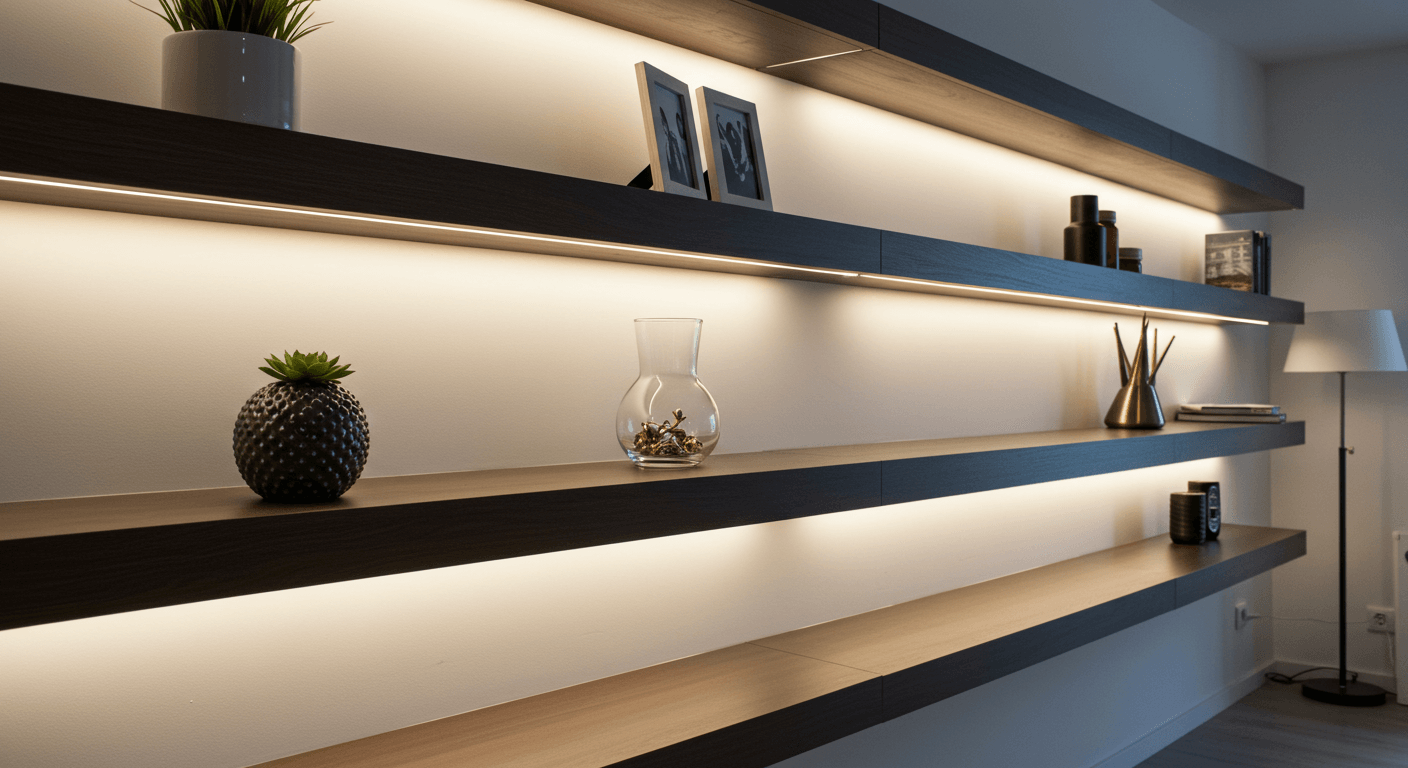
Common mounting strategies: shelf channels under display shelves, cove channels in ceiling recesses, glass-shelf channels for display cabinets, and wall-wash profiles to light vertical surfaces evenly. The right diffuser also affects light quality — our guides on LED strip installation e commercial ceiling linear lighting walk through the full process.
8. Dimming and Smart Controls for Commercial Projects
Controls are where commercial LED lighting earns its keep. A dimmed, zoned system saves energy, extends strip life and changes the room with the daypart:
| Control type | Melhor para | Implementation with LED strip |
|---|---|---|
| Small shops, single rooms | Dimmable driver + wall dimmer; check compatibility with the strip | |
| Restaurants, retail zones | Standard analog control, simple and reliable | |
| Hotels, multi-zone projects | Addressable scenes, integration with building systems | |
| Dynamic retail, mood switching | Scene control from a phone or tablet, tunable white scenes | |
| Café to bar transitions | Daytime 4000 K to evening 2700 K on one strip |
Plan zones on the floor plan, not the ceiling plan: separate display, circulation and back-of-house. Add occupancy sensors in storage and restrooms, and daylight sensors near windows. Deep-dive into dimming LED strip lights for wiring and compatibility details.
9. Real Commercial Applications
Here is how LED strip lighting performs across the most common commercial venues:
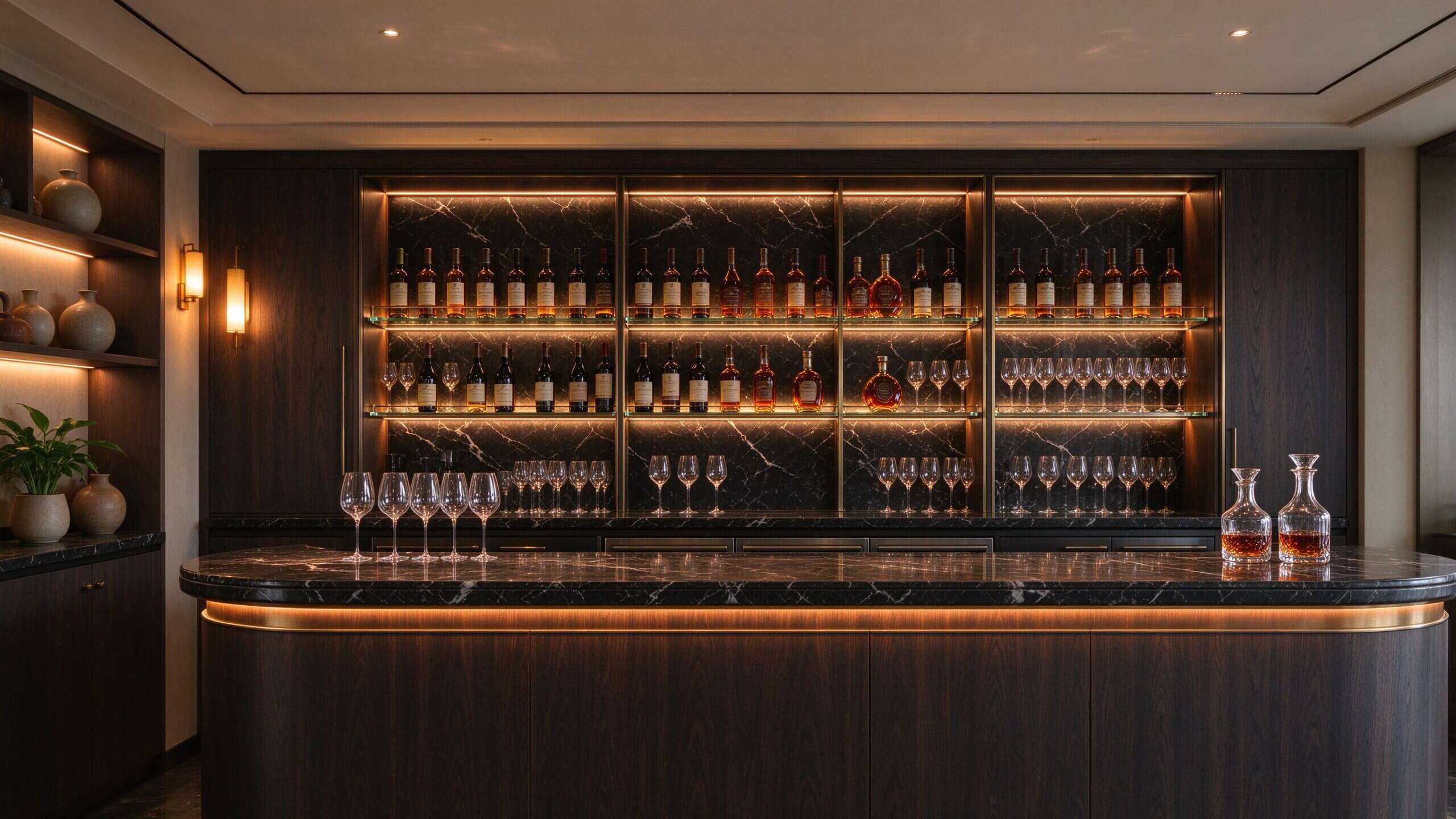
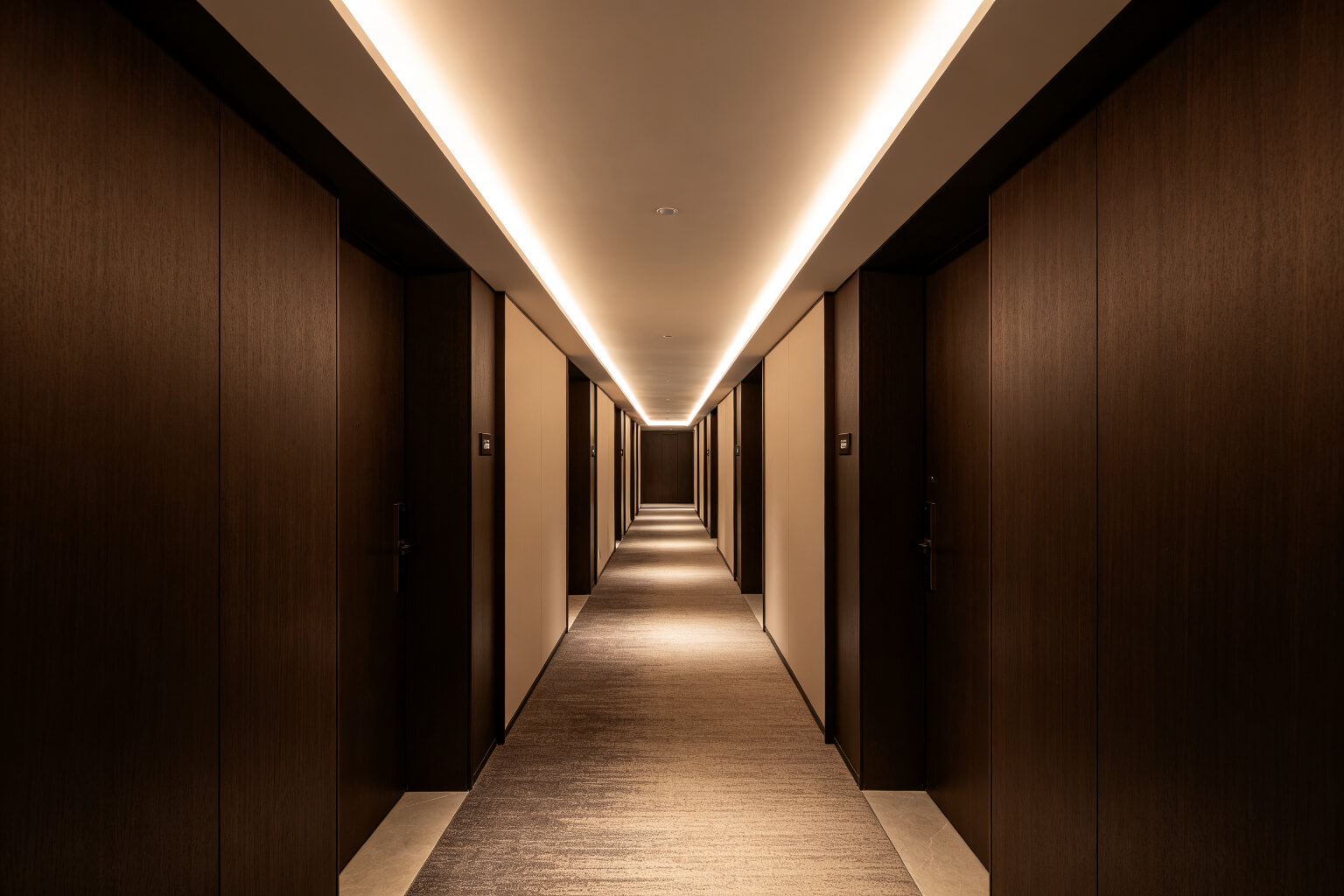
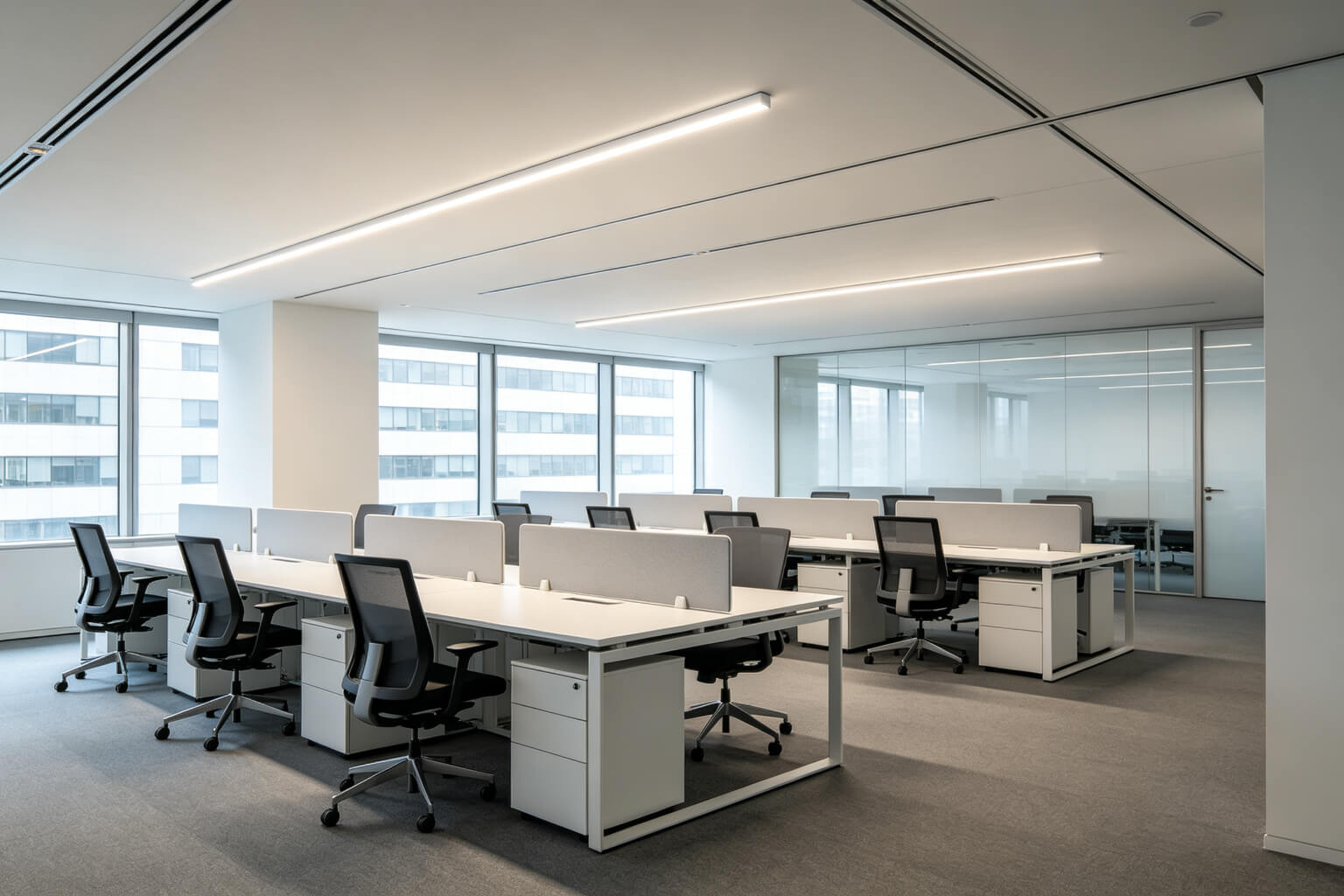
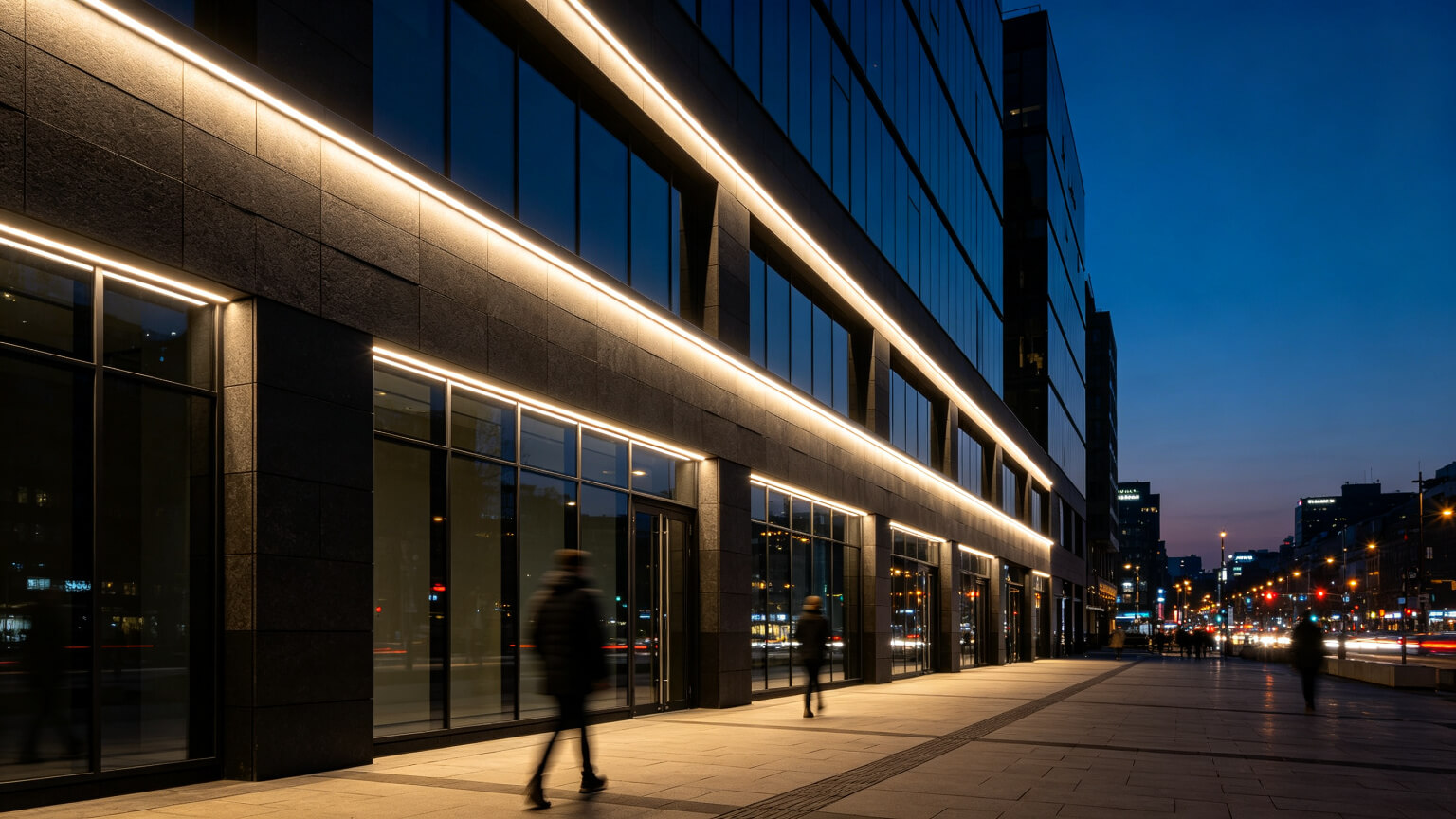
For gyms and entertainment venues, check our gym lighting guide; for office-specific standards, see office lighting standards.
10. Common Mistakes to Avoid
Mixing color temperatures
Two visible CCTs in one room scream ‘unprofessional’. Standardize one CCT per zone.
Ignoring CRI
CRI 80 strip on food or fashion washes out colors and hurts sales perception.
Wrong IP rating
Non-waterproof strip in a kitchen or façade fails early. Match IP to the environment.
Voltage drop in long runs
Long runs dim toward the end. Use 24 V, parallel injection, or shorter runs.
Bare strip without a channel
Heat, glare and untidy edges. Always spec a profile with diffuser.
No dimming or zoning
A fixed scene wastes energy and can’t adapt to dayparts or seasons.
11. Recommended KayTai LED Strips for Commercial Projects
Every KayTai strip is factory-tested with integrating-sphere and aging checks before shipment. These six cover the most common commercial specifications:
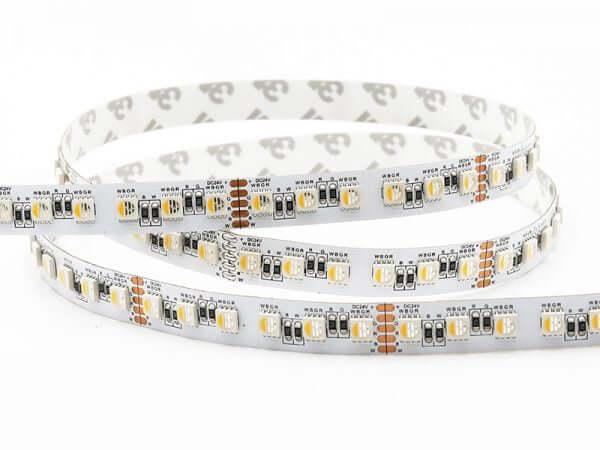
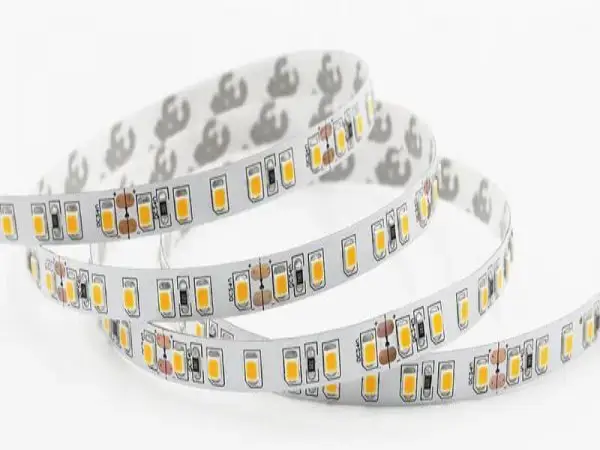

Need help choosing? Send your floor plan, application photos and target light levels — KayTai engineers will recommend the right strip, channel and control system with photometric data.
12. FAQ
▶What color temperature is best for a retail store?
3000 K is the general retail workhorse. Use 2700 K for luxury boutiques, 3500 K for fast fashion and sportswear, 4000 K for supermarkets, pharmacies and electronics, and 5000 K+ for jewelry or art galleries.
▶What CRI should commercial LED strips have?
CRI 90 or higher wherever customers see products or food. CRI 80 is acceptable for corridors, storage and back of house. Premium fashion and food counters often spec CRI 95-97.
▶COB or SMD strip for commercial lighting — which is better?
COB gives a continuous dot-free band, ideal for visible premium lines such as shelves, displays and coves. SMD2835 offers higher efficiency and value for long hidden runs. Choose by where the strip is visible.
▶Can LED strips be used in restaurant kitchens?
Yes — use IP65 (silicone-coated) strip inside a sealed profile. IP20 strip will fail quickly from splash and grease. Keep guest-facing zones at 2700-3000 K and back-of-house at 4000 K.
▶Do commercial LED strips need an aluminum channel?
Almost always. Channels dissipate heat, protect the strip, control glare with a diffuser and give a clean professional finish. Bare strip is rarely acceptable in customer-facing spaces.
▶Can LED strip lighting be dimmed or controlled?
Yes. Triac dimming suits small shops, 0-10 V suits restaurants and retail zones, DALI/DMX suits hotels and multi-zone projects, and tunable-white controllers handle day-to-evening mood changes.
▶What IP rating do I need for outdoor commercial lighting?
IP65 for covered outdoor areas and signage; IP67/IP68 for direct rain, facades, pools and water features. Also check UV resistance for long outdoor life.
▶How do I avoid voltage drop in long commercial runs?
Use 24 V strip, keep runs under the recommended length, inject power at both ends or in the middle for long lines, and use thicker gauge wire.
Planning a Commercial Lighting Project?
Send KayTai your floor plan and target light levels. We will recommend the right LED strips, channels and control system — with photometric data and free samples for qualified projects.
Contato KayTai