
The LED strip light is one of the youngest — and fastest evolving — lighting products ever made. In just two decades it went from a niche tinkerer’s accessory to one of the most installed lighting products in the world.
Here is the story of how LED strips evolved, what changed at each step, and where the technology is headed next.
01 The Early Days of LED Strips
LED strips first appeared in the early 2000s, built by mounting small LED chips in rows on a rigid or semi-flexible board. The earliest strips were single-color, often red or blue, and were used mainly for signage and vehicle accent lighting.
From Rigid Bars to Flexible Tape
The breakthrough was the flexible PCB — a thin, bendable circuit board that could be rolled, cut, and installed almost anywhere. Combined with a peel-and-stick adhesive backing, the modern LED tape was born.
Early strips were simple: one color, fixed brightness, soldered to a power supply. But they proved a concept — light you could cut and place anywhere.
02 Miniaturization & Better Chips
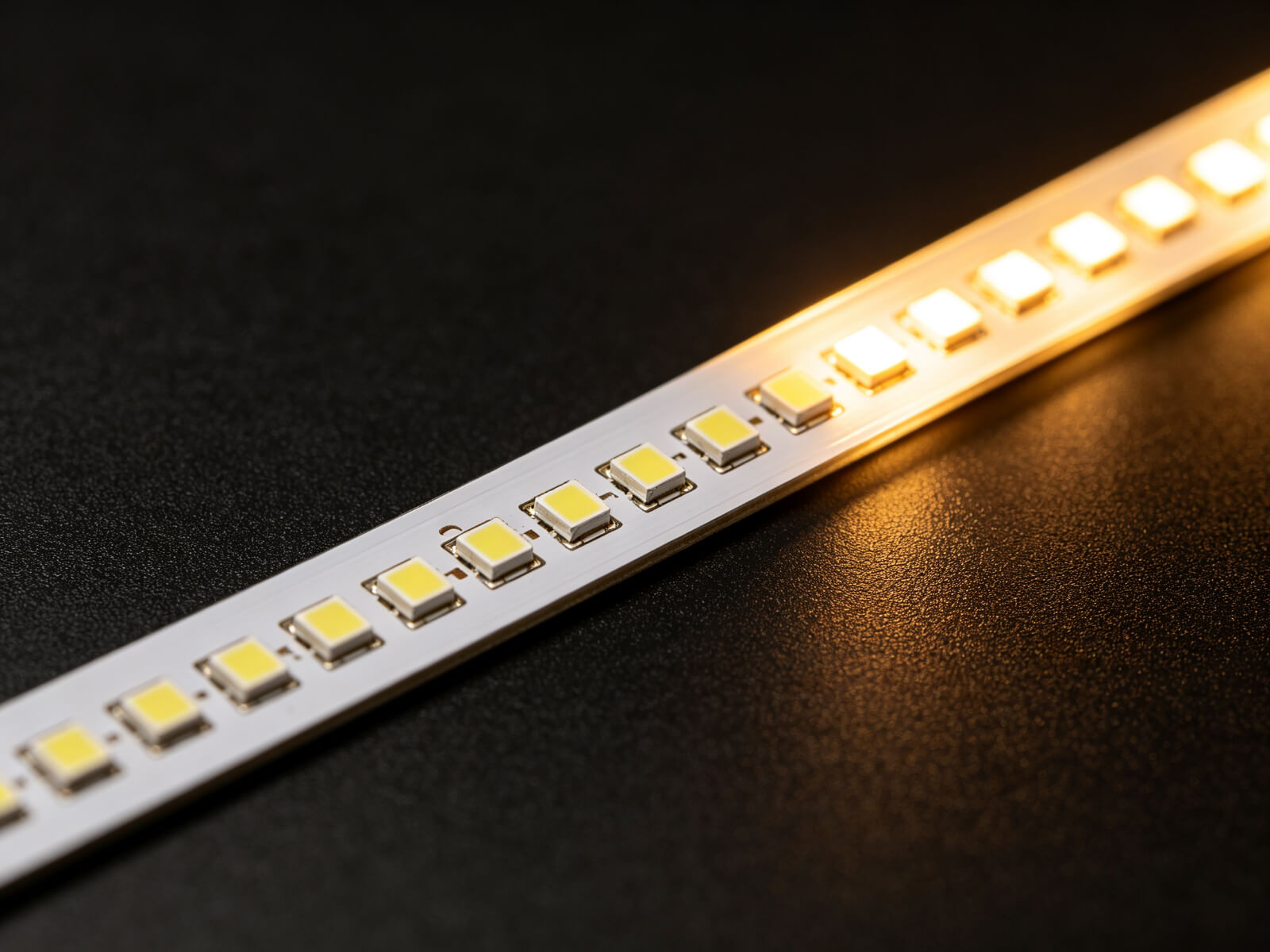
As LED chip technology advanced, strips got smaller, denser, and more efficient. The same length of strip now holds many more LEDs, producing more light with less power and less heat.
Two packaging breakthroughs drove the change:
The Workhorse
Small surface-mount chips soldered directly to the PCB — reliable, efficient, and affordable. See our SMD LED vodilo.
The Premium Upgrade
Chips-on-board packed densely for a seamless, dot-free glow. The fastest-growing strip category for premium projects.
03 From Fixed Color to RGB & Beyond
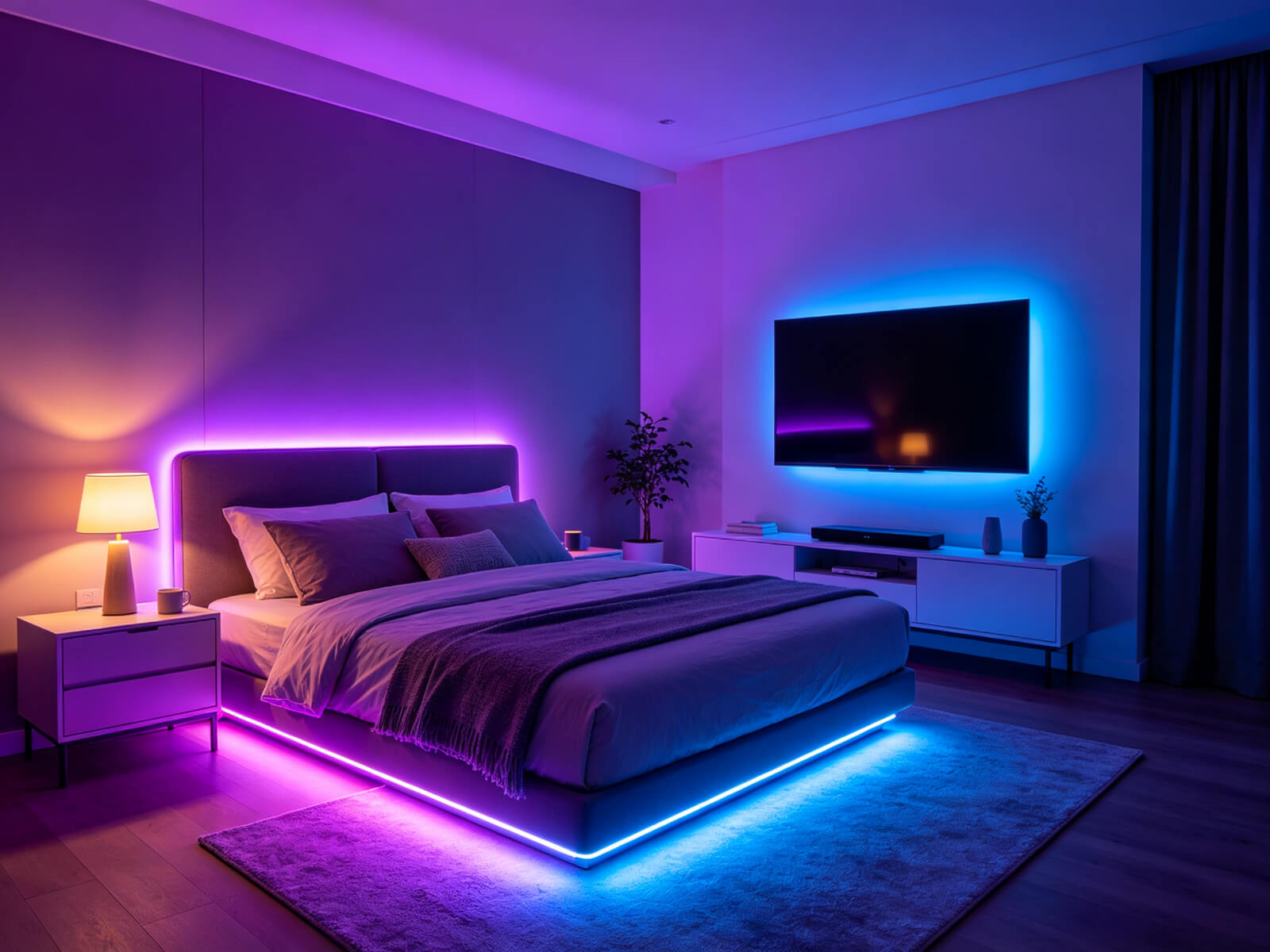
Single-color strips were great — but users wanted more. The next big leap was color-changing RGB. By placing red, green, and blue chips together and mixing them, strips could produce any color.
From RGB to RGBW and Addressable
- RGB — red, green, blue chips, 16 million colors
- RGBW — adds a dedicated white chip for true white light
- Addressable — each LED controlled individually for animations and patterns
- Tunable white — shift CCT from warm to cool without color
Raziščite naše RGBW LED strips in nastavljivi beli trakovi.
04 Efficiency Gains: More Light, Less Power
Efficiency improved dramatically with every chip generation. Modern LED strips reach 120–150 lm/W, compared to about 15 lm/W for a classic incandescent bulb.
| Light Source | Typical Efficiency | Lifespan |
|---|---|---|
| Incandescent bulb | ~15 lm/W | ~1,000 hours |
| Halogen | ~20 lm/W | ~2,000 hours |
| Fluorescent | ~60 lm/W | ~10,000 hours |
| Early LED strips | ~60 lm/W | ~30,000 hours |
| Modern LED strips | ~120–150 lm/W | ~50,000 hours |
Higher efficiency means lower energy bills, less heat, and longer life — three of the strongest reasons LEDs replaced every older technology.
05 The Digital Control Era
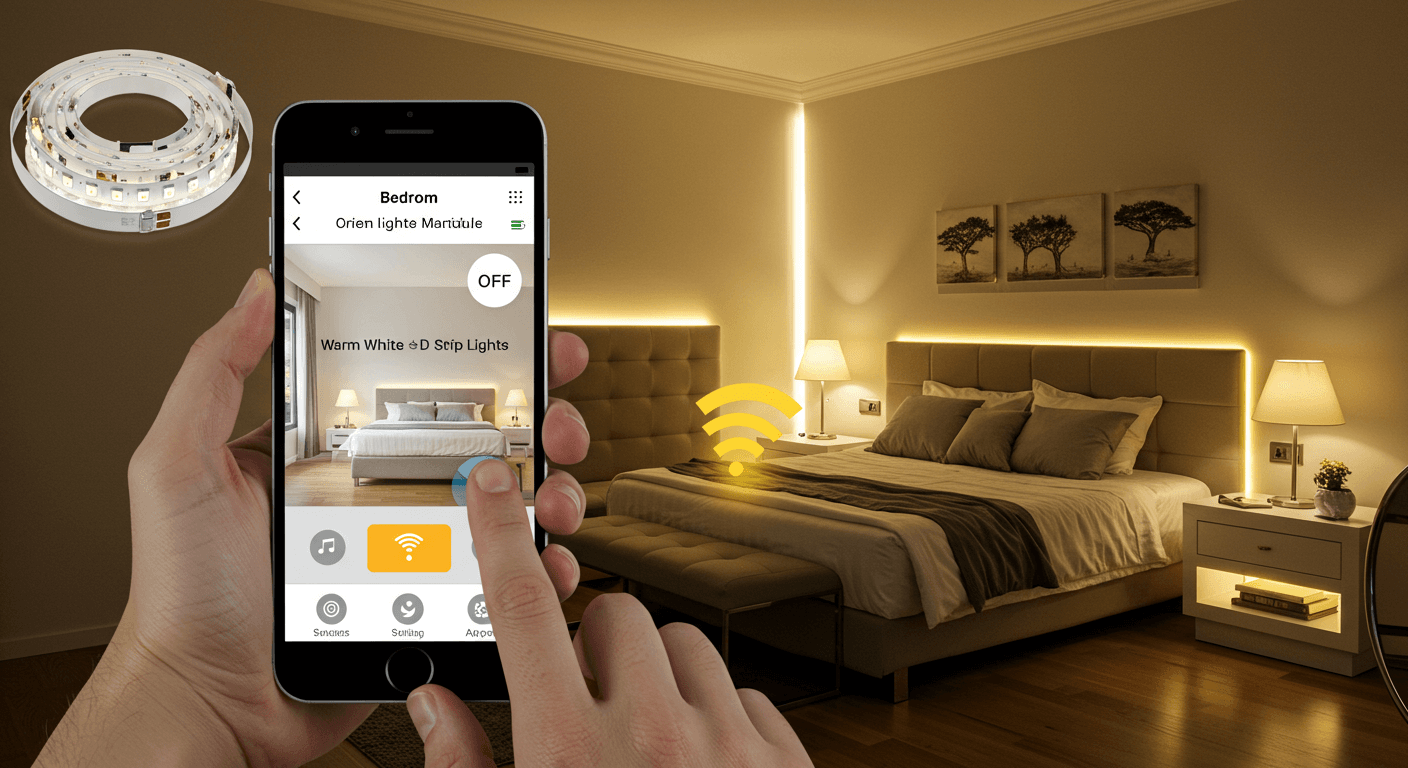
The most recent revolution is control. Early strips were either on or off. Modern strips can be controlled by remote, smartphone app, voice assistant, or smart-home automation.
Control Options Today
- Remote control — dimming, CCT, color scenes at the press of a button
- Smartphone apps — Bluetooth or Wi-Fi control from anywhere
- Voice assistants — “turn the kitchen strip to warm white”
- Smart home hubs — Zigbee, Matter, and automation schedules
This is where lighting becomes a system — and why choosing compatible, quality-controlled strips matters.
06 Modern Strips & What’s Next
Today’s LED strips combine everything learned in the last two decades: dense efficient chips, seamless COB glow, full color control, and smart connectivity.
Where the Technology Is Headed
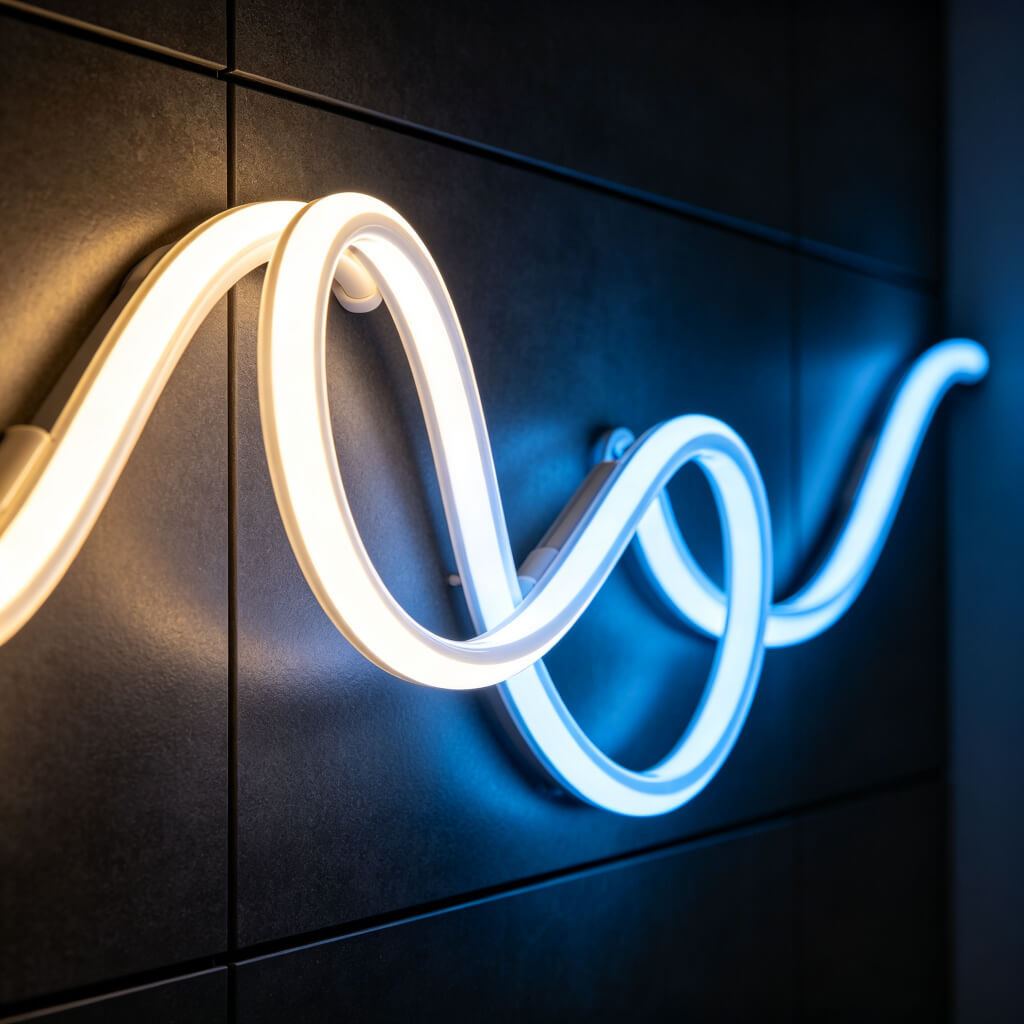
- Seamless light — COB and side-emitting strips replace visible-dot designs
- Human-centric lighting — CCT and intensity tuned to your circadian rhythm
- Higher integration — sensors and connectivity built into the strip system
- Better materials — thinner, more flexible, more durable PCBs
KayTai builds every modern strip category: single-color, nastavljiva bela, RGBW, COB, side-view, in upogljiv.
Why Evolution History Helps You Buy Better
Understanding the evolution helps you avoid outdated products. If a supplier offers only old-style low-density strips, you are buying last decade’s technology.
See today’s standard in our LED trakovi overview and buying guide.
07 LED Strip Evolution FAQ
Q1When were LED strip lights invented?
The first flexible LED strips appeared in the early 2000s, once flexible PCBs and surface-mount LED chips became practical and affordable.
Q2What is the biggest improvement in LED strips over the years?
Three improvements stand out: much higher efficiency (120–150 lm/W), seamless COB light, and digital/smart control. Together they turned strips from accent tape into a full lighting system.
Q3Are RGB strips newer than single-color strips?
Yes. Single-color strips came first; RGB mixing, RGBW, addressable, and tunable-white variants followed as chips and controllers improved.
Q4What should I look for in a modern LED strip?
High LED density, high CRI (90+), tight binning (≤3 SDCM), good efficiency, and a flexible PCB with a reliable adhesive. Start with our buying guide.
Build With Today’s LED Technology
Talk to our team about modern, high-quality LED strips for your project.

Fascinating history of LED strip development. Seeing the jump from early boards to today’s flexible high-density strips explains a lot about current pricing and performance. The timeline is well structured and easy to follow.
Great overview of how LED strips have evolved. The sections on chip size and density improvements are insightful. It is helpful context when deciding between older and newer product generations.
Interesting to see how strips moved from low-density single colour to today’s addressable options. The section on COB and RGBIC developments explains why my older strips cannot compare. Good context for choosing modern strips.