
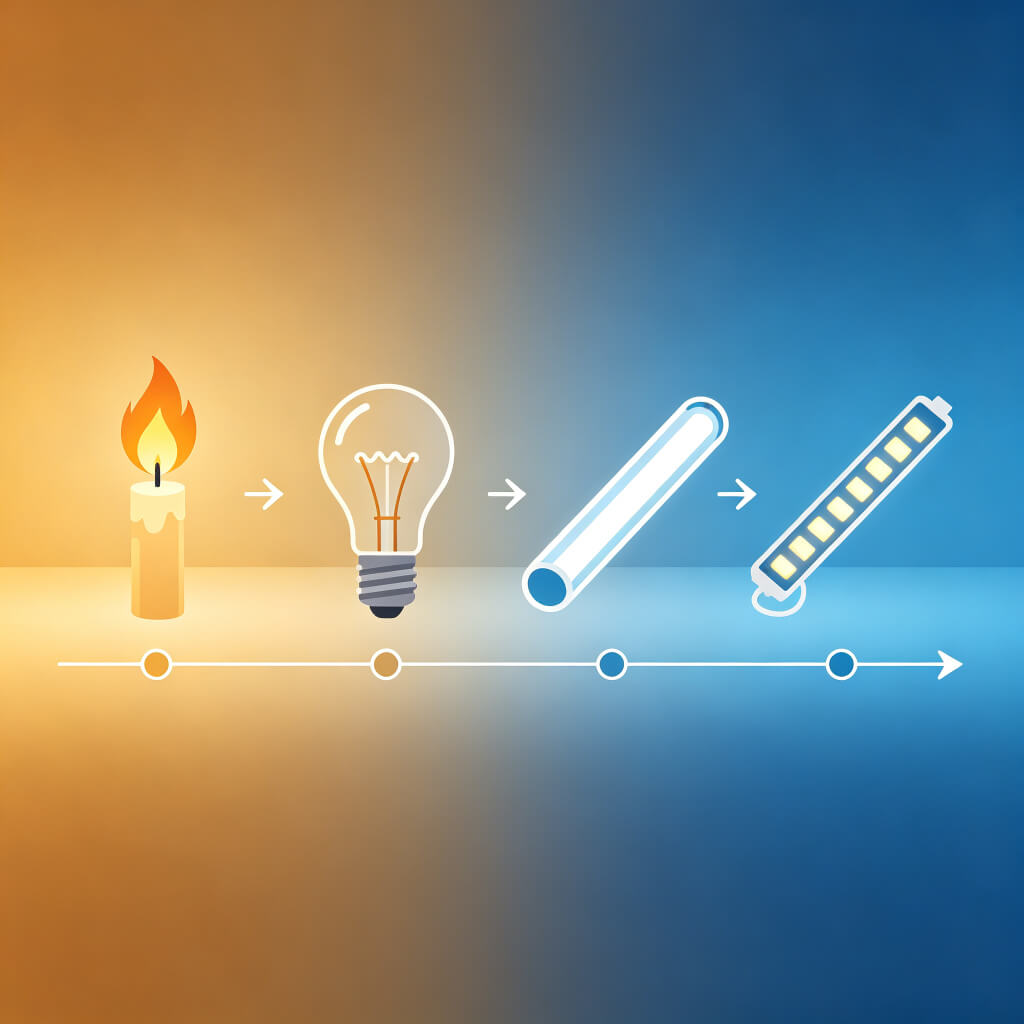
For most of human history, our ancestors relied on fire — candles, oil lamps, and gas flames — to push back the dark. Then, in less than 150 years, the world switched to electric light, and within the last two decades, LED technology changed lighting forever.
Understanding where lighting came from helps you appreciate why LEDs won — and why choosing the right LED today matters more than ever.
01 The Story of Light
Light is something we rarely think about — until it is not there. For thousands of years, people lit their homes with candles, oil lamps, and gas flames. These sources worked, but they were dim, smoky, and dangerous. Open flames meant fire risks, soot on the walls, and a constant need to refuel.
The dream of a clean, instant, controllable light drove inventors for centuries. That dream finally came true in the 1800s with the arrival of the first electric lamps — and it set the stage for everything we use today, from ceiling lights to flexible LED trakovi.
Let us walk through the key milestones — from the first glowing carbon rod to the semiconductor chips in your LED strips today.
02 The First Electric Lamps
The electric light bulb was not the work of a single inventor. It was a relay race of scientists building on each other. Here are the pioneers who made electric light possible:
Humphry Davy — The Electric Arc
The English scientist connected a piece of carbon to a battery and made it glow — the first electric lamp. It burned too briefly for practical use, but proved electricity could produce light.
Warren de la Rue — Platinum Filament
The British scientist used a tightly coiled platinum filament inside a glass enclosure. It glowed much longer, but platinum was far too expensive for real use.
Joseph Swan — Carbon Filament
Swan experimented with glass chambers and vacuums, replacing platinum with carbonized paper filaments to cut costs — a major step toward a cheap bulb.
Thomas Edison — The Practical Bulb
Edison tested more than 3,000 designs before perfecting a thin, high-resistance filament bulb that was efficient, affordable, and commercially practical.
Tungsten Filament
William David Coolidge refined tungsten filament production — the standard that powered incandescent bulbs for a century.
LED — The Semiconductor
No filament at all. Light is produced directly in a semiconductor chip — safer, cooler, and up to 50,000 hours of life.
That last milestone is where KayTai works every day — turning raw LED chips into reliable LED strips for homes and projects around the world.
03 Who Really Invented the Light Bulb?
Ask anyone and they will say Thomas Edison. The truth is more interesting. Joseph Swan demonstrated a working carbon-filament lamp years before Edison, and Edison himself built on Swan’s improved design.
| Factor | Joseph Swan | Thomas Edison |
|---|---|---|
| First working lamp | 1860s–1878 | December 1879 |
| Filament | Carbonized paper | Thin, high-resistance carbon (later bamboo) |
| Key advantage | Cheaper filament | More efficient, practical, commercial system |
| Business | Swan Electric Light Co. | Edison Electric Illuminating Co. (later GE) |
| The outcome | Merged with Edison to form the world’s largest light company | Remembered as the inventor of the bulb |
The real lesson? Innovation is cumulative. Edison’s genius was not just the filament — it was the whole system: bulbs, wiring, sockets, and power stations. Today, the same principle applies to LED lighting: the quality of the whole system — chip, PCB, driver, and profile — determines how well your light performs.
04 The Halogen & Fluorescent Era
After incandescent bulbs matured, two more technologies improved efficiency before LED arrived:
Halogen Bulbs
Halogen lamps added a small amount of halogen gas to the bulb, which returned evaporated tungsten back to the filament. This made bulbs brighter and longer-lasting than standard incandescent. First patented with chlorine gas in 1882, the modern iodine version arrived in 1959 from General Electric.
Halogen was a clear step forward — but it still ran hot and wasted most of its energy as heat.
Fluorescent Tubes
The concept dates to French physicist Alexandre Becquerel in 1857, but the first practical lamp appeared in 1938 at General Electric. Fluorescent tubes use a phosphor coating to convert ultraviolet light into visible light — roughly four times more efficient than incandescent.
They were efficient, but they contained mercury, needed ballasts, and produced flicker and harsh color. Something better was coming.
Both technologies set the stage for the LED revolution — a light source with no gas, no filament, no mercury, and dramatically better efficiency.
05 The Rise of LED Technology
The first theory of electroluminescence was published by Russian inventor Oleg Losev in 1927. But it was not until 1962 that Nick Holonyak Jr. at General Electric built the first practical visible-spectrum LED — a dim red light used as an indicator.
The Blue LED Changed Everything
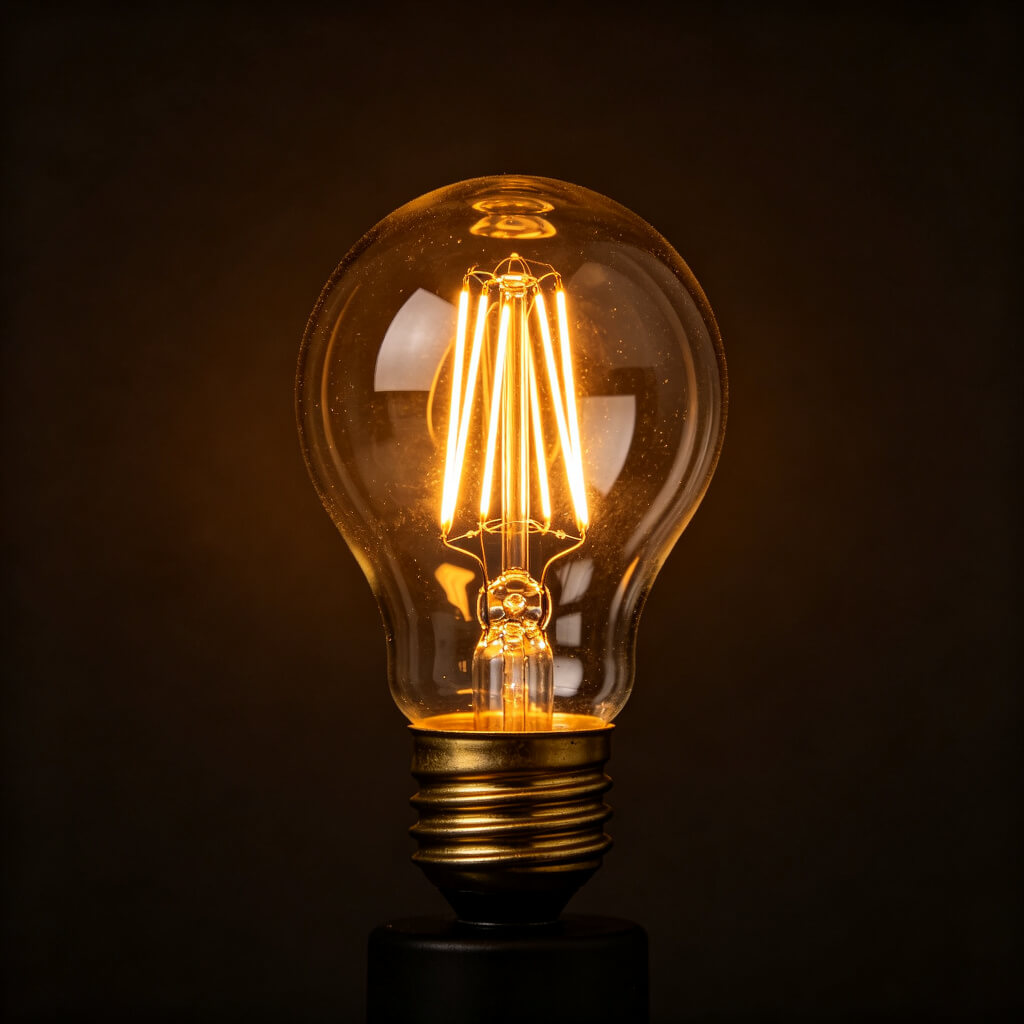
For decades, LEDs were only red, green, and yellow — too dim and too limited for general lighting. The turning point came in 1993, when Shuji Nakamura, Isamu Akasaki, and Hiroshi Amano developed the first high-brightness blue LED.
Blue was the missing piece: combine a blue LED with a yellow phosphor and you get white light. This discovery earned the three scientists the 2014 Nobel Prize in Physics — and it launched the modern LED lighting era.
Since the 2000s, LEDs have replaced incandescent, halogen, and fluorescent across homes, offices, and cities. Today, the same blue-chip technology powers COB LED trakovi and every other LED product we manufacture.
06 From Bulbs to LED Strips: The Next Chapter
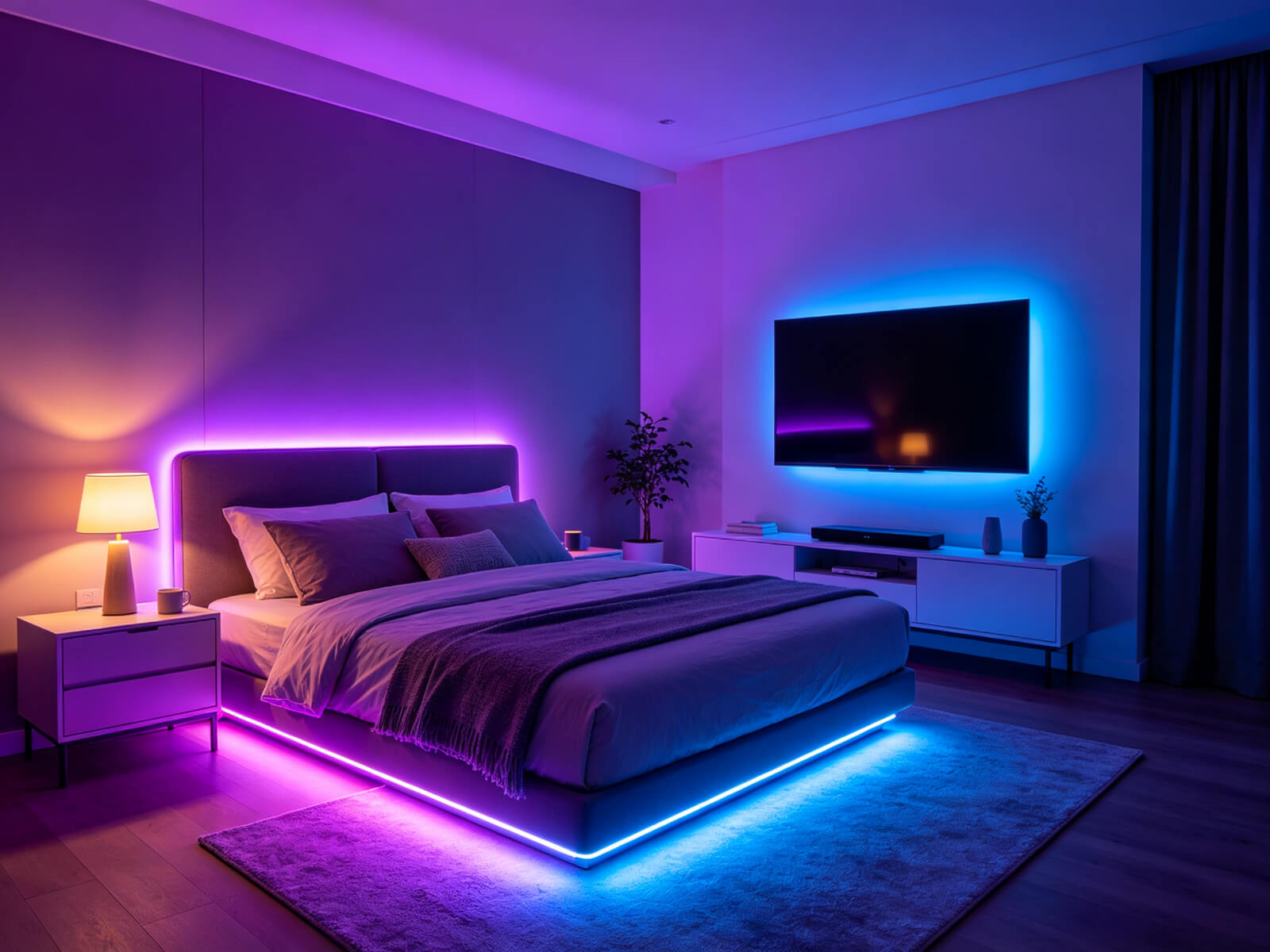
The most exciting chapter of LED history is happening right now — the move from rigid bulbs to flexible strips. By mounting hundreds of tiny chips on a flexible PCB, LED strips can be cut, bent, and installed almost anywhere a light has never been before.
A Technology Built for Design
- Under cabinets — clean task light where bulbs cannot fit
- Architectural lines — cove and recessed lighting with aluminum profiles
- Color scenes — RGB and tunable white for any mood
- Outdoor & signage — waterproof strips and neon flex
See how the technology works behind the scenes in our guide to how LED strip lights are made, then compare COB vs SMD trakovi to pick your starting point.
What Comes Next?
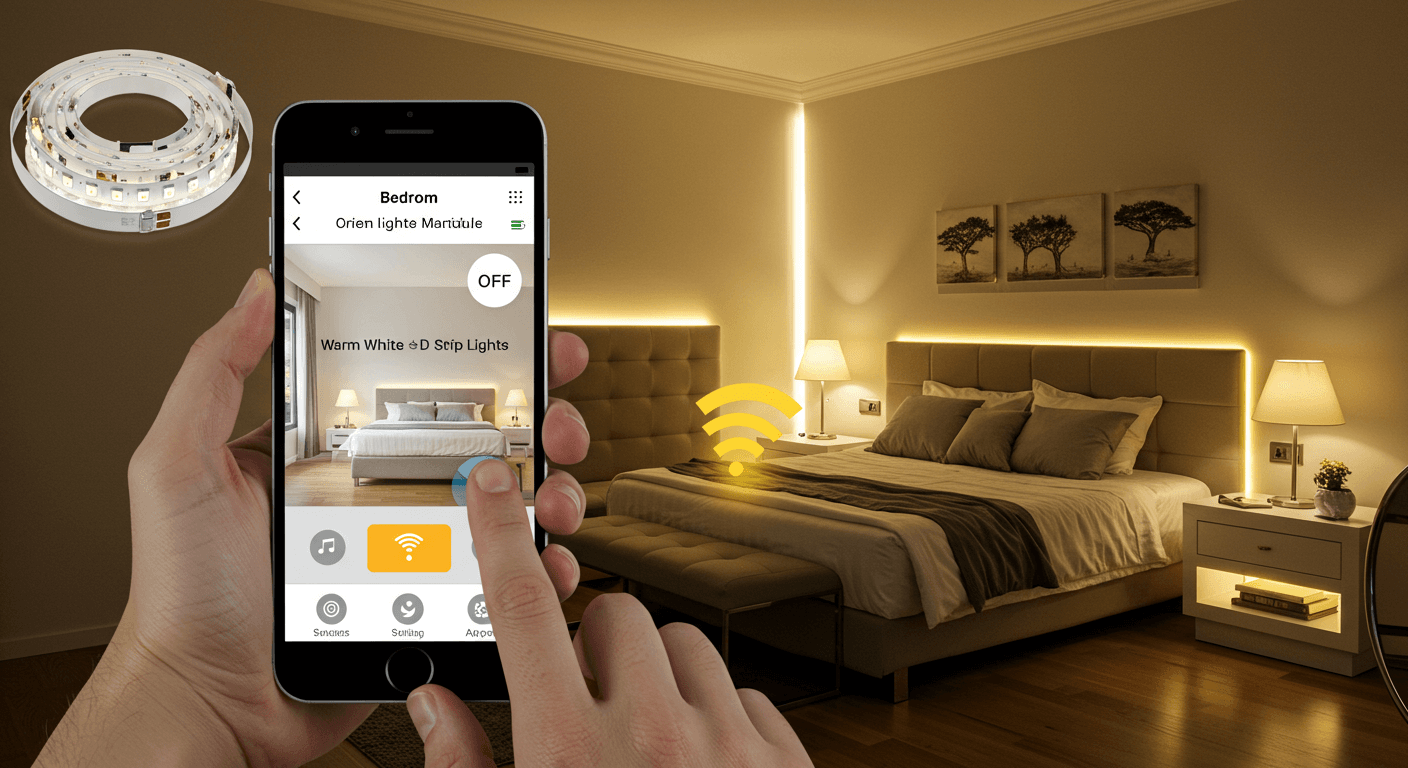
LEDs now represent the overwhelming majority of new lighting sold worldwide, and halogen and fluorescent bulbs are being phased out. The future is smarter, more efficient, and fully integrated with digital control — tunable CCT, app control, and automation.
If you are new to this world, start at the beginning: read our complete guide to what is LED, then explore our LED trakovi hub.
07 Why Lighting History Matters Today
Every old lighting technology left behind a lesson, and those lessons still guide smart buying decisions:
Efficiency Wins
From carbon rods to tungsten to LED, every breakthrough won because it delivered more light for less energy. Check the lumens-per-watt of any LED you buy.
The System Matters
Edison succeeded because he built the whole system. For LED strips, that means quality chips, PCB, driver, and profiles working together.
Safety Is Non-Negotiable
Fluorescent tubes brought mercury; early lamps brought fire risk. Modern LEDs run on safe low voltage — but only when the driver and insulation are correct.
Quality Compounds
The best LEDs are the result of decades of material science. Brands that control binning, assembly, and testing — like KayTai — deliver light you can trust for years.
Ready to put that knowledge to work? Explore our single-color, nastavljiva bela, in RGBW LED strips, or talk to our team about a custom project.
08 Lighting History FAQ
Q1Who invented the light bulb?
Thomas Edison is credited with the first practical incandescent bulb in 1879, but Joseph Swan, Humphry Davy, and Warren de la Rue all made crucial earlier breakthroughs. Edison won because he built the whole system — bulb, wiring, and power.
Q2Why was the blue LED such a big deal?
Red, green, and yellow LEDs existed for decades, but white light needs blue. The 1993 high-brightness blue LED (which won the 2014 Nobel Prize) made white LEDs possible — and launched the modern LED lighting era.
Q3Are incandescent and fluorescent bulbs still used?
They are being phased out worldwide because they are inefficient, and fluorescent tubes contain mercury. LEDs are now the dominant technology for nearly every lighting application.
Q4How did LED strip lights become so popular?
LED strips combine the efficiency of LED chips with a flexible PCB that can be cut, bent, and installed anywhere — a combination no filament or gas technology could ever match. See our guide to how LED strips are made.
From Edison to LED — Let’s Light Your Project
Tell us your application and our engineers will recommend the right LED solution.

Interesting timeline from incandescent to LED. It puts efficiency gains in perspective and explains why the industry moved so fast. Good context for anyone selling or specifying lighting today.
Interesting look at how lighting technology has evolved. The timeline from incandescent to LED is well presented and puts modern LED advantages in context. A good read for anyone in the industry.
Fascinating read on how lighting evolved from candles to LEDs. The efficiency comparison table puts LED savings in perspective for clients who hesitate on the upfront cost. Well-researched article.