
Gå ind i enhver belysningsbutik - eller rul gennem et hvilket som helst LED-katalog - og du vil se hundredvis af forskellige lys. Pærer, rør, paneler, lister, spotlights, projektører, neon... De har alle én ting til fælles: hver enkelt er drevet af en LED.
Men hvordan vælger du? Den nemmeste måde er at forstå, at LED-lys er grupperet på tre måder: efter pakke (hvordan chippen er lavet), efter farve (hvilket lys det udsender), og ved armatur (hvordan det er indbygget i et produkt).
01 LED-typer efter pakke og formfaktor
De pakke er hvordan LED-chippen fysisk er bygget og monteret. Det påvirker størrelse, lysstyrke, varme, og hvor LED'en kan bruges.
Standard LED
Den klassiske runde eller flad-top LED med to metalben, indsat gennem et PCB og loddet nedenunder. Lille, pålidelig og bruges hovedsageligt som indikatorlys i fjernbetjeninger og enheder.
Overflademonteret LED
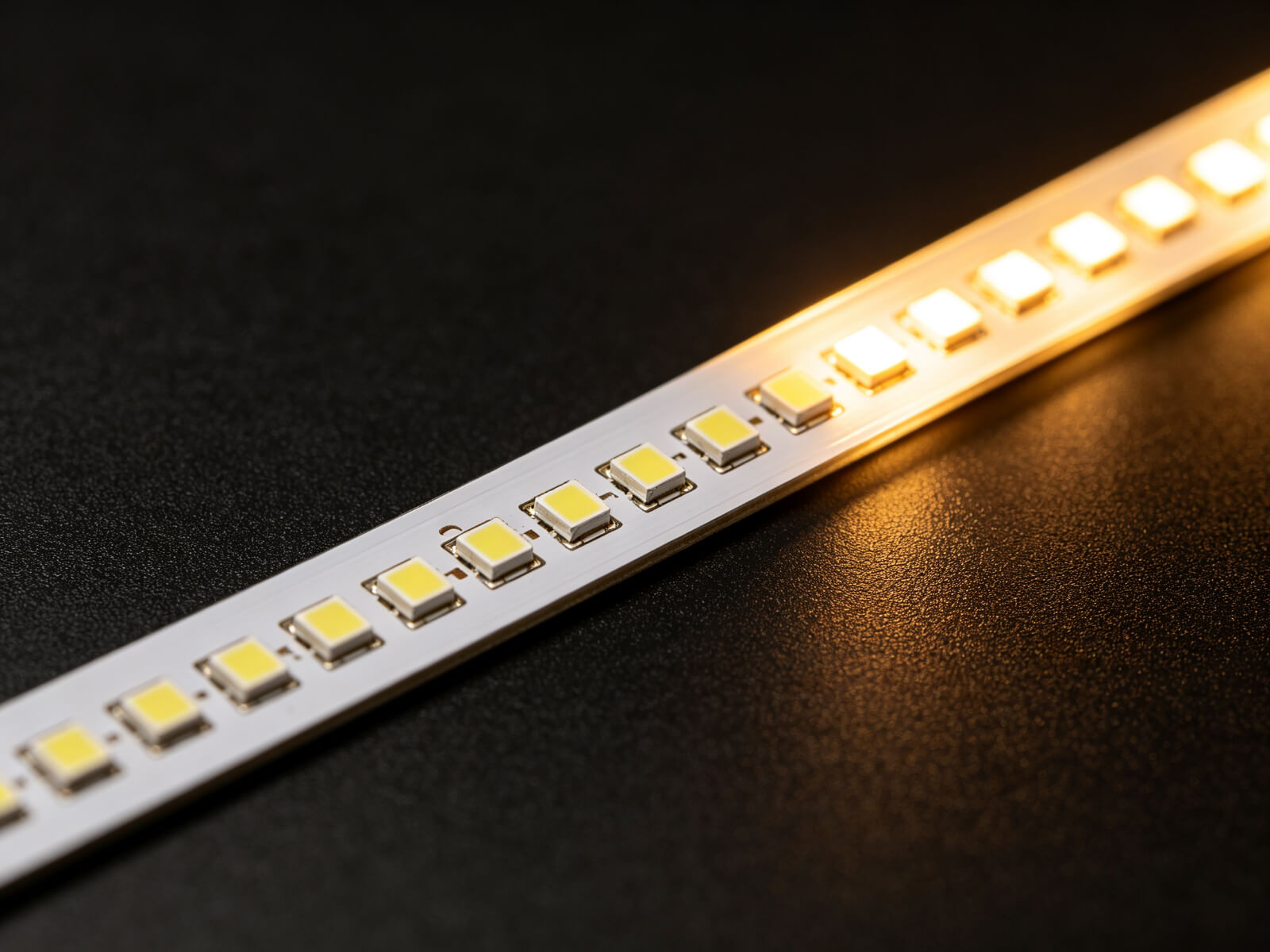
Loddet direkte på printet - ingen trådben. Slank, flad og yderst effektiv. SMD LED'er (5050, 2835, 3030) driver langt de fleste LED-stribelys.
Chip-on-board LED
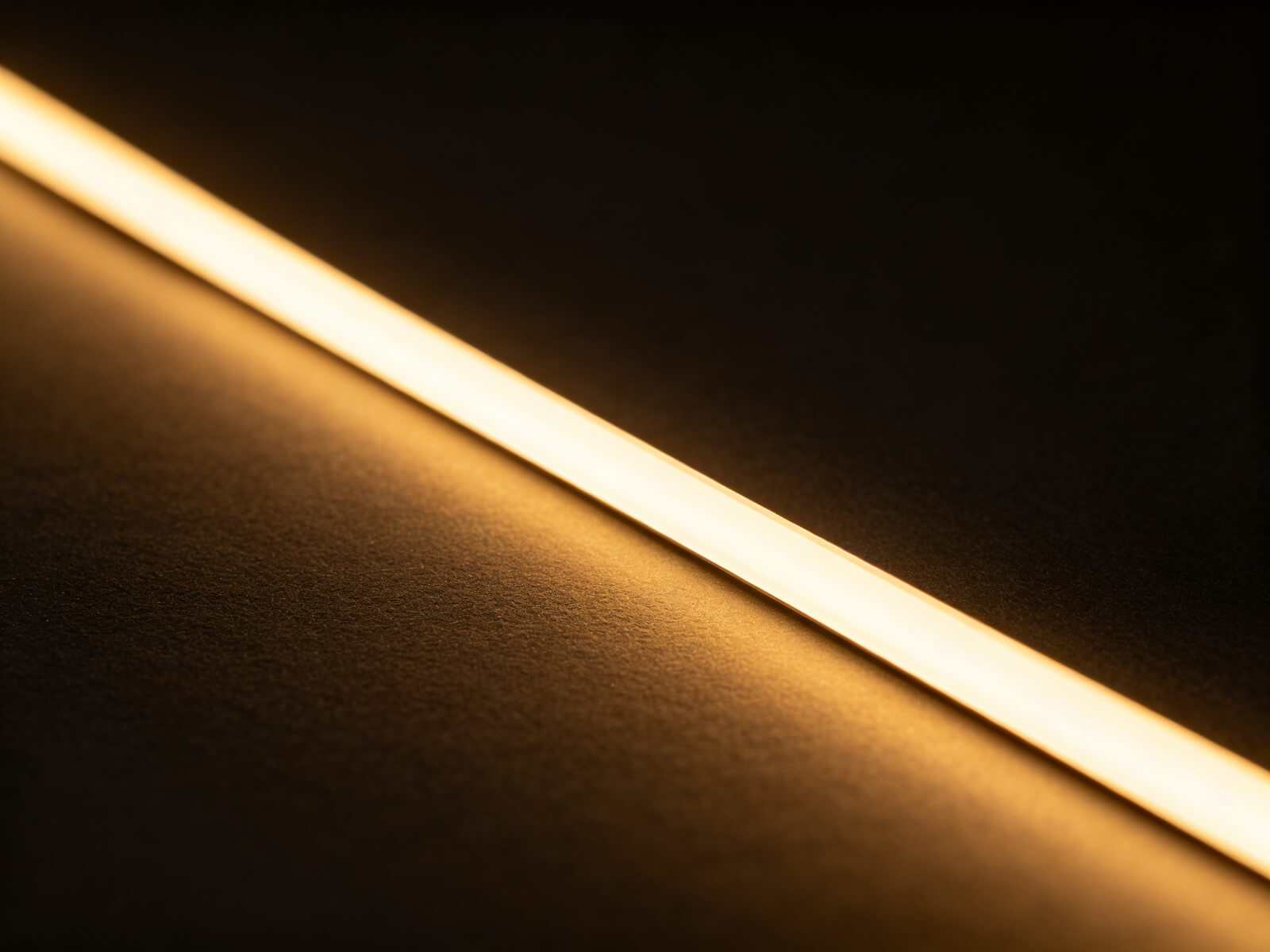
Mange chips monteret tæt på ét substrat for at danne en enkelt lyskilde. Ingen "prikker" eller pixelering - kun en ren, kontinuerlig stråle, ideel til premium-strimler.
Chip-Scale Pakke
Pakken har næsten samme størrelse som selve chippen. Ekstremt kompakt og effektiv, brugt hvor pladsen er trang - telefoner, wearables, kompakte moduler.
High-Power LED
Designet til at køre ved 1W eller mere med hundredvis af milliampere. Meget lys, men genererer varme, så den har brug for dedikerede køleplader - almindelig i spotlights og projektører.
De to du vil se oftest
I strip light-verdenen er de to pakker, du vil møde igen og igen SMD og COB.
- SMD strimler — individuelle synlige prikker, stor værdi, tilgængelig i enkeltfarvede, RGB- og adresserbare versioner
- COB strimler — sømløst prikfrit lys, højere tæthed, glattere og mere premium look
Se selv forskellen: SMD LED strips og COB LED strips. Eller læs vores guide til SMD LED'er.
02 LED-typer efter farve og bølgelængde
LED'er kan også klassificeres efter det lys, de udsender:
Enkelt farve
Én fast bølgelængde - rød, blå, grøn, gul. Anvendes i indikatorer, skiltning, trafiksignaler og enfarvet stribebelysning.
Hvid LED
LED'er udsender ikke hvidt naturligt. Hvid laves ved at tilføje en gul fosfor til en blå chip, eller ved at blande RGB. Fås i varm til kølig CCT.
Farveskiftende
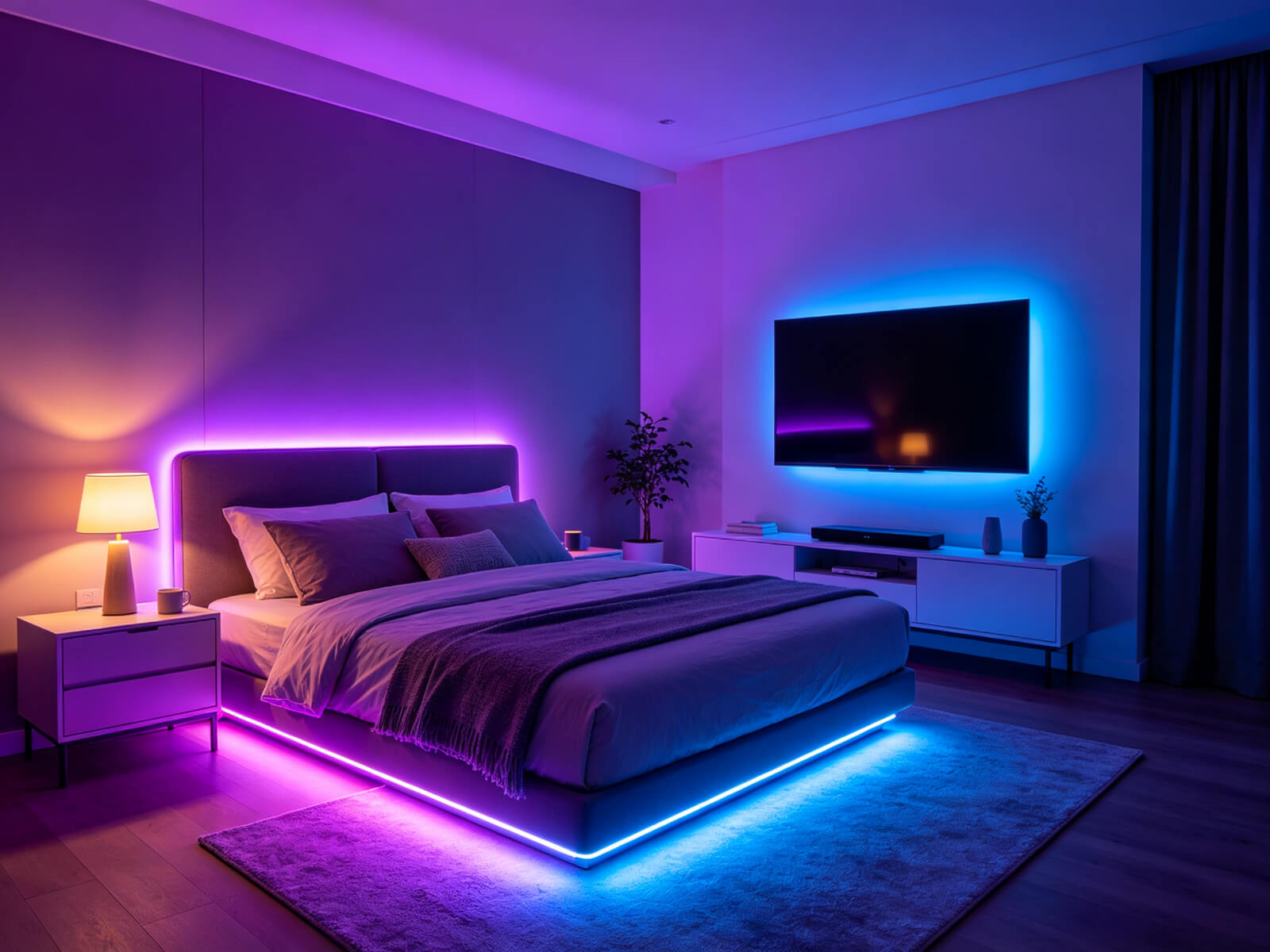
Røde, grønne og blå chips pakket sammen. Ved at blande de tre producerer en RGB LED omkring 16 millioner nuancer - perfekt til effektbelysning.
Digital kontrol
Hver LED kan styres individuelt for at vise mønstre, animationer og effekter via protokoller som DMX512 eller SPI. Grundlaget for dynamisk skiltning og scenebelysning.
Ultraviolet
Udsender lys i UV-spektret, der bruges til sterilisering, hærdning og materialetestning.
Infrarød
Udsender lys uden for synligt område (780nm-1mm), brugt i fjernbetjeninger, sensorer og termisk billedbehandling.
Farve er mere end udseende
Lysets farve ændrer, hvordan et rum føles. Varm hvid (2700K–3000K) slapper af; kølig hvid (4000K–6500K) giver energi; RGB skaber underholdning.
For at vælge den rigtige tone, se vores farvetemperaturguide, eller udforske RGBW LED strips til fuld farvekontrol.
03 LED-typer efter armaturdesign
Endelig er LED'er indbygget i færdige armaturer. Her er landskabet af LED-armaturer, du vil støde på:
Eftermontering
Direkte erstatninger for glødepærer med standard sokkel (E26/E27, GU10). Skru i og gå.
Lineær
Energieffektive erstatninger til lysstofrør i T5/T8/T12-størrelser - omkring 50 % mere effektive.
Downlights
Installeret i lofter eller vægge, skjult bag en trim. Dåse eller canless, ideel til ambient- og opgavelys.
Loftspaneler
Ultratynde, flade paneler til nedhængt, forsænket eller overflademontering. Ren, moderne kontorbelysning.
Tape lys
Fleksible PCB'er med bittesmå spåner, skærbare og bøjelige. Det mest alsidige LED-produkt — vores speciale.
Retningsbestemt
Fokuserede bjælker til detailhandel, gallerier og arkitektoniske højdepunkter. Smalle til brede strålevinkler.
Bred stråle
Højeffekt udendørsbelysning med IP65/IP66 vejrbestandighed til parkeringspladser og udendørs.
Højt til loftet
10.000-60.000 lumen til lofter over 15 fod - lagre, fitnesscentre, fabrikker.
Udendørs veje
3.000–30.000+ lumen med præcisionsoptik til veje og motorveje.
Ydervægge
Retningsbestemt sikkerhedsbelysning monteret på bygningens ydre, erstatter HID-armaturer.
Udendørs accent
Pullerter, vægskiver og stolpelys, der tilføjer dybde til haver og stier.
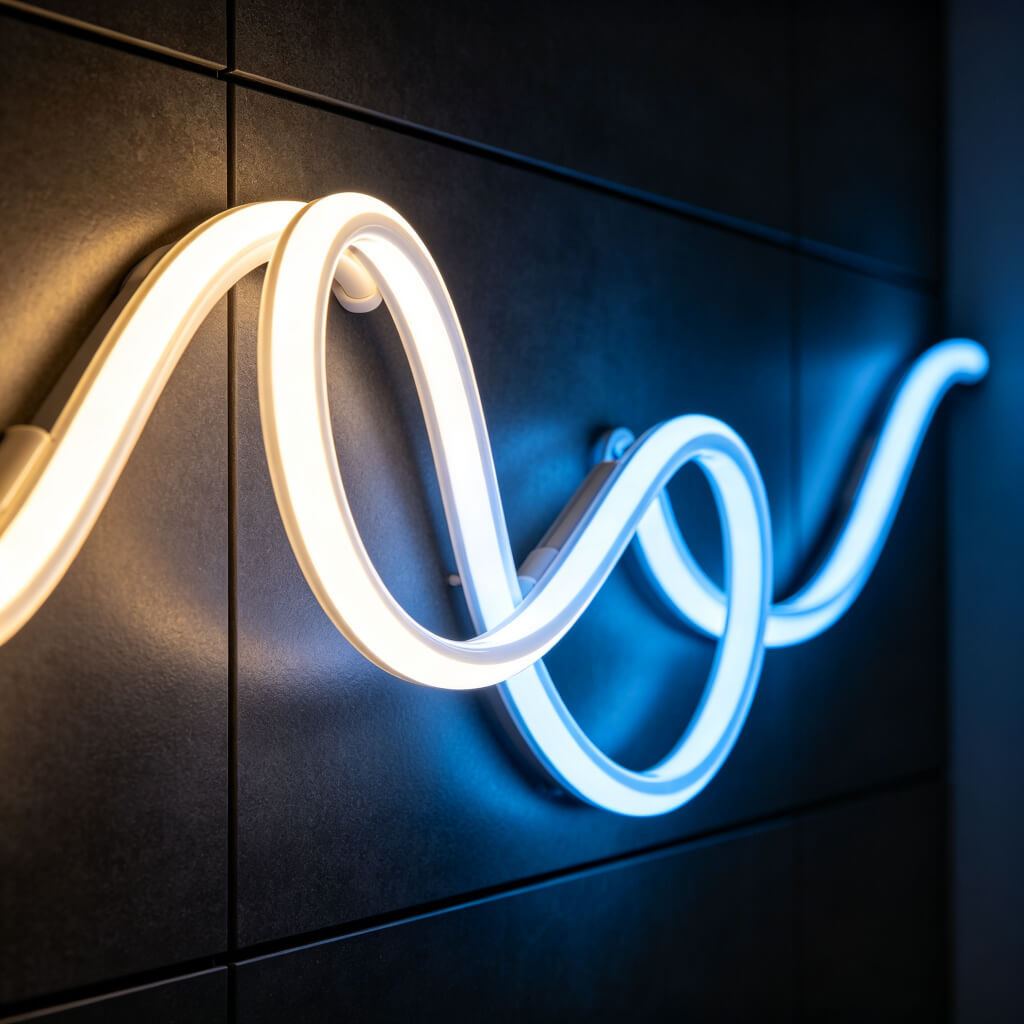
Fleksibel neon
Silikone/PVC LED-rør, der efterligner klassisk neon - bøjelige, skærbare, lavspændings- og vandtætte.
To kategorier, der betyder mest for projekter
Hvis du planlægger et bolig- eller arkitektonisk belysningsprojekt, giver to armaturer den mest fleksibilitet:
- LED strip lys — skærbar, bøjelig, installeres næsten overalt
- LED neon flex - gør brugerdefinerede glødende former og skilte nemme
Begge er kerneprodukter fra KayTai. Sammenlign vores LED strip lys rækkevidde og udforske aluminiumsprofiler at installere dem rent.
04 Fokus: LED Strip-lys — den mest alsidige type
Af alle LED-armaturer er der ingen, der matcher alsidigheden LED strip lys. Hundredvis af bittesmå spåner på et fleksibelt printkort, der kan skæres ved markerede linjer, bøjes rundt om hjørner og monteres med skræl-og-klæb tape.
Hvorfor Strips vandt
- Klip til at passe - trim nøjagtigt til din løbelængde
- Bøj om hjørner — fleksibelt PCB følger enhver linje
- Mange varianter — enkeltfarve, justerbar hvid, RGB, RGBW, adresserbar, COB, set fra siden
- Nem installation — 3M klæbende bagside eller aluminiumsprofiler
- Uendelige anvendelser — under skabe, bugter, spejle, trapper, skiltning, biler
Start dit projekt med vores LED strip købsvejledning, og gennemse derefter ensfarvet, indstillelig hvid, COB, og bøjelig intervaller.
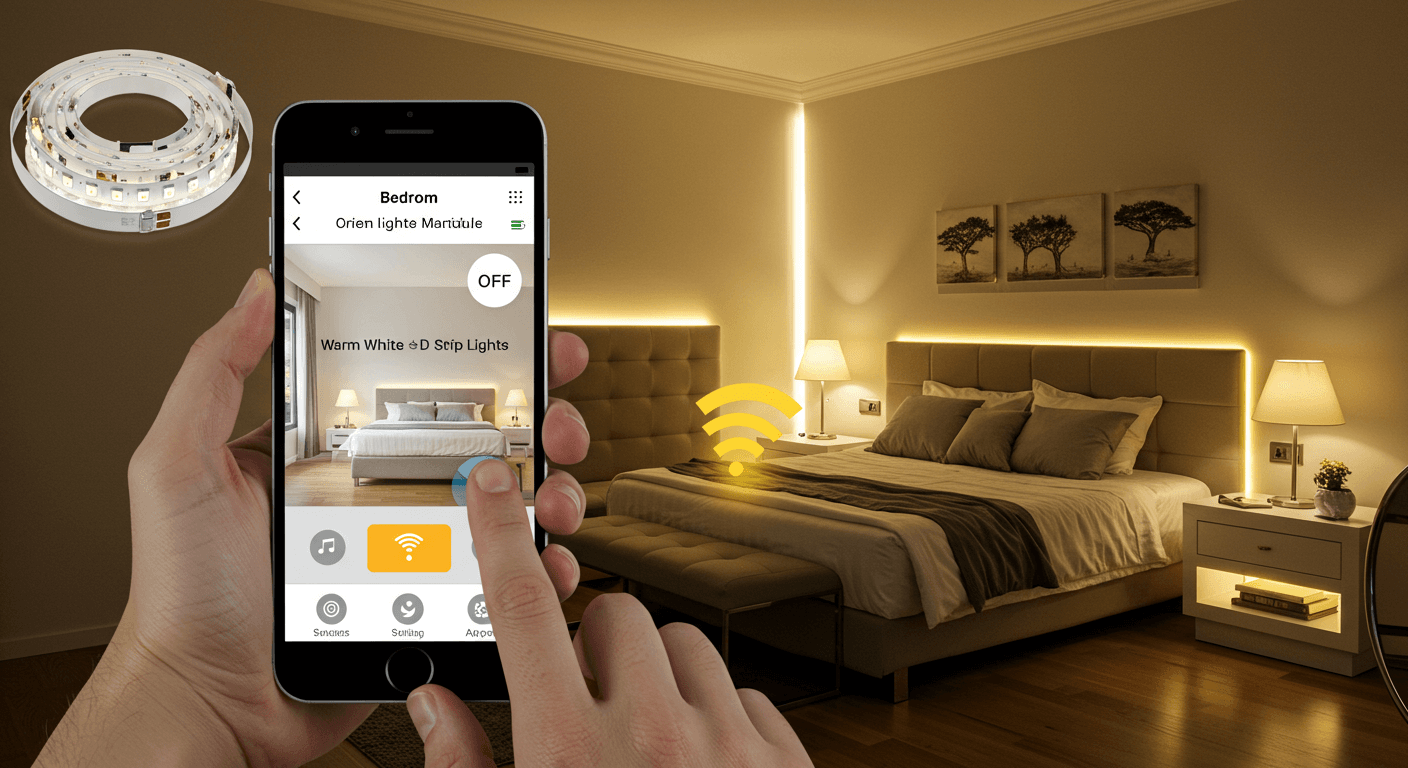
Beyond Basic Strips
Neon flex tager stripkonceptet videre - en LED-strimmel inde i et fleksibelt silikonerør, der lyser som klassisk neon. Perfekt til skiltning, logoer og kreative former.
Læs vores guide til LED strip belysning for at forstå, hvilken type der passer bedst til dit projekt, og spørg vores team om prøver, før du forpligter dig.
05 Sådan vælger du den rigtige LED-type
Følg disse tre spørgsmål for at indsnævre enhver LED-beslutning:
Vores ingeniører hjælper kunder over hele verden med at træffe disse valg hver dag. Fortæl os din plads, og vi vil anbefale den rigtige LED strip eller profil.
06 LED-typer ofte stillede spørgsmål
Q1Hvad er forskellen mellem SMD og COB LED-strips?
SMD-strimler har individuelle synlige prikker og er stor værdi; COB-strimler pakker chips tæt for en sømløs, prikfri, premium glød. Læs vores COB strimler eller den SMD guide.
Q2Hvad betyder RGBW?
RGBW tilføjer en dedikeret hvid chip til de røde, grønne og blå chips, så du får levende farver plus en ægte, ren hvid. Fantastisk til både effekter og hverdagsbelysning.
Q3Hvilken LED-type er bedst til udendørs brug?
Vælg vandtætte LED-strips med en IP65-IP68-klassificering eller vejrbestandige armaturer som projektører og vægpakker. Tjek vores guide til vandtætte muligheder for detaljer.
Q4Er LED neon flex lys det samme som LED strips?
Neon flex er en LED-strimmel omsluttet af et fleksibelt silikone- eller PVC-rør, der giver en glat neonglød. Den er bøjelig, skærbar, vandtæt og ideel til skilte og kreative former.
Ikke sikker på, hvilken LED-type du har brug for?
Send os din ansøgning og krav - vi anbefaler det rigtige produkt og sender prøver.

Nyttigt overblik over LED-formater. Sammenligningen på tværs af lister, paneler og downlights hjælper, når du skal vælge pr. applikation. Stripsektionen dækker de vigtigste specifikationer godt for førstegangskøbere.
Nyttigt overblik over LED-lystyper. Sammenligningen på tværs af strimmel-, panel-, downlight- og pæreformater hjælper, når du planlægger et projekt. Afsnittet om, hvor hver type passer bedst, er et godt udgangspunkt.
Nyttig oversigt over strimmeltyper. Sektionen, der sammenligner COB og SMD lysstyrke, hjalp mig med at vælge COB til en bugtinstallation, hvor jeg havde brug for glat lys uden prikker. Spændingsvejledningen til længere kørsler var også nyttig.