
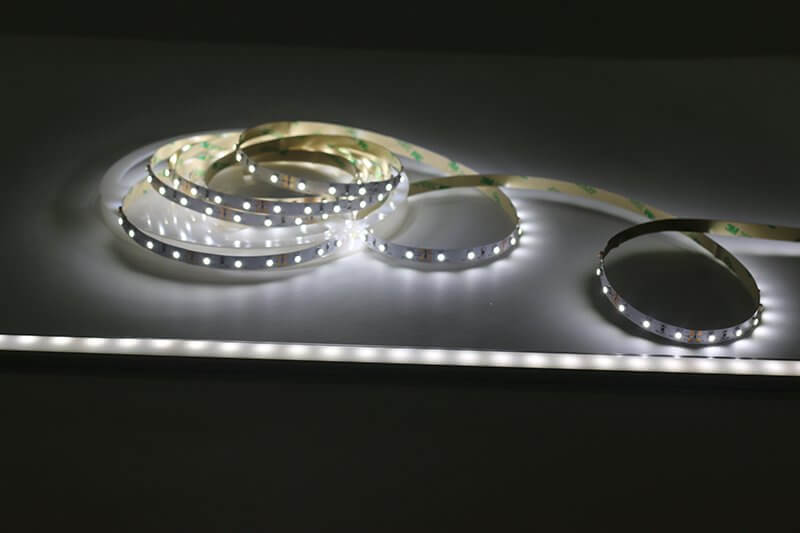
The LED strip is brighter at one end and dimmer at the other. Why? The answer is voltage drop. Voltage drop refers to the voltage that drops on its way to the LED strip light.
In this guide you’ll learn:
- What LED strip voltage drop is and why it happens
- How to spot voltage drop on your own strip
- The main factors that decide how bad it will be
- Six practical ways to avoid it – from parallel wiring to constant current strips
What’s LED Strip Voltage Drop?
KayTai is a professional LED strip light manufacturer in China. We will let you know something about LED voltage drop.
LED strip voltage drop is the amount of voltage lost between the power supply and the LEDs themselves. The greater the resistance in the circuit, the higher the voltage drop.
In the DC circuit of the LED strip, the voltage will gradually diminish as it passes through the wire and the strip light itself. So, the extension of wire or strip will lead to one side of your strip lights being brighter than the other side.
Why Does LED Strip Voltage Drop Happen?
KayTai know more about LED strip light voltage drop.
- Wire resistance. Any length of wire has a certain amount of electrical resistance. The longer the wire, the more the resistance. Electrical resistance causes a voltage drop, and voltage drop causes your LEDs to dim.
- PCB resistance. The PCB itself has resistance. The resistance of the PCB will consume part of the voltage and convert the electrical energy into thermal energy.
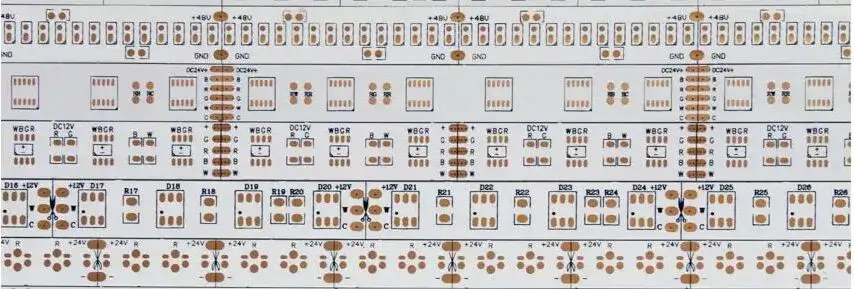
- PCB size matters. PCB resistance is related to the cross-section size (corresponding to the PCB board width and copper thickness). The larger the PCB cross-section, the smaller the resistance; the longer the PCB length, the greater the resistance.
How to Find Voltage Drop?
The LED voltage drop is most noticeable on the white LED strip, so you can open the white light on the color-changing LED strip to observe the voltage drop.
Let us see if we can see a voltage drop by running a long-distance white light LED strip. In the below picture, we can see that the beginning (position “1”) is clear white, and after running for a distance (position “2”), the white light gradually turns yellow, and at the end of the LED strip (position “3”), the white light turns red due to the decrease in voltage.
LED strip voltage is related to LED chips. Below are the forward voltages required for several color chip drives.
| LED chip | Forward voltage |
|---|---|
| Blue LED chip | 3.0 – 3.2V |
| Green LED chip | 3.0 – 3.2V |
| Red LED chip | 2.0 – 2.2V |
Note: The white LED uses a blue chip and then adds phosphors on the surface. The driving voltage of the blue chips is greater than that of the green and red chips.
So when the voltage of the white LED strip light drops, and the current voltage cannot meet the voltage required by the blue chips, the light strip will display yellow (green & red mixed color) and red because they are lower than the voltage required by the white light.
Do All LED Strip Lights Have a Voltage Drop?
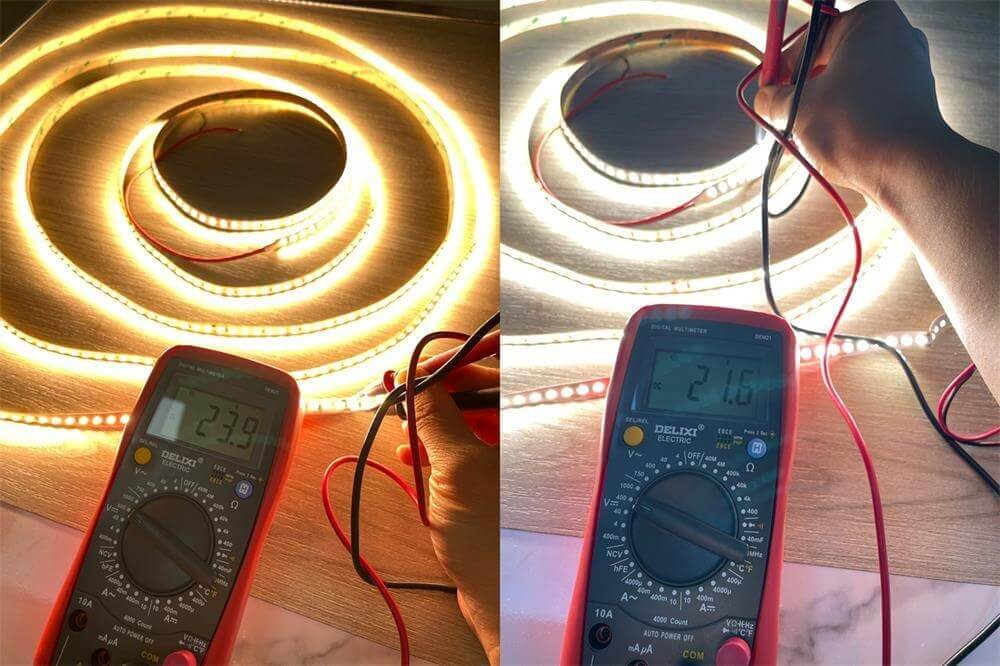
Basically, all low-voltage LED strips, such as 5Vdc, 12Vdc, and 24Vdc will have voltage drop problems. The table below shows how the three main strip families compare:
| Strip type | Napetost | Voltage drop? | Max run, one-end feed |
|---|---|---|---|
| Low-voltage | 5V / 12V / 24V DC | Yes, common | About 5 m (12V) |
| High-voltage | 110V / 220V / 230V AC | Rarely | Up to 50 m |
| Constant current | 24V DC + IC | Compensated by IC | 15 – 50 m |
Low-voltage strips (5V / 12V / 24V)
These drop voltage easily. Because for the same power consumption, the lower the voltage, the greater the current. According to Ohm’s law, voltage equals resistance multiplied by current. The resistance of a conductor is constant. The greater the current, the greater the voltage drop. This is also the reason why people use high voltage to transmit electricity!
High-voltage strips (110V / 220V / 230V)
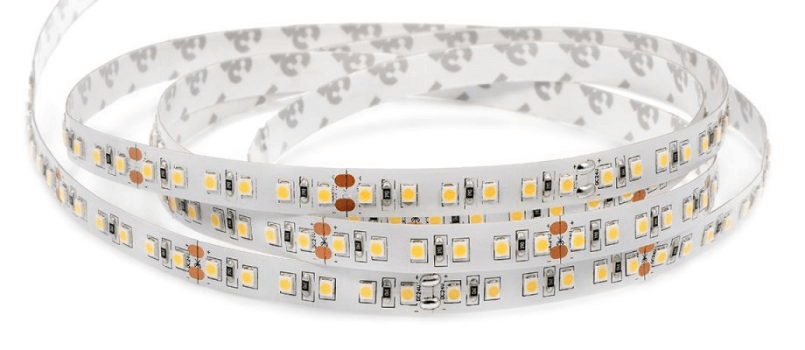
High voltage LED strips, such as 110VAC, 220VAC, and 230VAC, generally do not have the problem of voltage drop. For one end power feed, the maximum run distance of high-voltage LED light strips can be up to 50 meters.
According to the power equal to the voltage multiplied by the current, the voltage of the high-voltage LED strip is 110V or 220V, so the current of the high-voltage LED strip is very small, so the voltage drop is also small.
Constant current strips (24V with IC)
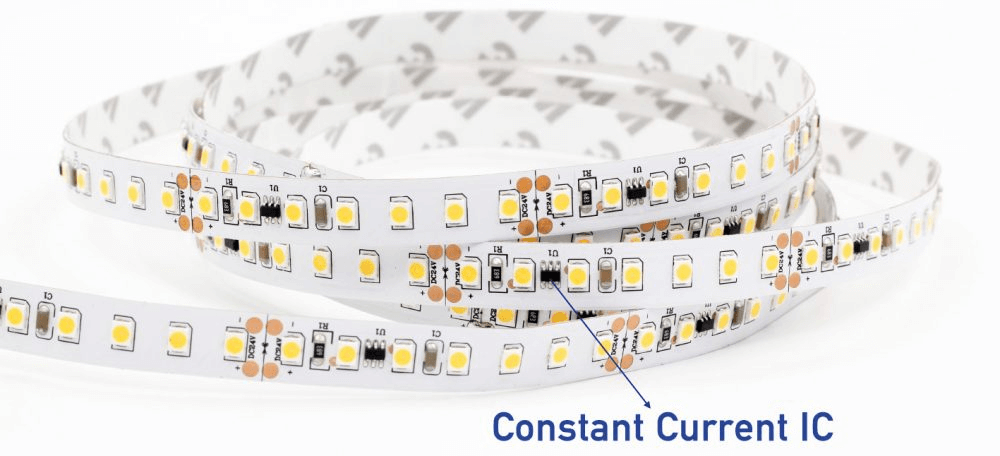
The constant current LED light strip, generally 24Vdc, will not have the problem of voltage drop. Because constant current LED strips have ICs, these ICs can keep the current flowing through the LEDs constant. As long as the current through the LED is constant, the brightness of the LED is also constant.
In fact, the voltage of the constant current LED light will also decrease. For example, the voltage at the end of the constant current LED light strip will also be lower than the 24V. Under normal circumstances, a voltage drop will cause a drop in current through the LED, resulting in lower brightness.
However, since there are ICs on the constant current LED strips, these ICs can keep the current passing through the LEDs constant, which needs to be within a specific voltage range (for example, 24V~19V).
Is LED Strip Voltage Drop Harmful?
LED strip voltage drop is typically not detrimental to the LEDs, since it is a form where the voltage supplied to them is less than what was originally expected.
However, the voltage drop usually represents the conversion of electrical energy to the thermal energy of the resistor, which generates a lot of heat.
This can cause problems if your LED strip is installed in or near heat-sensitive materials. 3M adhesives and LEDs are also somewhat thermally sensitive, so excessive voltage drops can be a problem.
What Factors Affect the Voltage Drop?
According to Ohm’s law, voltage is equal to current times resistance. The resistance of the wire is determined by its length and size of the wire. The LED strip PCB resistance is determined by the length and the thickness of the copper in the PCB.
So, the degree of voltage drop of LED strips can be decided by three main factors: the total current of the LED strip, the length and diameter of the wire, and the thickness of the copper in the PCB.
Remember: Voltage drop = Current × Resistance. Cut the current or the resistance, and the drop shrinks.
1. The total current of the LED strip
Through the specification of the LED strip, we can know the power of the 1-meter LED strip, so that we can calculate the total power of the LED strip. The total current of the LED strip is equal to the total power divided by the voltage.
So the greater the total power, the greater the total current, and thus the more severe the voltage drop. Therefore, the voltage drop of LED strips with high power is more serious than that of LED strips with low power.
Alternatively, the lower the voltage, the higher the current and the more severe the voltage drop. Therefore, the voltage drop of the 12V LED strip is more serious than that of the 24V strip.
2. The length and diameter of the wire
The resistance of the wire is mainly determined by the conductor’s material, the conductor’s length, and the conductor’s cross-section. The longer the wire, the greater the resistance, and the smaller the cross-section, the greater the resistance. You can check out the Wire Resistance Calculation Tool to make calculations more straightforward.
3. The length and the thickness of the copper in the PCB
PCBs are similar to wires, they are both conductors and have resistance themselves. The conductive material in a PCB is copper. The longer the PCB, the greater the resistance; the larger the copper cross-section inside the PCB, the smaller the resistance. You can check out the PCB Resistance Calculation Tool to make calculations more effortless.
Factors at a glance
| Factor | Effect on voltage drop | How to reduce it |
|---|---|---|
| Total current of the strip | Higher power = higher current = more drop | Use higher voltage (24V over 12V) |
| Wire length & diameter | Longer / thinner wire = more drop | Use short runs of thick wire |
| PCB length & copper thickness | Longer PCB / thin copper = more drop | Choose 2oz – 3oz copper PCB strips |
How to Avoid Voltage Drop?
Although the LED strip will have the voltage drop problem, we can avoid it using the following methods.
Parallel Connections
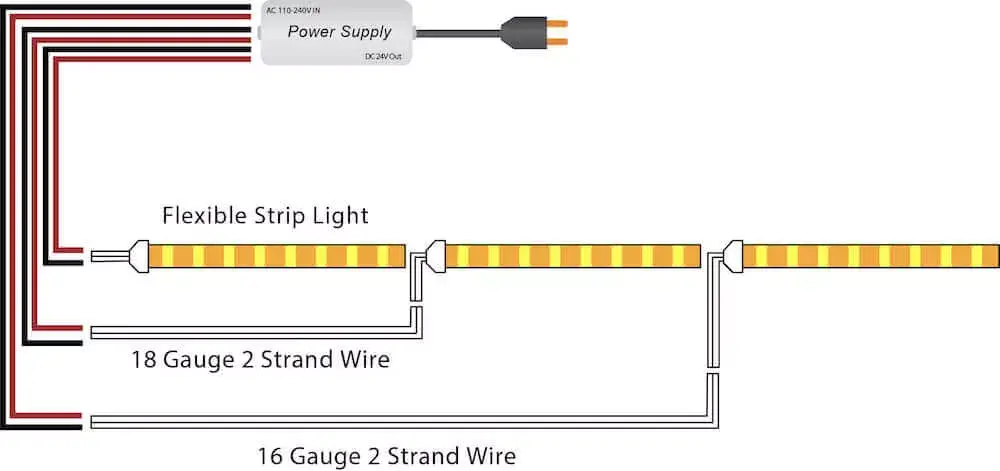
When longer LED strips need to be installed, it is recommended that every 5 meters of strips be connected to the power supply in parallel.
Power Supply at Both Ends of the LED Strip Light
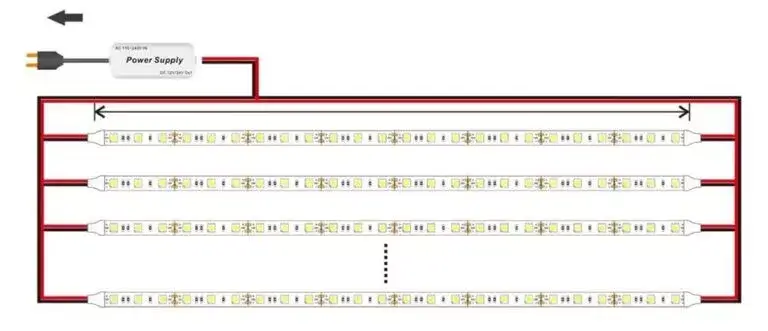
The recommended maximum length of LED strips on the market is 5 meters. If you need to install a 10-meter LED strip, you can connect both ends of the LED strip to the power supply.
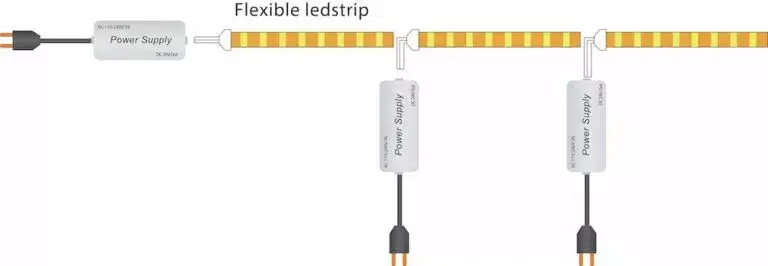
Use Multiple Power Supplies
Using multiple power supplies instead of a single unit is a great idea to get better brightness. It requires strategic planning, so you don’t end up too far from the power source.
Use High Voltage 48Vdc or 36Vdc LED Strip
Use higher input voltage LED strips to avoid voltage drop issues. For example, use 48V, 36V, and 24V instead of 12V and 5V. Because higher voltage means lower current, lower voltage drop.
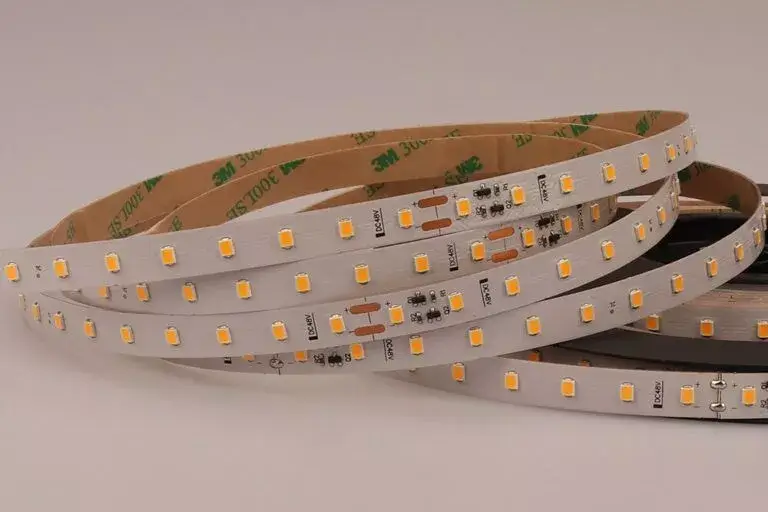
Use LED Strips with Thick Copper PCB
Copper is the most commonly used material in electrical wiring. This is because it conducts electricity well and is relatively inexpensive compared to silver. The thickness of copper is usually measured in ounces. The thicker the copper wire, the more current flows through.
We recommend using 2oz. or 3oz. for high-power LED strips to avoid voltage drops. The thicker the copper wire, the lower the internal resistance. Therefore, the copper wire will carry more power efficiency. In addition, it is better for heat dissipation.
Quick rule of thumb: keep 12V runs under 5 meters and 24V runs under 10 meters per end feed. Need longer? Feed both ends, wire in parallel, or switch to a constant current strip.
Use Big Size Wire
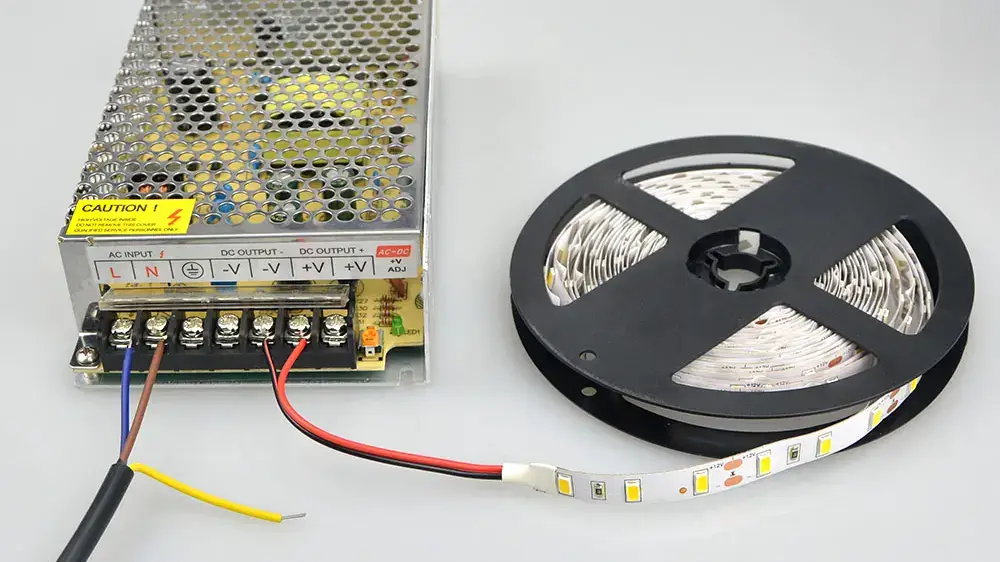
Sometimes, the place where the LED strip is installed is a long distance from the LED power supply. Then we must consider what size wire we need to use to connect the LED strip and the power supply.
Of course, the bigger the wire size, the better. We need to know what the voltage drop is that we can accept, and know what this length of the wire causes the voltage drop. You can determine the size of the wire by following the steps below:
Step 1. Calculate the Wattage
You can check the power per meter on the packaging label of the LED strip, so the total power is the power per meter multiplied by the total number of meters. Then divide the total power by the voltage to get the total current.
Step 2. Measure the Distance Between the LED Strip and the Driver
Measure the distance between the LED strip and the LED power supply. This directly affects wire size.
Step 3. Choose the Right Size Wire
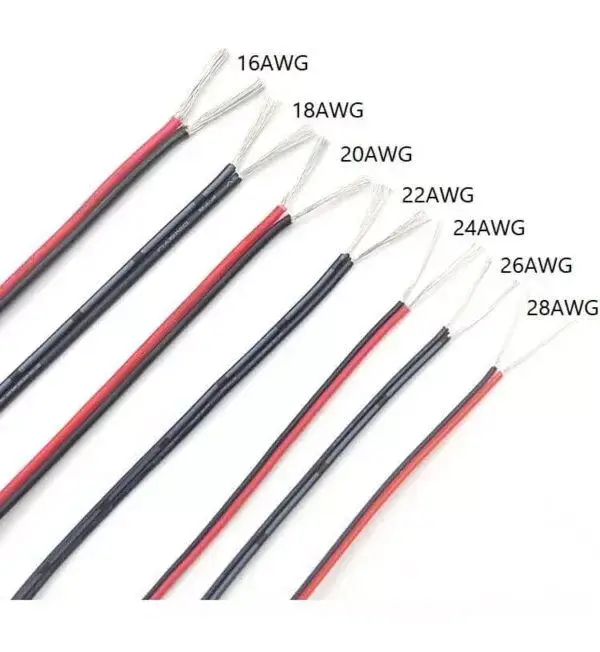
You can calculate the voltage drop of the wire using the Voltage Drop Calculator. You can try changing different wire diameters in the calculator to see the voltage drop corresponding to different wire diameters. This way, find a wire of the right size (with a voltage drop you can accept).
Before you wire the whole run, review kako izrezati in povezati LED trakove so your joints and connections stay clean.
Use Super Long Constant Current LED Strip
The super long constant current (CC) LED strip light can achieve 50 meters, 30 meters, 20 meters, and 15 meters per reel, and only needs to be connected to the power supply on one end, and the brightness of the beginning and the end are the same.
By adding constant current IC components to the circuit, the super long constant current LED strip can ensure that the current through the LED can be kept constant within a specific voltage range (for example, 24V~19V) so that the brightness of the LED is consistent.
Many constant current strips use COB technology, which combines continuous chips with the constant current driver for a seamless, consistent line of light.
LED Strip Voltage Drop FAQ
Quick answers to the questions buyers ask most about LED strip voltage drop.
Q1. How long can a 12V or 24V LED strip run before voltage drop?
For standard 12V strips, keep each run to about 5 meters fed from one end. 24V strips can run roughly twice as far (up to about 10 meters) before the drop becomes visible. For longer runs, feed both ends, use parallel wiring, or choose a constant current strip.
- 12V: ~5m per end feed
- 24V: up to ~10m per end feed
- Constant current: 15-50m per reel
Q2. Is 12V or 24V better for avoiding voltage drop?
24V is better. For the same wattage, a 24V strip draws half the current of a 12V strip, and lower current means less voltage drop along the wire and PCB. 48V and 36V strips reduce it even further.
- Higher voltage = lower current = less drop
- 24V runs longer than 12V
- 48V/36V for the longest runs
Q3. Why is my LED strip brighter at one end?
That is classic voltage drop. The LEDs near the power supply receive the full voltage, while the far end receives less because the voltage is lost along the wire and the strip’s own PCB. The far end also dims and may shift color on white or RGBW strips.
- Check the white channel – it shows drop first
- Far end turns yellow then red
- Feed the far end or run in parallel
Q4. Can voltage drop damage my LED strips?
Not usually – the LEDs simply run dimmer. The main concern is heat: the lost voltage becomes heat in the wire and PCB, which can stress heat-sensitive adhesive and chips in very long or high-power runs. Correct wiring avoids this.
- Dimming is harmless by itself
- Excess heat is the real risk
- Keep runs within rated length
Q5. What voltage do I need for a long LED strip install?
If your total run is longer than about 10 meters, step up the voltage or use constant current strips. Choose 24V for medium runs, and consider 48V, 36V, or a 24V constant current strip for 15-50 meter projects.
- Under 5m: 12V is fine
- 5-10m: use 24V
- 10m+: constant current or 48V/36V
Zaključek
To sum up: voltage drop is the voltage loss of the power supply when long LED strips are connected. It can cause the brightness distribution on the PCB to be mismatched with the brightness of the LED strip and make it look like this.
To avoid this, you can either choose super long constant current LED strips or connect both ends of the LED strips to the same power supply. As for me, I prefer connecting both ends of the LED strips to the same power supply.
If you need good quality LED strip lights, please contact KayTai – our engineers can help you choose the right voltage, PCB and connection method for your project length.
Keep Reading: Related LED Strip Guides
These guides pair well with this one and answer the next questions buyers usually ask:
How to Cut and Connect LED Strip Lights
Clean joints and connectors keep a long run reliable – read this before you wire up.
Best LED Strip Lights Ideas for Kitchen Cabinets
Compare 3528, 5730 and 5050 strips and size under-cabinet lighting correctly.
How to Choose an LED Diffuser for LED Strips
Match the right clear, frosted or opal diffuser to your strip and finish.
Need LED Strips That Stay Bright End to End?
Tell us your project length and voltage – we’ll recommend the right strip, PCB and wiring plan so your light stays even from the first meter to the last.
Free LED engineering tools

The voltage drop guide is exactly what I needed. The run length limits and power injection advice are practical. The tables make planning much easier.
The voltage drop guide is exactly what I needed. Run length limits and injection points are practical. The tables make planning straightforward.