Arkadan Aydınlatmalı Taş Aydınlatma: LED Levhalar Oniks, Mermer ve Kaymaktaşını Nasıl Parlatıyor?
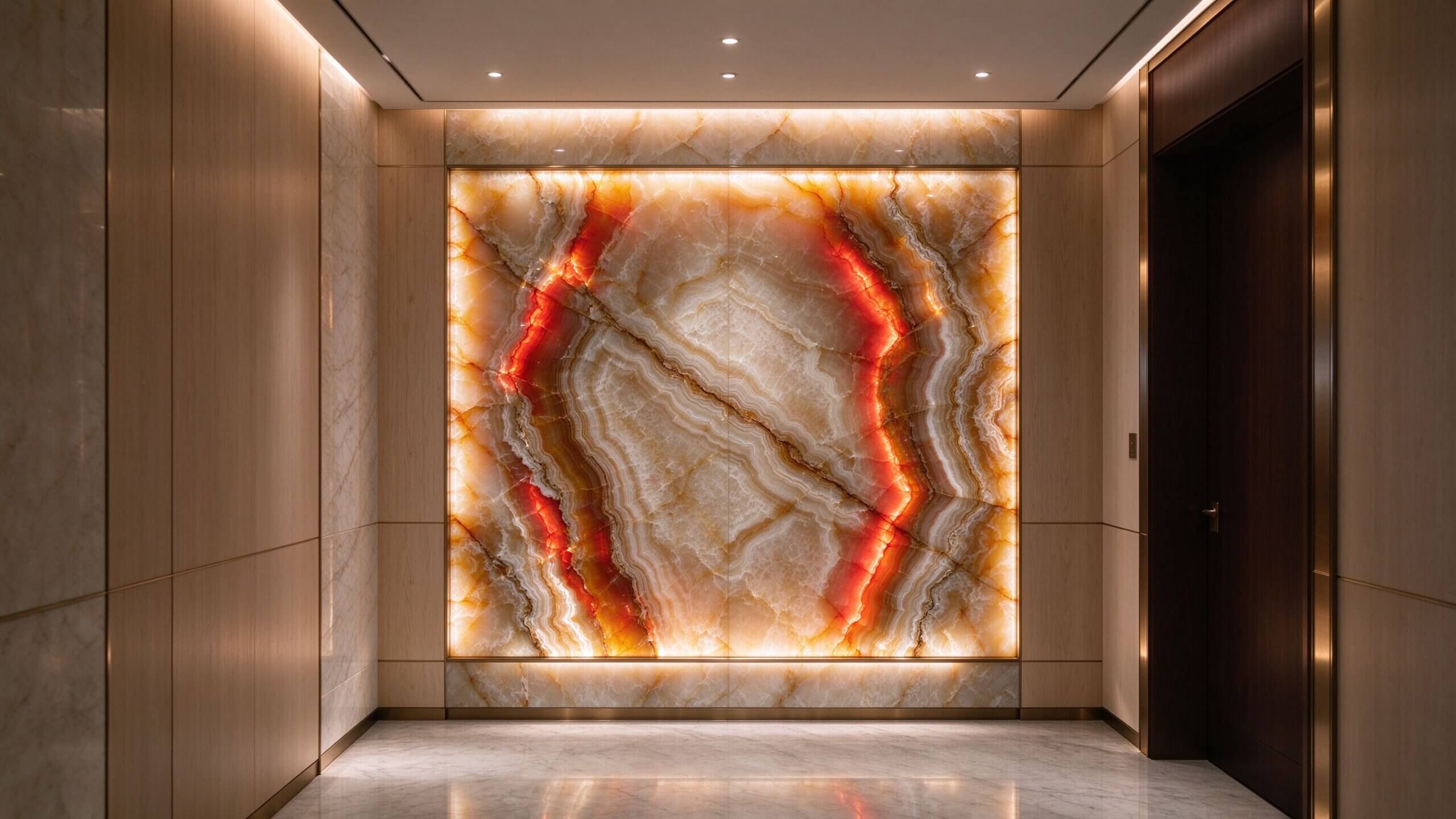
Backlit stone is one of the most striking design statements in modern hospitality, retail and residential interiors. A translucent onyx wall that glows from within, a marble reception desk that seems to hold light, an alabaster spa panel as soft as moonlight — all of it starts with one question: what is the right light source to put behind the stone?
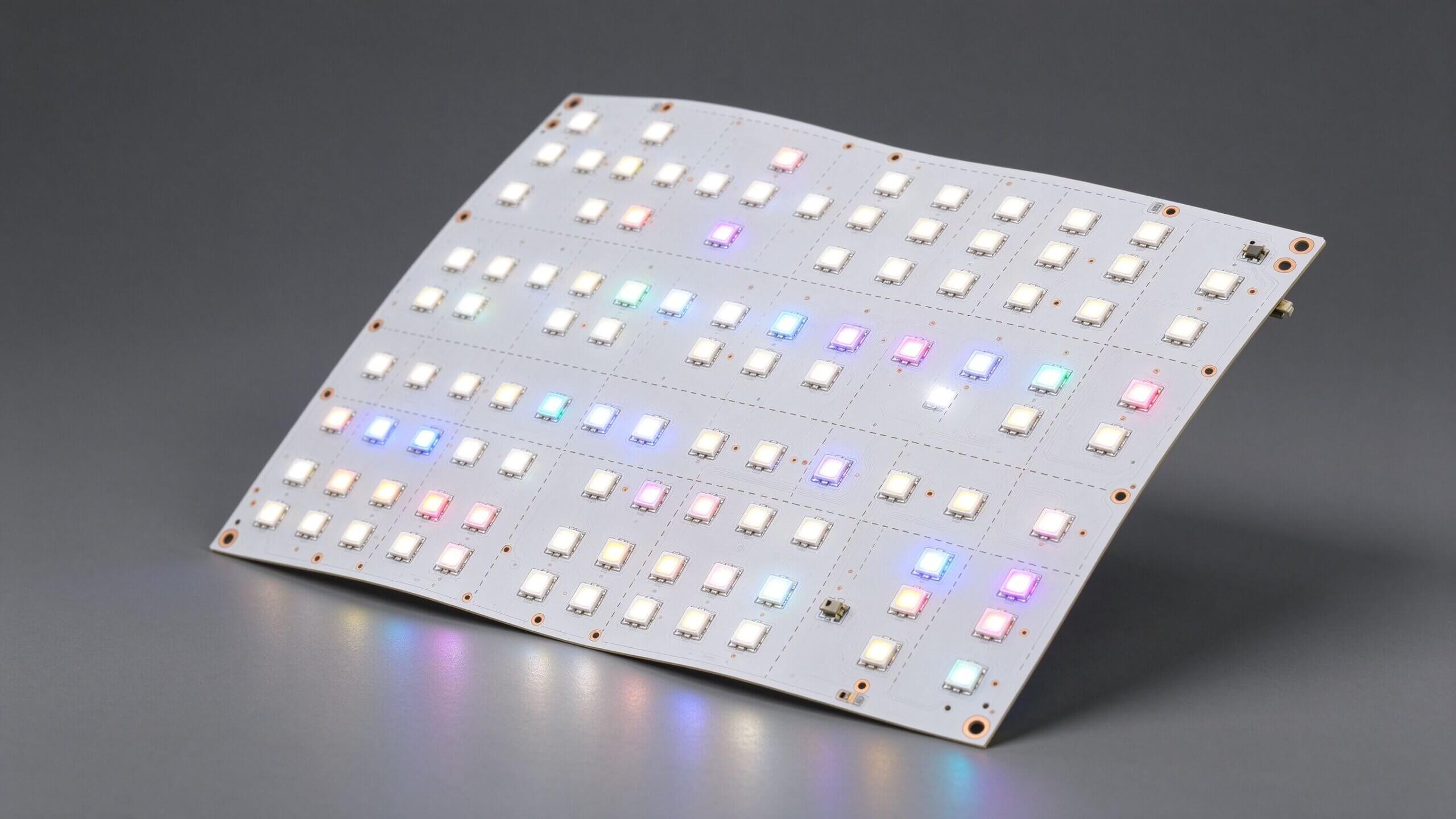
The answer for most projects is the LED sheet light: an ultra-thin, cuttable PCB panel with a dense array of SMD LEDs that produces uniform area lighting — no dots, no hot spots, no shadow stripes. This guide covers what LED sheet backlighting is, how it compares with strips and modules, which translucent stones work best, color temperature and CRI, RGB vs RGBW selection, power supply sizing, a step-by-step installation walkthrough, control systems and the mistakes that ruin otherwise beautiful projects.
İçindekiler
- 1. What Is LED Sheet Light Backlighting?
- 2. Where Backlit Stone Shines
- 3. LED Sheet vs Strip vs Module vs Panel
- 4. Choosing the Right Translucent Stone
- 5. Color Temperature and CRI
- 6. RGB vs RGBW vs Tunable White
- 7. Power Supply and Wiring
- 8. How to Install LED Sheets Behind Stone: 6 Steps
- 9. Control Systems Compared
- 10. Real Applications: Walls, Bars, Counters and Signs
- 11. Common Mistakes to Avoid
- 12. SSS
1. What Is LED Sheet Light Backlighting?
An LED sheet light is a thin, flexible PCB panel — typically 0.3 to 0.5 mm thick — with densely packed 2835 or 5050 SMD LEDs evenly distributed across its surface. Where an LED strip produces a line of light and an LED module produces a point of light, an LED sheet produces a continuous, uniform area of light.
Uniform area glow
Dense LED arrays (up to 128 LEDs per panel) eliminate visible dots, even behind thin onyx or marble.
Ultra-thin and flexible
About 0.5 mm thick — fits 20 mm retrofit cavities and can conform to curved surfaces.
Cuttable to any shape
Trim along marked lines with scissors into rectangles, circles or irregular geometries.
Backlighting works by mounting the sheet 20–50 mm behind a translucent stone panel. Light enters the stone and diffuses through its mineral structure, revealing veining and banding that is invisible when the stone is viewed in normal daylight. If you are new to strip-based lighting and want to compare the two approaches, the komple LED şerit ışık kılavuzu is a useful reference — but for large glowing surfaces, sheets win.
2. Where Backlit Stone Shines
Backlit stone is no longer a niche luxury. It has become the signature material of high-end interiors because it does two jobs at once: it is architecture and it is lighting. Typical applications include:
Hotel lobbies and corridors
Onyx feature walls and glowing reception desks create an immediate sense of arrival.
Bars, clubs and restaurants
Backlit stone bars and counters turn the bar itself into the room’s centerpiece.
Spas and wellness
Alabaster panels deliver warm, diffused calm — the most flattering light for relaxation spaces.
Retail and showrooms
Backlit display walls make premium products feel sculpted and precious.
yerleşim
TV walls, kitchen islands, bathroom niches and wardrobe doors with a quiet glow.
Signage and branding
Translucent stone logos and lightboxes with a museum-grade finish.
In commercial projects, backlit stone is also an operational decision: LED sheets run on low-voltage DC, generate far less heat than fluorescent boxes, and can be dimmed or recoloured by remote, wall panel or building control. See how the same design language scales to ceilings in our ticari tavan doğrusal aydınlatma kılavuzu.
3. LED Sheet vs LED Strip vs LED Module vs LED Panel
The most common question buyers ask is which light source belongs behind stone. Here is the honest comparison:
| Criterion | LED sheet | LED şerit | LED module | LED panel |
|---|---|---|---|---|
| Uniform area light | Linear light | Point light | Uniform area light | |
| ~0.5 mm | ~3 mm with tape | 10–20 mm | 8–25 mm rigid | |
| Yes (20–50 mm units) | Yes (25–50 mm) | HAYIR | HAYIR | |
| Evet | Evet | Sınırlı | HAYIR | |
| High — one sheet covers a wall area | Low — many parallel runs | Low — diffuser needed | Orta | |
| Stone backlighting, feature walls, signs | Coves, linear accents | Channel letters, small signs | Ceiling panels, troffers |
Why not strips? You can backlight stone with closely spaced LED strips, but you need many parallel runs, power injection points and a diffuser — and hot spots still appear where the strip lines are. Modules are worse: they need thick diffusers and show irregular patterns through translucent stone. Panels are rigid and cannot be cut to fit a wall geometry. The sheet was designed for exactly this job.
Where sheets are overkill, strips remain the better tool: coves, shelf edges, under-cabinet lines and thin slots. For those, our LED strip guide Ve dolap altı aydınlatma kılavuzu cover selection and installation.
4. Choosing the Right Translucent Stone
Not all stone transmits light equally. A 2 mm resin panel passes nearly all light; a 20 mm granite slab blocks almost everything. The variables are thickness, mineral density and surface finish — polished faces reflect light before it enters the stone, while honed finishes give a warmer, diffused glow.
| Malzeme | Translucency | Typical thickness | Şunun için en iyisi: |
|---|---|---|---|
| Harika | 6–12 mm | Luxury feature walls, bars, reception desks | |
| Harika | 8–15 mm | Warm diffused glow in spas and wellness centres | |
| İyi | 5–10 mm | Elegant subtle backlighting in hotels and offices | |
| Harika | 3–8 mm | Consistent colour, modern look, budget-friendly | |
| Very high | 3–10 mm | Budget-friendly, even diffusion, easy to fabricate |
Onyx is the gold standard: a 6–8 mm slab with a sheet 30 mm behind reveals every vein. Alabaster is softer and milkier — forgiving on gap distances and pairs beautifully with 3000 K white. Thin marble is less translucent, so it needs a brighter sheet or a smaller gap. Always request stone samples and test each against a real LED sheet in the actual installation environment before committing — thickness, veining and finish all change light transmission.
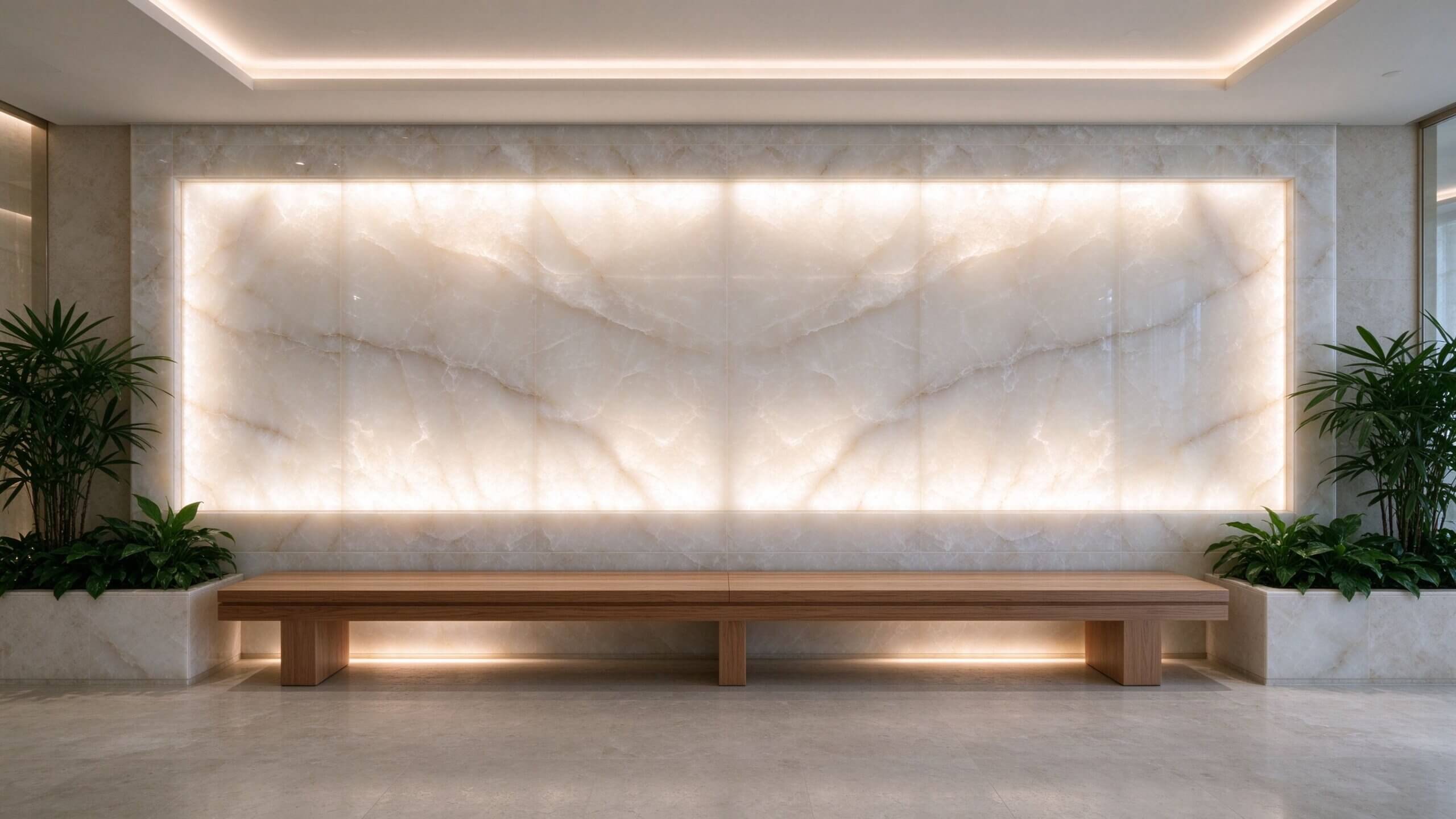
5. Color Temperature and CRI: Matching Light to Your Stone
Color temperature decides whether your stone looks warm and rich or cold and washed out. The stone’s mineral matrix already filters light — pairing a warm stone with a cool LED produces a desaturated, muddy result.
| Stone / mood | Önerilen ŞNT | Neden |
|---|---|---|
| 2700–3000 K | Warm light flatters golden veining | |
| 3000 bin | Soft, milky, relaxing glow | |
| 3500–4000 K | Neutral white keeps the stone crisp | |
| 3500–4000 K | Neutral tones preserve the natural colour | |
| 4000 bin | Bright, precise, colour-accurate | |
| Avoid for warm stones | Washes out warm veining and looks clinical |
CRI matters just as much. Choose sheets with CRI 90 or higher for hospitality and retail. Behind stone, a low-CRI light makes veining look flat and muddy; high-CRI rendering gives the stone depth. If you are comparing light quality across suppliers, our renk sıcaklığı ve CRI kılavuzu resmin tamamını açıklıyor.
6. RGB vs RGBW vs Tunable White: Which Sheet Do You Need?
If the wall doubles as everyday lighting — a reception desk, a corridor, a counter — choose RGBW over RGB. This is the single most common specification regret.
| Tip | White light quality | Şunun için en iyisi: |
|---|---|---|
| Muddy — mixed RGB white drops CRI below 60 | Purely decorative walls that never need true white | |
| True white with CRI 90+, plus full colour | Most hospitality and retail projects | |
| 2700–6500 K white only, no colour | Café-to-bar transitions, spa and office scenes | |
| Colour plus tunable white in one sheet | Premium projects that need everything |
Budget roughly 15–20% more for RGBW over RGB — the dedicated white chip is worth it for nearly every project. Need an alternative for linear accents around the stone? The COB vs SMD vs RGBIC comparison helps pick the right strip type for secondary lighting.
7. Power Supply and Wiring: Sizing Without Voltage Drop
Under-sizing the power supply is the most common cause of a dim, flickering backlit wall. Here is how to size it correctly.
Count the sheets
Example: a 2.4 m × 1.5 m wall (3.6 m²) of 490 × 245 mm sheets takes about 6–7 sheets.
Total the wattage
At 48 W per sheet: 7 × 48 W = 336 W. Add 20% headroom → 400–450 W 24 V DC driver.
Choose the right wire
20 AWG for a single sheet, 18 AWG for multiple. Keep runs short and inject power in the middle of long chains.
Follow the same 120% rule for every project, position the driver at the point of shortest total run, and never exceed the manufacturer’s maximum sheets per series chain (typically 3–4) — for larger walls, divide the layout into independent sections. For a fuller treatment of density, power and run length, see LED strip specs explained.
8. How to Install LED Sheets Behind Stone: 6 Steps
Stone is expensive and hard to remove once installed — so order matters. Skipping the pre-test is the most common cause of failure.
Test everything first
Connect power and controller on a workbench; cycle all colours and brightness before mounting. A dead segment is found here — not after the stone is sealed in place.
Yüzeyi hazırlayın
Remove dust, oil and moisture with isopropyl alcohol. On uneven concrete, add aluminium tape or a flat backing board so the adhesive gets full contact.
Cut to size
Cut with sharp scissors along the marked lines only. Cutting against the marks severs copper traces and creates dead zones. Butt sheets edge-to-edge with a 2–3 mm gap.
Mount the sheets
Peel the 3M backing and press the sheet 20–50 mm behind the stone, working from one corner outward to remove air bubbles. For permanent builds, add screws through pre-drilled holes.
Connect power and control
Use 20 AWG for one sheet, 18 AWG for several. Match connectors to the controller: 4-pin RGB, 5-pin RGBW, XLR/DMX for DMX512. Label every wire.
Power on and fine-tune
Cycle colours, lock in preset scenes, walk the wall looking for uneven spots. Hot spots mean increase the gap or add diffuser film.
Tools checklist: sharp scissors · 18–20 AWG wire and strippers · power supply sized to wattage + 20% · controller (RF, wall panel, DMX512 or DALI) · isopropyl alcohol wipes · multimeter.
If you are installing trimless linear channels elsewhere in the same project, our drywall channel installation guide covers the complementary detail work.
9. Control Systems Compared
The right controller depends on who operates the lights and how often settings change. A handheld remote suits a wall changed a few times a week; DMX512 suits a hotel lobby with ten programmed scenes.
| Denetleyici | Şunun için en iyisi: | Key features |
|---|---|---|
| Small–mid projects | Colour wheel, preset scenes, brightness/speed; works through stone and drywall | |
| Permanent installations | RGBW dimming, zone control, clean aesthetic | |
| Large architectural projects | Pixel mapping, programmed scenes, building-wide sync | |
| Smart building integration | Tunable white, scheduling, BMS integration | |
| Dynamic effects | Pixel-by-pixel control, chasing patterns, video sync |
Most RF controllers handle up to 10 A — beyond that, add a signal amplifier every 5–10 sheets. For a deep dive into dimming options that also applies to strip systems, see how to dim LED strip lights.
10. Real Applications: Walls, Bars, Counters and Signs
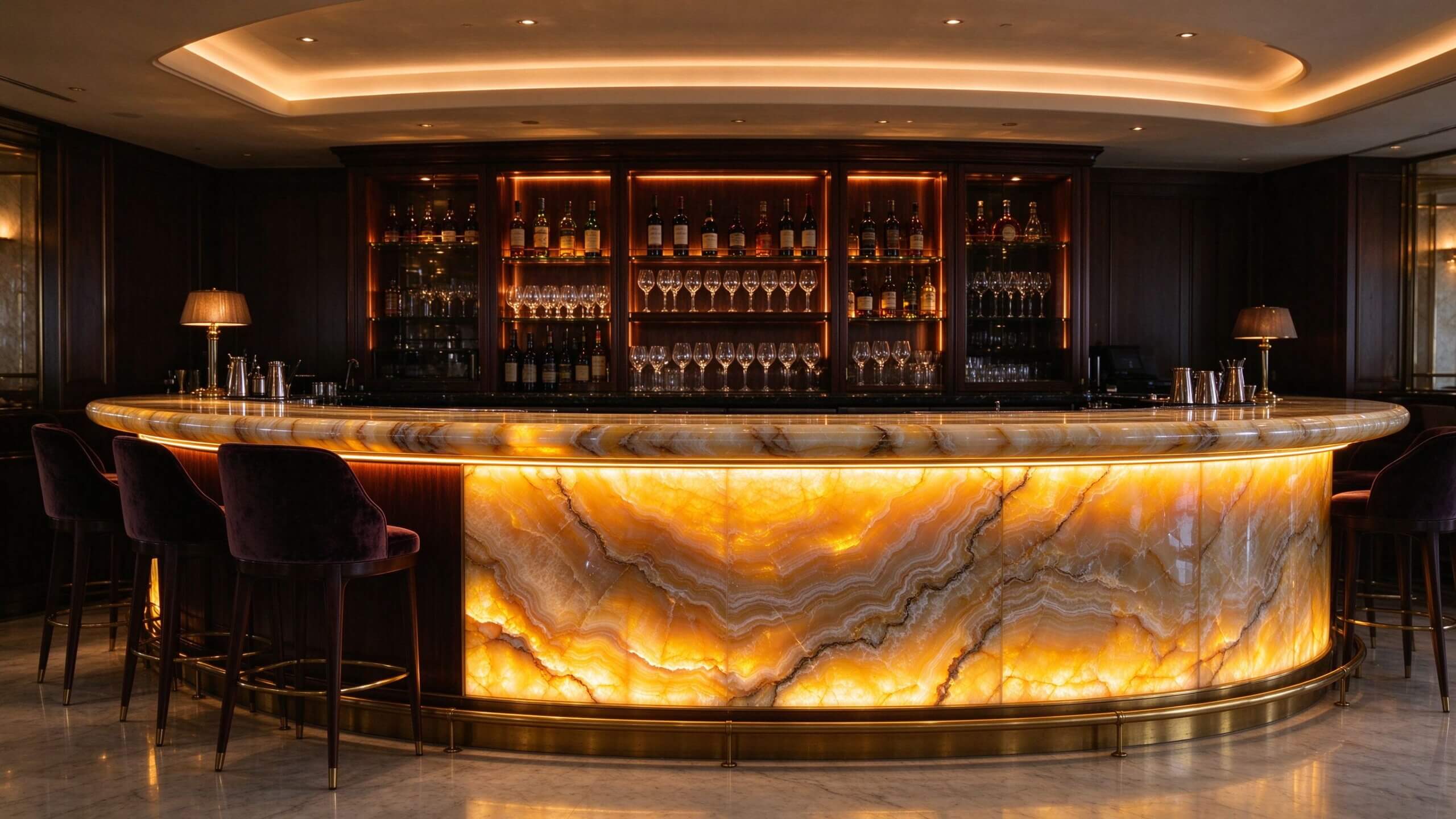
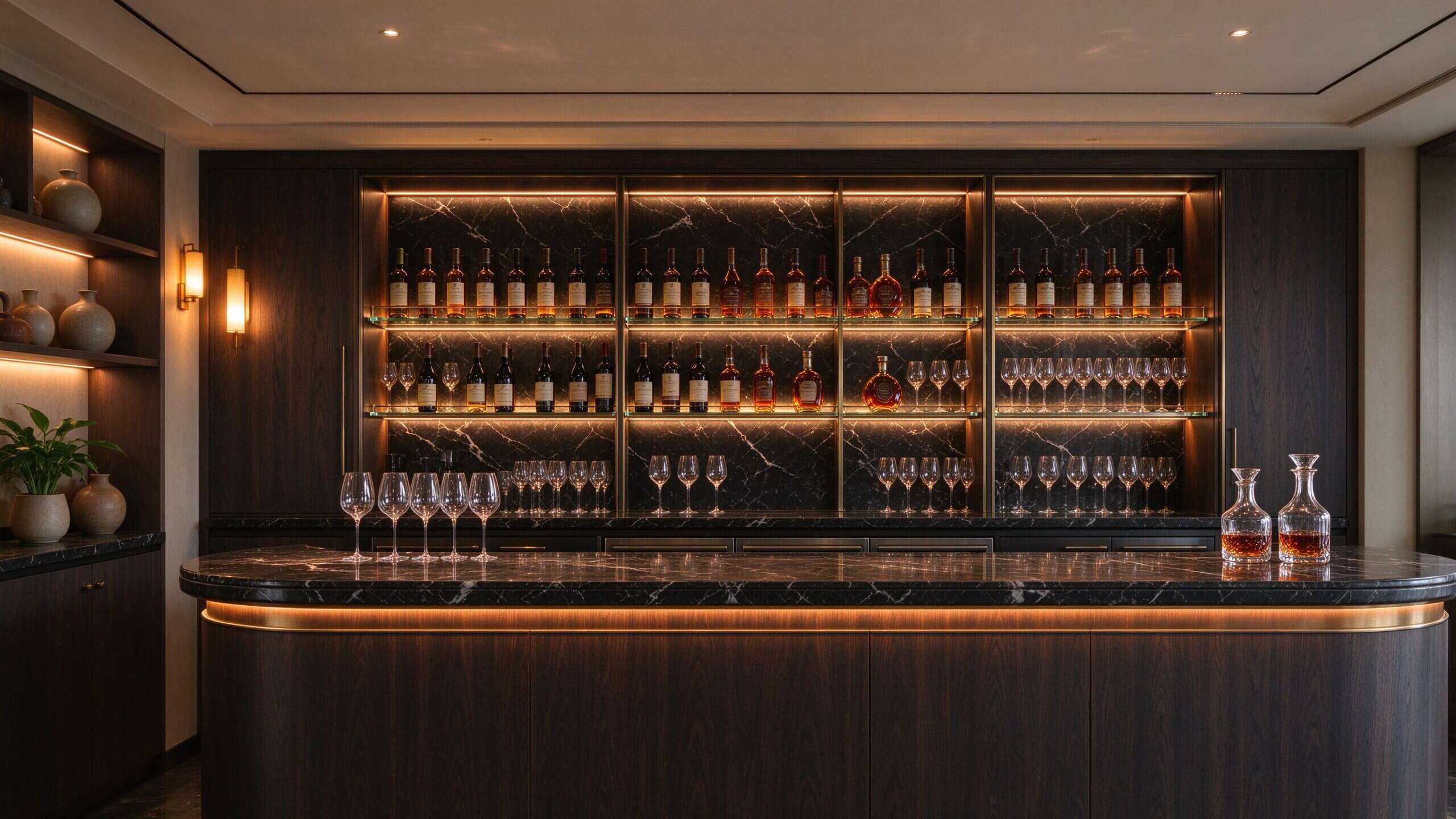
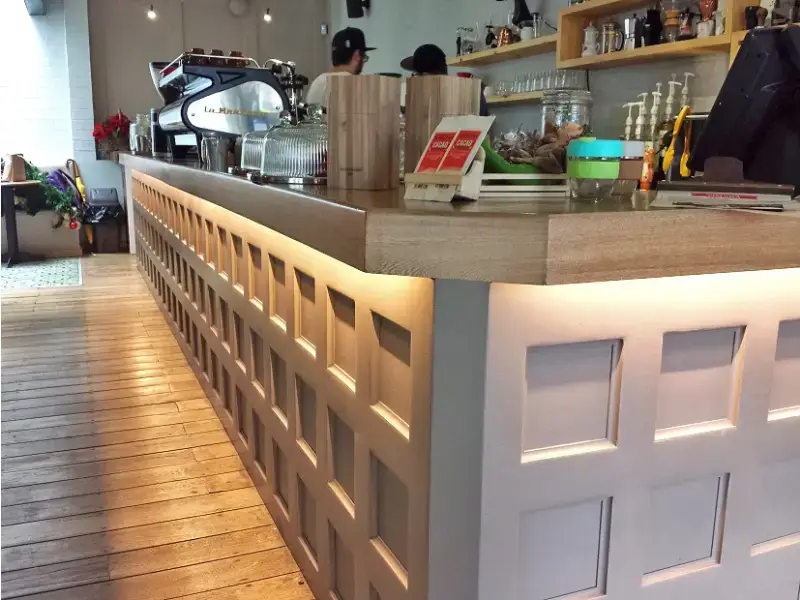
The same LED sheet technology extends to signage, facade branding and feature walls — see how far linear lighting goes on bina cepheleri.
11. Common Mistakes to Avoid
Cutting against marked lines
Severed copper traces create permanent dead zones. Cut on the marks, and re-test every segment after cutting.
Mounting on dirty surfaces
Dust and grease weaken the adhesive and cast shadow pockets. Wipe with isopropyl alcohol first.
Under-sizing the power supply
A dim, flickering wall is almost always a driver too small. Size at 120% of total wattage.
Skipping the pre-test
A dead segment found after the stone is sealed is a dismantled wall. Always bench-test first.
RGB controller on RGBW sheets
The white channel stays off — the wall never shows true white. Match the controller profile.
Gap too small for thin stone
Hot spots and striping appear when the sheet is too close. Keep 20–50 mm and test with real samples.
12. KayTai Solutions for Backlighting and Beyond
KayTai is an LED lighting manufacturer with a full line of strip lighting, aluminum profiles and controls. While our standard range focuses on strip-based systems, our factory supports custom and OEM lighting development for architectural projects — including custom panels, waterproofing and harnesses. The following complementary products are used in backlit-stone and feature-wall projects:
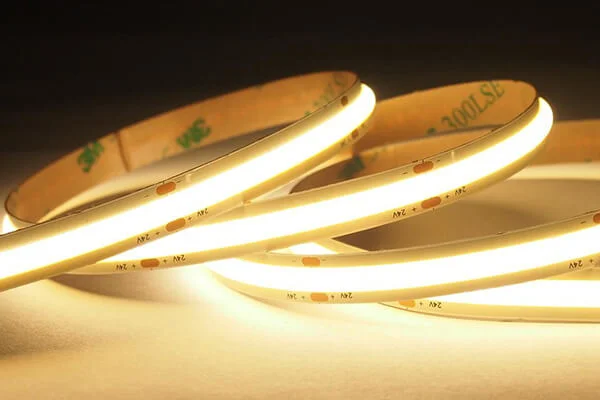

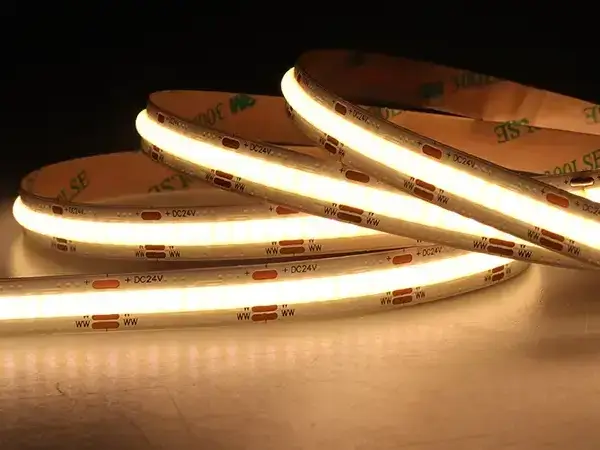
Need help specifying a backlit stone project? Contact KayTai with your dimensions, stone type and colour requirements — our engineers can advise on light source selection, driver sizing and wiring diagrams.
13. FAQ
▶What is an LED sheet light?
An LED sheet light is a thin, flexible PCB panel with a dense array of evenly distributed LEDs. Unlike strips (linear) or modules (point), sheets produce uniform area lighting with no visible dots or hot spots — ideal for backlighting onyx, marble, alabaster, acrylic and resin panels.
▶Can LED sheets backlight stone walls?
Yes. Mount them 20–50 mm behind the stone with 3M adhesive or screws. Dense 2835/5050 arrays deliver uniform glow, and RGB/RGBW versions change colour via RF remote, wall panel, DMX512 or DALI.
▶RGB or RGBW — which is better for stone backlighting?
RGBW. The dedicated white chip delivers CRI 90+ and a natural colour temperature alongside colour effects. Use plain RGB only for purely decorative walls that never need true white.
▶How far should LED sheets be from the stone?
20–50 mm. Thinner or more translucent materials need a larger gap; brighter output allows a shorter one. Always test with real stone samples first.
▶Can LED sheets be cut to size?
Yes — cut along the marked lines with sharp scissors into any shape. Minimum cut units range from one LED to 50 × 50 mm. Re-test each segment after cutting.
▶How long do LED sheet lights last?
35,000–50,000+ hours depending on model and conditions. Mount on metal surfaces for better heat dissipation and keep drivers accessible for service.
▶What is the best stone for backlighting?
Onyx for dramatic veining, alabaster for soft warm diffusion, thin marble for subtle elegance. Resin and acrylic panels are the budget-friendly, colour-consistent alternatives.
▶Can LED strips backlight stone instead of sheets?
Technically yes, with closely spaced parallel runs and a diffuser — but hot spots and striping are hard to avoid. LED sheets are the cleaner, faster, more uniform solution.
Planning a Backlit Stone Project?
Send KayTai your wall dimensions, stone type and colour requirements. Our engineers will advise on the right light source, driver sizing and wiring — with layout support for custom and OEM projects.
KayTai ile iletişime geçin