
When we talk about LED strip lights, we should know the basic knowledge of CCT and CRI. When we are using LED strip lights, we need to know what is CRI and what is CCT, what is the best combination of LED chips to balance the light, and then what is the best way to choose the LED strip light. KayTai — a professional LED strip manufacturer — explains it all here. Explore our LED strip lights catalog and the color temperature guide for deeper detail.
Table of Contents
1. What is LED Strip Light CCT?
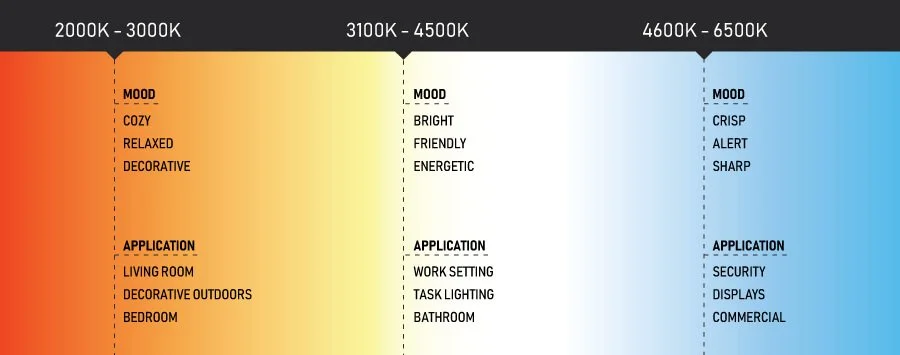
Color temperature (or chromaticity) is a scale used to describe the appearance of a light source. It is measured in degrees Kelvin (K), from 2,500K and above (cool colors) to 6,500K and below (warm colors). Color temperature is typically expressed as a single number, but it is actually a range of colors that are visible to the human eye. These different ranges are created by varying the amount of each pure color (red, green and blue) used in white light. KayTai has many different CCT LED strip lights.
2. What CCT Should You Choose for Your Room?
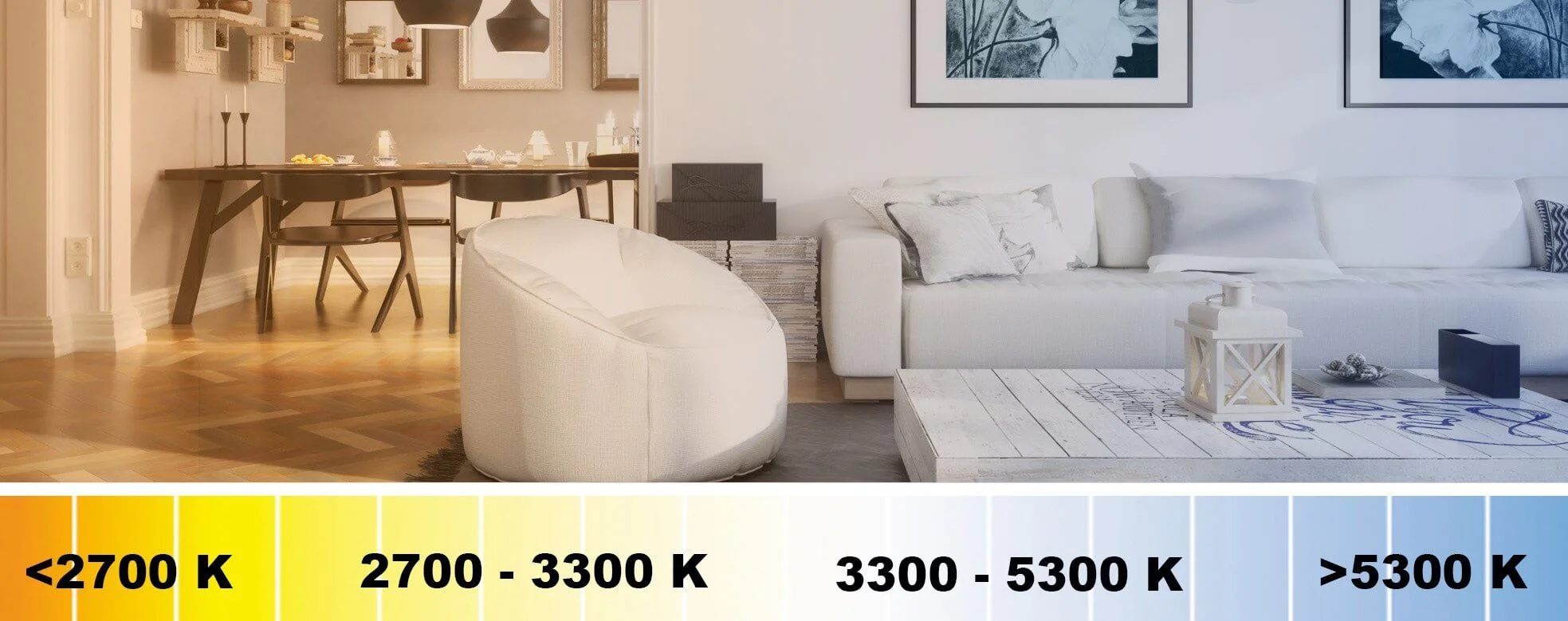
Choosing the right color temperature for your room can make all the difference in how you feel when you are in your space. The best way to determine what color temperature is right for your space is to think about how you want it to feel. Do you want it to be relaxing? Inviting? Bright? Here is a breakdown of each type of light and what effect it will have on your mood:
Warm Light
Warm light has a yellowish tint, which gives off a cozy feeling. It is perfect for rooms where you want to relax, like your bedroom or living room.
Cool Light
Cool light has a blue tint, which gives off an energetic vibe that is great for offices or kitchens. It also helps improve concentration, since blue wavelengths are known to boost alertness and attention span.

3. What is LED Strip Light CRI?
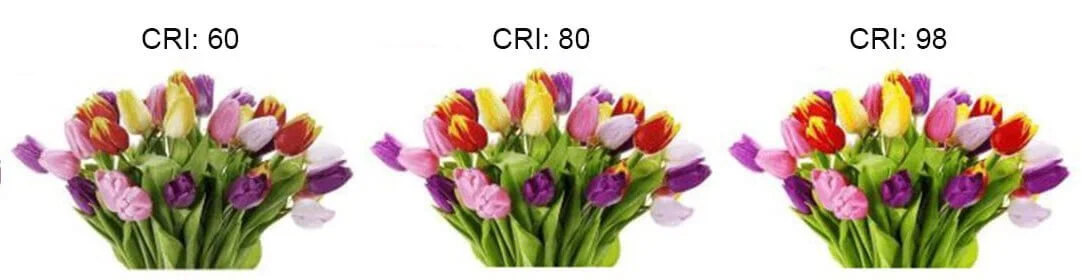
Color Rendering Index (CRI) is a measure used for the ability of light to reproduce the exact tones on any object. This would give a faithful reproduction of what the colors of the object look like in natural light. LED Strip Light CRI is not only a measure of how accurately it can depict color, but also how much of it resembles natural sunlight. The higher the value, the closer it will resemble natural sunlight.
The difference between different lighting sources is that their color rendering index varies from one to 100. Natural light such as sunlight has an index of 100, while incandescent lamps have an index of 85–95. Fluorescent lights have an index of 80–85, and LEDs have an index range from 75–80 depending on quality and type. For more, read our LED strip color consistency guide.
4. CCT vs. CRI: Which Value Is More Important?
The Color Rendering Index (CRI) and Correlated Color Temperature (CCT) are two of the most important characteristics of a light source. Both values are essential for choosing the right light for your needs.
What CRI Tells You
The CRI value indicates how well a lamp reproduces the color of an object. It determines how natural objects and colors will look under the light. A high CRI rating means that you can expect better color rendering from your light source.
How to Combine Them
The CRI is designed to be used in combination with other values, such as color temperature, to determine which lamp is best suited for a specific application. For example, if you want to use your lamp in an art studio or photography studio where accurate color representation is critical, then you should look for a high CRI rating in addition to a low color temperature value (CCT).
5. What CCT Should I Choose for LED Strip Lights?
When we are lighting our room, we need to choose different color temperature LED strip lights. In the market, there are many kinds of color temperature LED strip lights. It is difficult for us to choose the most suitable one. The different color temperatures of LED strip lights represent different color temperatures of light, which can be divided into warm white, pure white, and cool white.
Warm White (3000–3500K)
It has a yellowish tone and is the closest to incandescent bulbs. It looks like indoor lighting or outdoor lighting in daytime. Perfect for relaxing spaces.
Pure White (4000–4500K)
The pure white light has a bluish tone that makes everything look brighter than they actually are. It is recommended for retail use, such as supermarket shelves, clothing stores and so on.
Cool White (5000–5500K)
The cool white light does not have any blue tone but still looks bright enough to illuminate objects in detail. This kind of white light can be used in living rooms or bedrooms to create a warm atmosphere.

6. What Is the Difference Between CCT and RGB?
Cool White LED Strip Light
Cool white LED strip lights are best used in areas such as garages, basements, closets and other areas where you need a cooler temperature. They also work great for lighting up offices, kitchens and bathrooms. These lights are great for accenting certain areas of your home.
Warm White LED Strip Light
Warm white LED strip lights are best used in areas like living rooms, bedrooms and family rooms. They provide a more natural glow that is perfect for creating a relaxing environment after a long day at work or school. The warm white color is also great for helping children sleep at night without being too bright or harsh on your eyes.
RGB LED Strip Light
RGB lights allow you to choose the exact color of the light that you want to use in your home or business! This makes it possible to create an entire themed lighting scheme with just one product! See our RGBW color-changing LED strips and LED strip vs rope light guide.
7. KayTai LED Strip Lights: The CCT and CRI You Can Specify
Everything explained above is something KayTai builds into real product every day. Our strip range covers >80 and >90 CRI, a 1,800K to 10,000K CCT span, densities from 30 to 608 LEDs per metre, and DC 12V or 24V operation — so the colour temperature and colour rendering this article describes are order options, not fixed compromises.
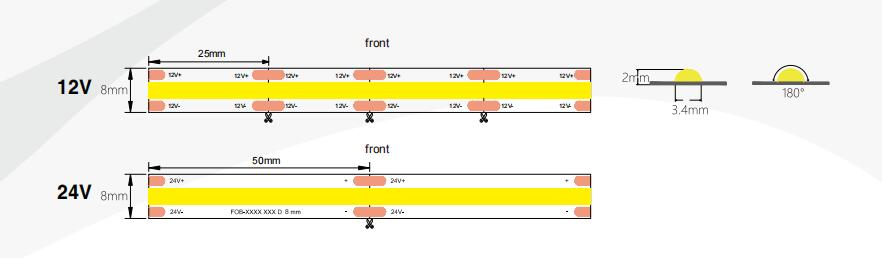
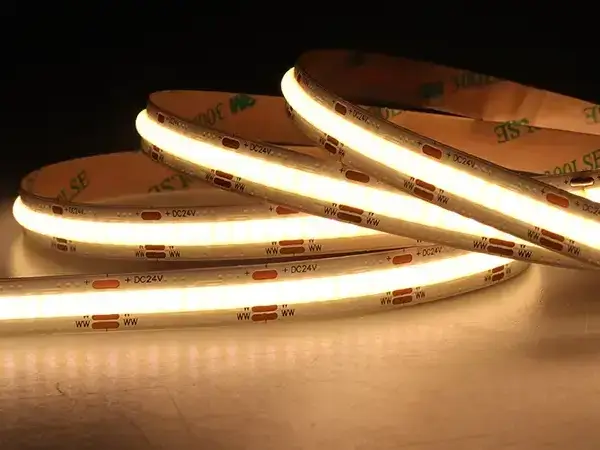
Dot-free, seamless light with >90 CRI and a 1,800–10,000K CCT range. Choose 320/384/480/528/608 chips per metre, 100–150 lm/W, on DC 24V. This is the family to pick when the article above makes the case for high CRI.
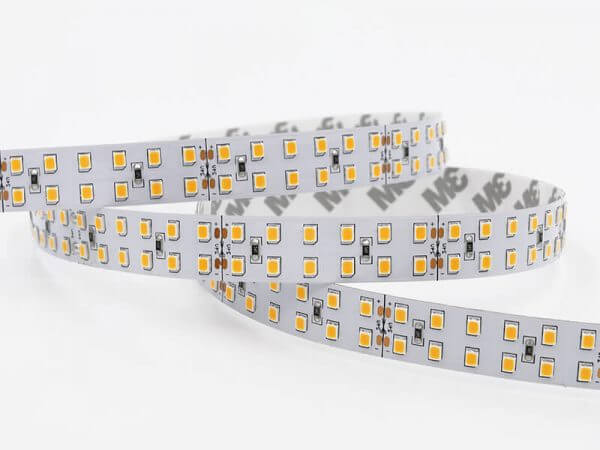
The workhorse white range in >80 or >90 CRI, densities of 60/120/180/240/420 LEDs per metre, and DC 12V or 24V. Available as a 240 double-line version for higher output in the same footprint.
One strip that moves across the whole white range instead of fixing a single CCT: 608 LEDs/m, 14W/m, 120 lm/W, >90 CRI, 120° beam, 30,000 working hours and a 5-year warranty.

When you want saturated colour plus white on the same run: 5050 RGB, 4-in-1 RGBW and 5-in-1 RGBWW, 60 or 96 LEDs per metre, alongside RGB COB for dot-free colour.
| Product family | CRI and CCT | Density and voltage |
|---|---|---|
| COB LED strip (white) | >90 CRI, 1,800–10,000K | 320–608 chips/m, DC 24V |
| SMD 2835 (single colour) | >80 / >90 CRI, 1,800–10,000K | 60–420 LEDs/m, DC 12V or 24V |
| Tunable white | >90 CRI, adjustable across the white range | up to 608 LEDs/m, DC 24V |
| RGB / RGBW / RGBWW | white CRI >80 / >90 on the white channel | 60 or 96 LEDs/m, DC 24V |
Figures are typical catalogue values and confirmed against your project. Custom CCT, CRI, density and voltage available. Common specs across the white range: 100–150 lm/W, 120° beam, –20℃ to +45℃ operating, 30,000 hours, 5-year warranty.
Browse all KayTai LED strip lights
Conclusion
Understanding CCT and CRI is the foundation of choosing the right LED strip light. Match the color temperature to the mood of the room, and choose a high CRI for applications where color accuracy matters. Need help? Contact KayTai for expert guidance and factory-direct pricing.
Choose the Right CCT and CRI for Your Project
Tell us your room type and application, and our team will recommend the ideal color temperature and CRI — with free samples available.
Contact KayTai
Good explanation of CCT and CRI together. The relationship between color temperature and rendering quality is clarified. Useful for anyone comparing strip specs.
Good explanation of CCT and CRI together. The relationship between colour temperature and rendering quality is clarified. Useful for comparing specs.