
Welcome to KayTai, your trusted Chinese manufacturer of high-quality LED strip lights. If you’re planning to purchase LED strip lights for your project, you’ve likely heard about power injection. This technique is essential for ensuring consistent brightness, preventing flickering, and extending the lifespan of your LED strips, especially in long or high-density installations. In this comprehensive guide, we’ll explain everything you need to know about power injection, why it’s important, and how to implement it effectively.

Table of Contents
1. What is Power Injection?
Power injection is a technique used to add electrical power at specific points along an LED strip to counteract voltage drop. Voltage drop occurs when the length of the LED strip increases, causing the brightness to decrease gradually. This happens because the electrical resistance in the strip’s conductive material increases with length, reducing the voltage available to the LEDs at the far end. Power injection involves connecting additional wires from the power supply to strategic points along the LED strip, ensuring that all sections receive adequate voltage and maintain consistent brightness.
2. Why is Power Injection Necessary?
Dimming
LEDs at the far end appear noticeably dimmer.
Flickering
Inconsistent voltage causes flickering or strobing.
Uneven Color
RGB strips may display incorrect colors.
Overheating
Voltage drop can overheat and damage LEDs.
Power injection becomes essential when the total length of the LED strip exceeds the manufacturer’s recommended limit (e.g., 5 meters for 12V strips or 10 meters for 24V strips), or when high-density LED strips are used, as they draw more current and are more susceptible to voltage drop. Learn more about avoiding voltage drop.
3. Benefits of Power Injection
Improved Brightness
Ensures all LEDs stay consistently bright.
Extended Lifespan
Even power distribution prevents overheating.
No Flickering
Eliminates flickering caused by voltage drop.
Controller Compatible
Adequate power for advanced color features.
Extended Length
Go beyond standard length limits safely.
4. Methods of Power Injection
End-to-End Injection
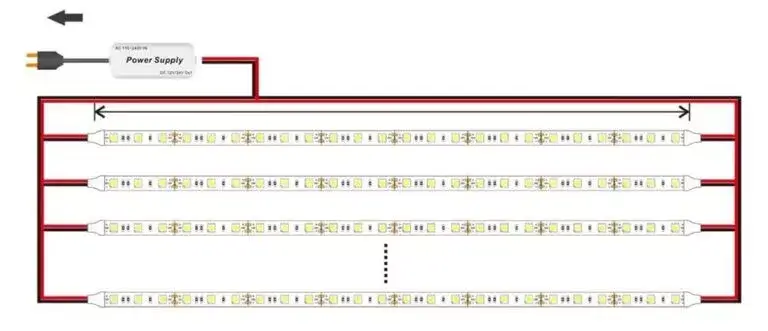
Power is supplied to both ends. Best for shorter strips (up to 5 meters). Cut to length, strip copper pads, connect wires at each end, solder with heat shrink, and test.
Midpoint Injection
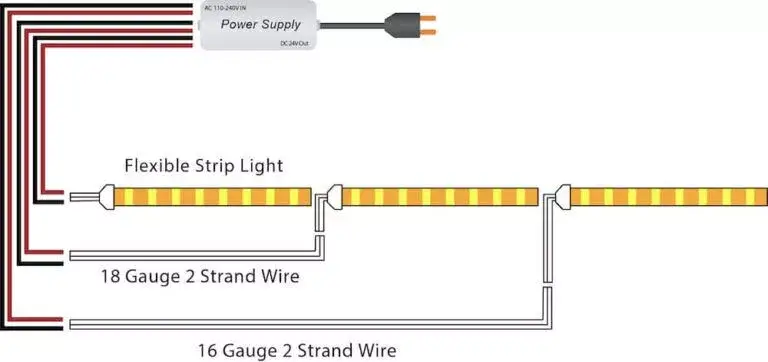
Power is injected at the middle point. Best for medium-length strips (5–10 meters). Cut at midpoint, tin pads, connect first segment, inject power at midpoint, connect second segment.
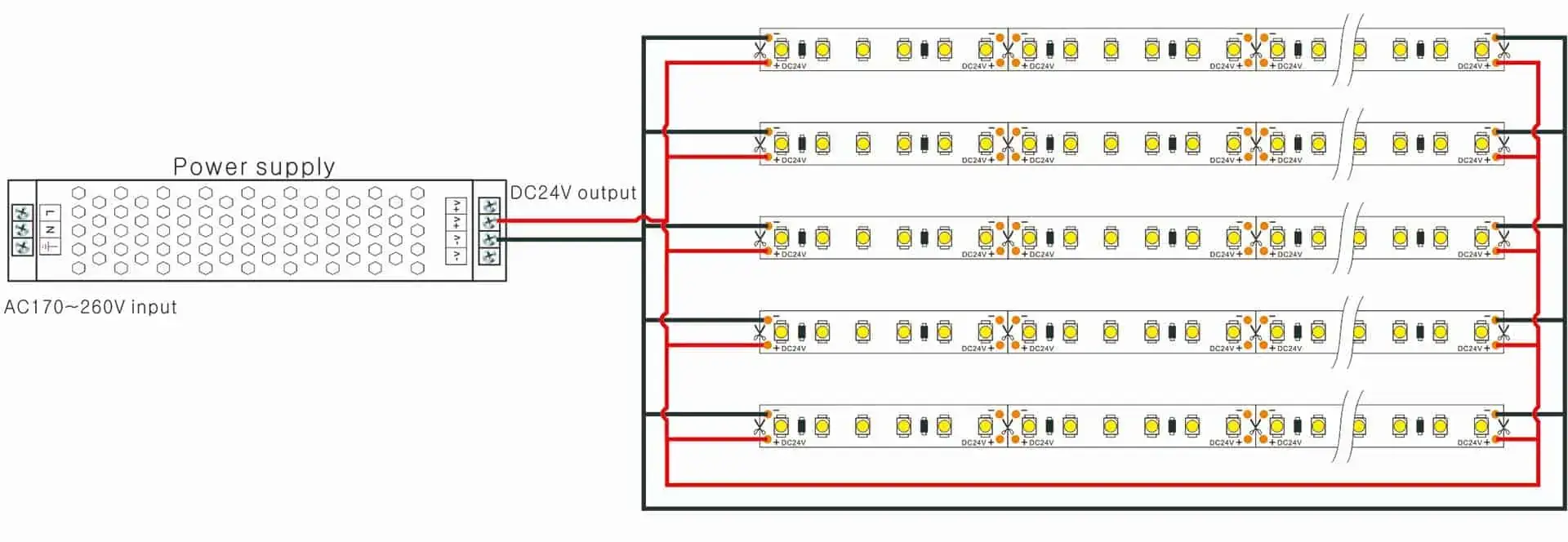
Parallel Injection
Power is injected at multiple points. Best for long strips (10+ meters). Mark injection points, calculate wire gauge, solder wires at each point, connect to the power supply, and test.
5. How to Determine if Power Injection is Needed
Strip Length
Exceeds 5m (12V) or 10m (24V) — needed.
Voltage Match
Power supply must match strip voltage.
Brightness Loss
Dim LEDs or wrong colors signal need.
Flickering
Clear sign of voltage drop.
Calculate Drop
Use a voltage drop calculator.
Consult Expert
Contact KayTai for personalized advice.
6. Tips for Successful Power Injection & How to Avoid It
Tips: plan your injection points based on strip length and voltage drop; use the correct power supply matching voltage and current; double-check polarity — positive to positive, negative to negative; consider LED strip density — high-density strips need more frequent injection; and use high-quality materials for safety and performance.
How to avoid the need for power injection: use multiple shorter strips instead of a single long strip; choose high-voltage strips (e.g., 48V) that run longer without injection; use thicker wires to reduce resistance; distribute power with multiple power supplies; and invest in high-quality strips with better conductive materials.
FAQs
▶Can I power an LED strip from both ends?
Yes, end-to-end power injection is a simple and effective method for shorter strips.
▶How do I calculate the power needed for my LED strips?
Multiply the strip’s wattage per meter by the total length to determine the total power requirement.
▶What gauge wire is needed for power injection?
The wire gauge depends on the current and length of the strip. Use a voltage drop calculator to determine the appropriate gauge.
▶Can I use a battery to power my LED strip?
Yes, but ensure the battery voltage matches the strip’s requirements and consider the battery’s capacity for runtime.
Power injection is a crucial technique for ensuring consistent brightness, preventing flickering, and extending the lifespan of your LED strip lights. Whether you’re working on a small residential project or a large commercial installation, understanding and implementing power injection can make a significant difference in the performance of your LED strips.
Get Expert LED Wiring Support
Explore KayTai’s range of LED strips and get personalized power injection advice.
Contact KayTai
Power injection is finally explained in a way that makes sense. Knowing where to add injection points along long runs prevents the dim tail end. The diagrams are very helpful.
Power injection finally made sense to me after reading this. The explanation of voltage drop over long runs and where to add injections is clear. The diagrams make the concept easy to follow.
As an electrician in the UK, I have seen plenty of long runs fail from voltage drop. This guide’s power injection points and cable sizing table are exactly what I needed for a 15m cove install last week. Clear diagrams too. Recommended reading for anyone wiring long strips.