How to Choose LED Strip Lights: The Complete 2026 Buying Guide
LED strip lights have become one of the most versatile and popular lighting solutions for homes, shops, offices and architectural projects. They are flexible, energy-efficient, easy to install, and available in endless color and brightness combinations. But with so many choices on the market — SMD vs COB, 12V vs 24V, IP20 vs IP68 — picking the right strip can quickly feel overwhelming.
Table of Contents
What Are LED Strip Lights?
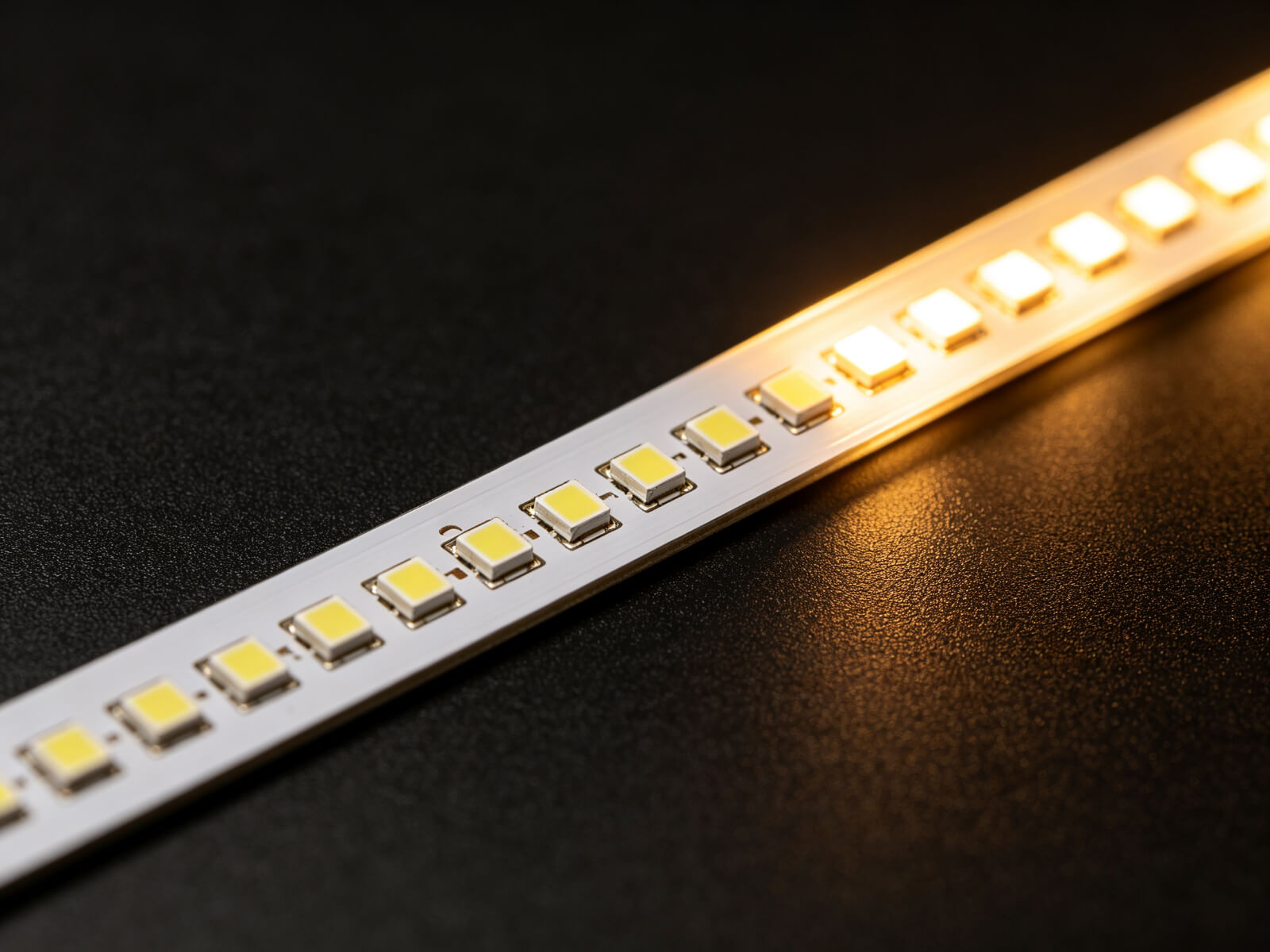
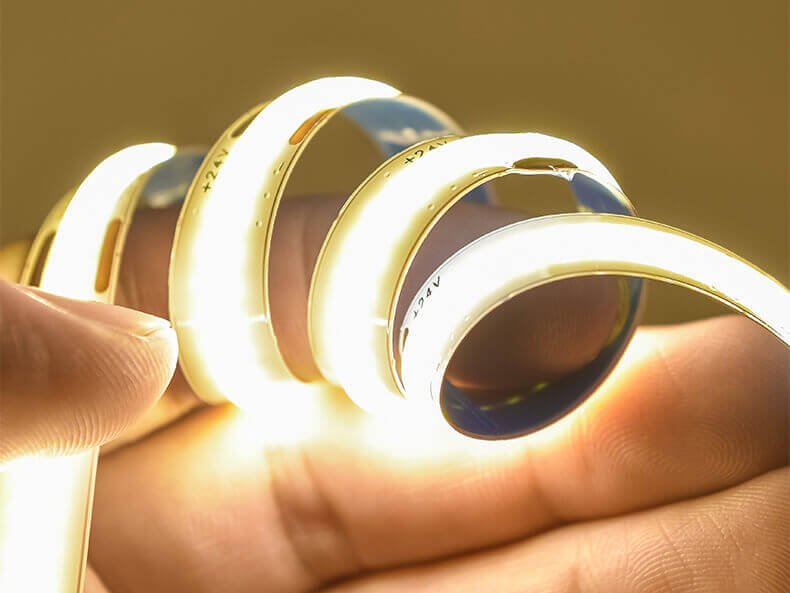
An LED strip light — also called LED tape, LED ribbon or LED flex — is a flexible circuit board densely populated with surface-mounted LED chips. The back carries strong 3M adhesive, so it can be cut to length and installed almost anywhere: under kitchen cabinets, behind TVs, along stair treads, inside coves and display cases, and even outdoors with the right waterproof rating.
Depending on the LED type, density and driver you choose, a single strip can deliver anything from a soft warm glow to a vivid, color-changing light show. That flexibility is exactly why LED strips are now the go-to choice for both DIY users and professional lighting designers.
LED Strip Light Types: A Guide to KayTai’s Range
KayTai manufactures a complete range of LED strip lights in our own factory in China, from single color workhorses to dot-free COB and color-changing RGBW tapes. Here is a quick overview of the main series to help you decide which type fits your project.


Key Factors to Consider Before Buying
This is the heart of the guide. Before you order, work through these ten factors one by one — each one determines how the strip will look, perform and last in your specific application.
1. LED Chip Type: SMD vs COB
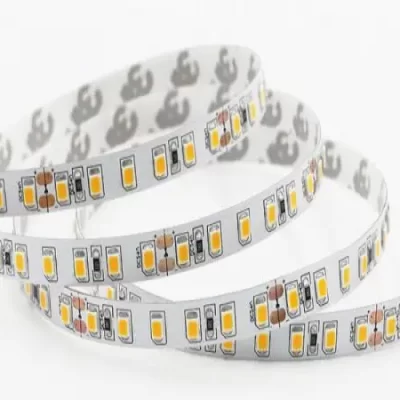
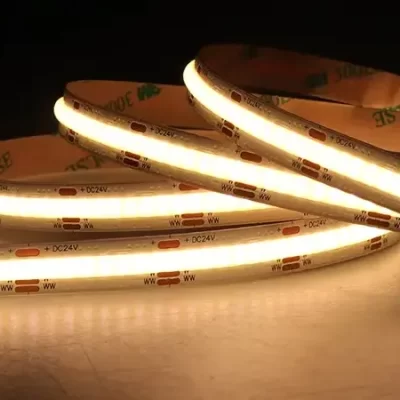
LED strips are usually divided into two families by chip technology. SMD strips (Surface-Mounted Device, e.g. SMD2835 or SMD5050) are the classic choice: bright, efficient, inexpensive, and widely available in single color, RGB and RGBW. COB strips (Chip-on-Board) place many tiny LED chips along the strip and cover them with a phosphor layer, producing a perfectly continuous, dot-free line of light with excellent uniformity and high CRI.
SMD LED strip
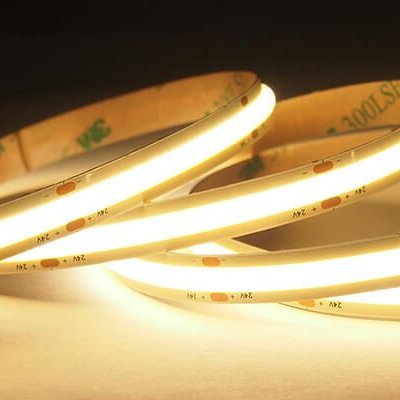
COB LED strip
Choose COB LED strips when you want a seamless, professional finish without visible hotspots; choose SMD when you need maximum brightness per meter or a specific single-color solution.
2. Brightness and LED Density
Brightness is mainly driven by the number of LEDs per meter and the chip size. Common densities are 30, 60, 120 and 240 LEDs/m — the higher the density, the brighter and more uniform the light line. High-density strips (120–240 LEDs/m) are also better at avoiding visible dots, which is why many designers prefer them for open coves and visible mounting.
Always compare lumens per meter rather than just LED counts, because different chips put out different amounts of light. Our single color LED strips are available in multiple densities so you can match brightness exactly to your project.
3. Color Temperature (CCT)
Color temperature, measured in Kelvin (K), describes how warm or cool the white light looks: 2700K is a cozy warm white, 3000K a soft warm white, 4000K a neutral white, and 5000K–6500K a crisp cool white. Warm tones suit bedrooms and restaurants; cooler tones suit kitchens, workshops and task areas.
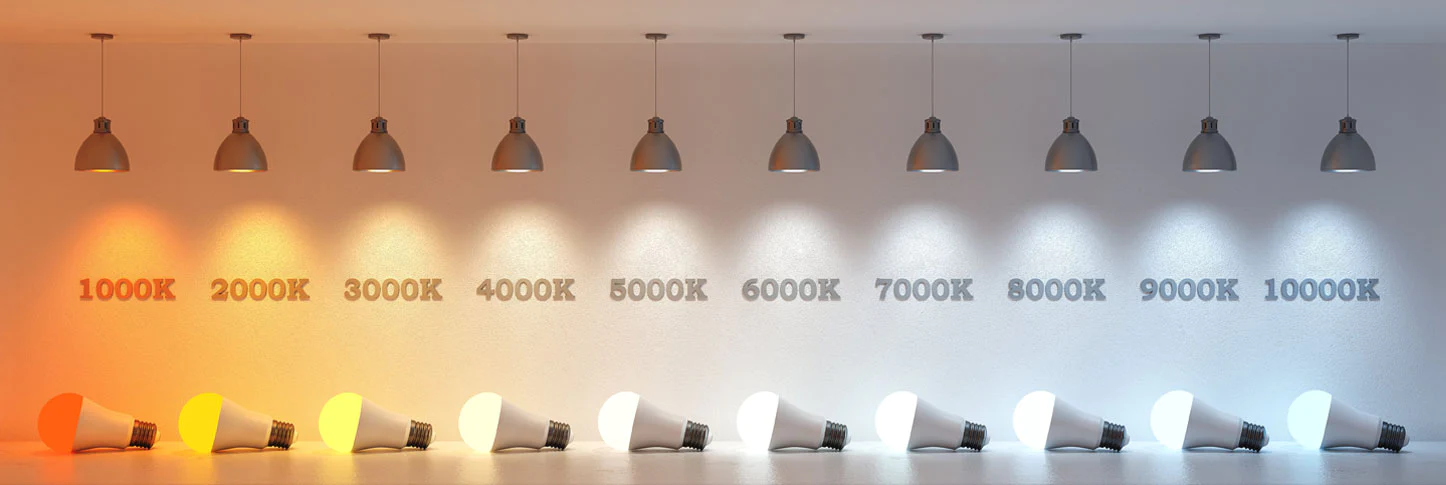
Not sure which to pick? Read our detailed comparison of 2700K vs 3000K vs 5000K vs 6500K to see which color temperature works best for each room.
4. CRI and Color Consistency
CRI (Color Rendering Index) measures how accurately a light reveals true colors — the higher the better. For retail displays, photography, makeup and premium interiors, choose strips with CRI ≥ 90. Color consistency is just as important for multi-meter runs: all sections of your project should look exactly the same. We control this by keeping a single BIN number for every order, so the strips you receive match from one reel to the next.
5. Voltage: 12V vs 24V
Low-voltage strips run on either 12V or 24V DC. 12V strips are easier to cut at short intervals and suit small, tight projects; 24V strips carry current more efficiently, which means longer runs before voltage drop becomes an issue.

We explain the full trade-offs in our guide on 12V vs 24V LED strips, including how to choose the best one for your installation.
6. IP Rating: Waterproof or Not
The IP rating tells you how well the strip is protected against dust and water. IP20 is bare and fine for indoor use; IP65 has a silicone sleeve for kitchens and bathrooms; IP67/IP68 are fully sealed and can be used outdoors, in pools and underwater features.
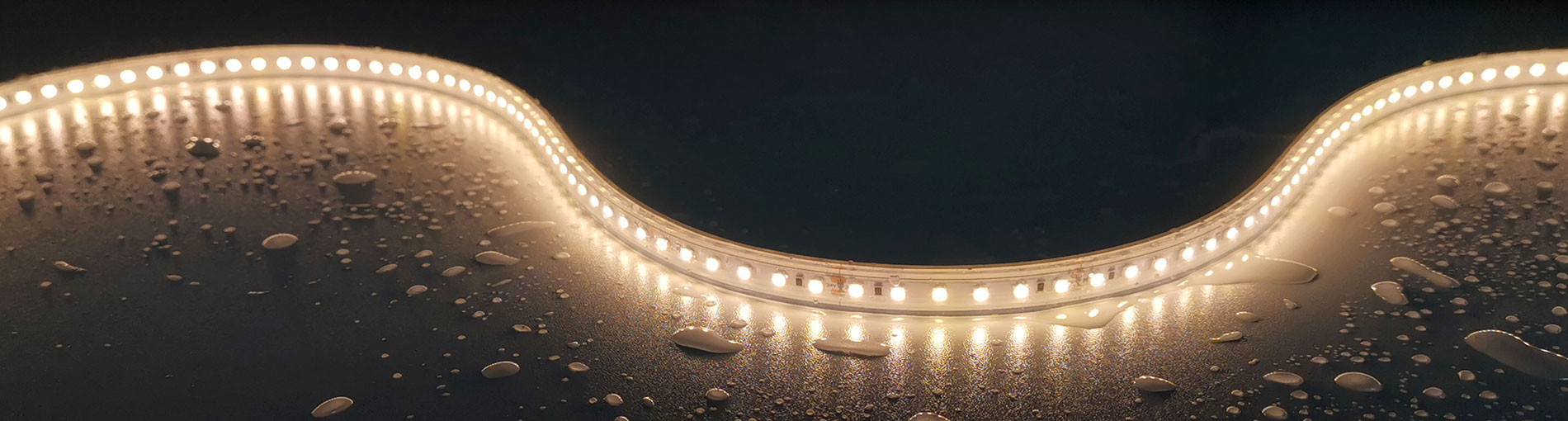
Learn how to pick the right protection in our article on choosing waterproof LED strip lights.
7. Power Supply and Wattage
LED strips always need a matching constant-voltage driver. A simple rule: total wattage = strip power per meter × total length, then add 20% headroom. Choose a quality driver with the same voltage as your strip — this avoids flicker, overheating and a shortened lifespan.

See our complete LED power supply buying guide for sizing formulas, constant voltage vs constant current, and safety tips.
8. Voltage Drop on Long Runs
If you run a strip too far from its power source, the far end will appear dimmer and slightly off-color. This is called voltage drop, and it happens with every low-voltage strip. The fix is simple: power-inject along the run, use a thicker cable, or choose a 24V strip.
We cover the causes and solutions in detail in our guide on how to avoid LED strip light voltage drop.
9. Cutting, Connecting and Installing
Almost every LED strip can be cut at the marked cut lines, then reconnected with solder-free connectors or soldered joins. Before you cut, always check the voltage drop for the new run length and plan the power feed accordingly.
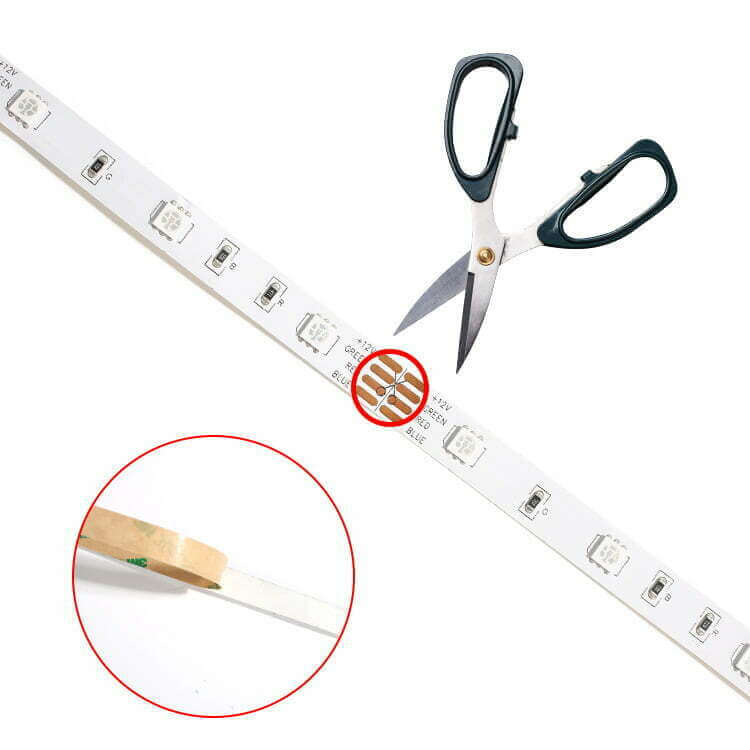
Follow our step-by-step tutorial on how to cut and connect LED strip lights for a clean, reliable installation every time.
10. LED Aluminum Profile and Diffuser
Mounting strips inside an aluminum profile not only looks professional — it also dissipates heat, protects the strip, and turns the LED line into a finished architectural light. Add a diffuser cover to soften the light and remove any remaining dots.

Start with our LED aluminum profile buying guide, then learn how to pick the right cover in our article on choosing an LED diffuser.
Why Choose KayTai?
KayTai is a professional LED strip light manufacturer in China, producing LED strip lights in our own factory with strict control over every step of production. Here is what makes us a reliable partner for wholesalers, distributors and project buyers.
✓ Quality LED Chips & Pure Copper PCB
We use quality LED chips and at least 2oz pure copper PCB boards for stable brightness and good heat dissipation, ensuring a long working life.
✓ Strict Color Consistency
Single-BIN selection and batch records keep every reel consistent, so your whole project looks uniform even across multiple orders.
✓ Full Range of IP Ratings
IP20, IP65, IP67 and IP68 options let you use our strips indoors, in kitchens, outdoors and even underwater.
✓ Strict Quality Control
Every strip is inspected and aged before shipment to guarantee a low failure rate and reliable performance.
✓ CE & RoHS Certified
Our LED strip lights are CE and RoHS certified, meeting the requirements of the EU and other major markets.
✓ Experienced R&D & Sales Team
Our engineers support OEM/ODM projects, and our sales team replies quickly with practical advice for your application.
What We Can Do for You
Beyond standard LED strips, KayTai supports a wide range of customization to make your project easier and more profitable:
Free Samples
Request free samples before you commit — test brightness, color and quality in your own application first.
OEM / ODM Service
Custom specifications, packaging and branding developed around your requirements.
Custom Length & Color
We keep one BIN and cut custom lengths, and match your exact color temperature needs.
Logo Printing
Your logo, date and batch number can be printed on the PCB for a professional finish.
Certificates & Test Reports
CE, RoHS certificates plus test reports available on request.
Prompt Delivery
Efficient production and shipping schedules keep your project on track.
FAQ
▶How long can an LED strip be run from one power feed?
For a 12V strip, keep runs under about 5 meters; for 24V, up to about 10 meters is usually safe. Beyond that, add parallel power injection or choose a higher voltage to avoid dimming.
▶Can LED strips be cut and shortened?
Yes. Cut only at the marked cut lines, then reconnect with solder-free connectors or solder. Always re-check total length and power requirements after cutting.
▶What is the difference between IP65, IP67 and IP68?
IP65 resists water spray from any direction, IP67 can be briefly immersed, and IP68 can be continuously submerged. Choose according to your installation environment.
▶Do I need an aluminum profile for my LED strip?
Not always, but it is strongly recommended for permanent installations: it improves heat dissipation, protects the strip and gives a cleaner, more professional finish with a diffuser.
Need Help Choosing the Right LED Strip Lights?
Tell us your project details — our team will recommend the right type, length, IP rating and power supply for you, and free samples are available.
Contact KayTai
A solid buying guide. The checklist covering brightness, CRI, IP rating and voltage makes comparing options straightforward. I used it to narrow down my choices quickly.
This buying guide covers the right ground. The CRI and brightness sections are what I check first, and the voltage advice is a helpful reminder for anyone wiring multiple strips. Worth saving for reference.
This 2026 buying guide is comprehensive. The checklist on CRI, density and voltage covered every factor I forgot to consider on my first order. The waterproofing section alone saved me from buying the wrong strips for a bathroom.